
Melanin, Undertones, & Why Your Tan Doesn't Change Your Colors
Let me guess. Somewhere along the way, someone told you that because your skin is fair, you must be cool-toned. Or that because your skin is deep, you can "wear anything." Or (my personal favorite) that you're a Summer in May and an Autumn by Labor Day because you spent July at the lake.
My friend, I have heard them all. And they simply do not hold up against science.
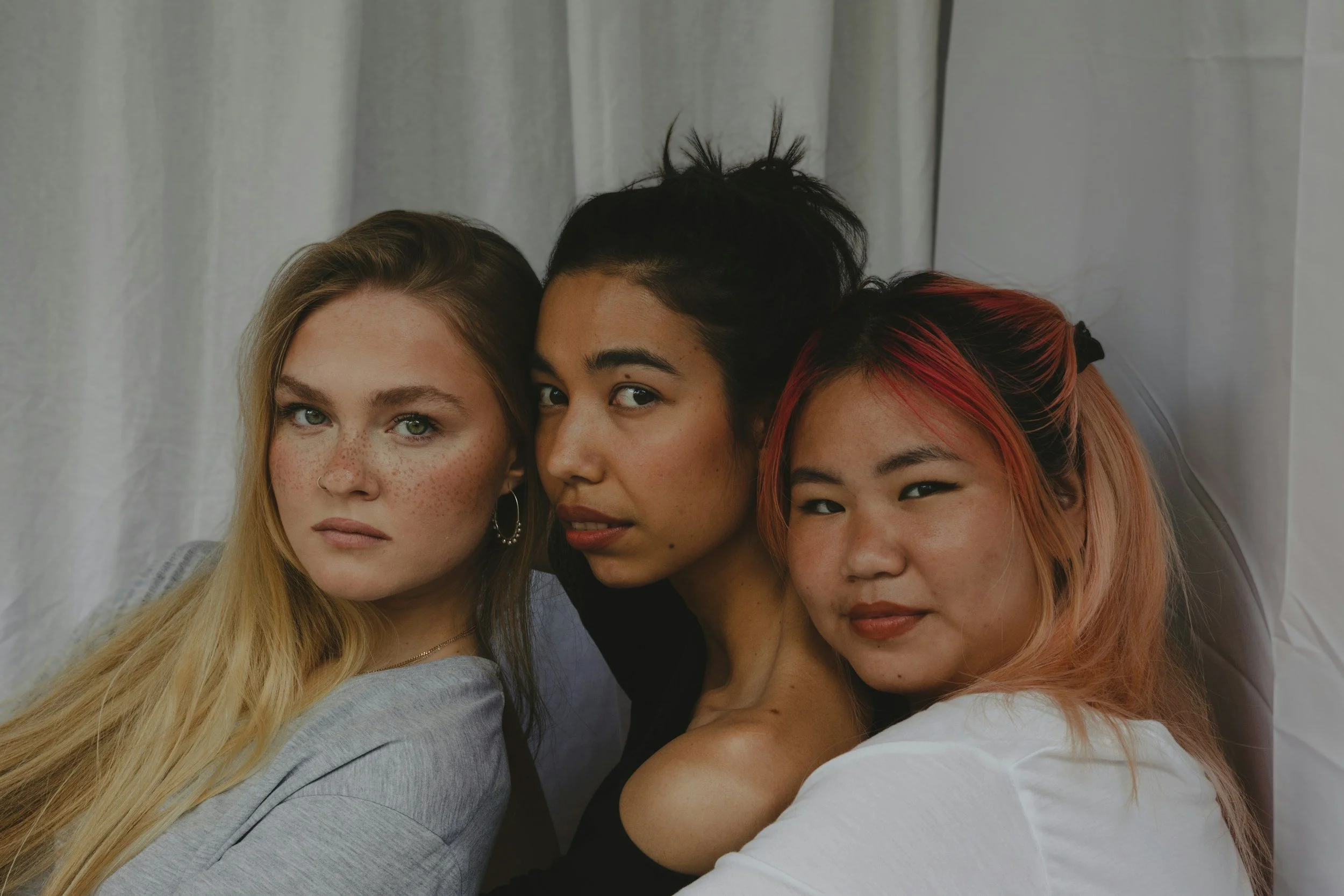
Your coloring is more than light, medium, or dark — and your season is, too
Here's the truth: your coloring is a whole lot more interesting than a shade on a foundation chart. It's written in the pigments your body makes. And once you understand those pigments, a lot of "why does this color hate me?" moments start to make sense.
So let's talk melanin. No chemistry degree required. Promise.
Visible melanin comes in two flavors (and you have both)
You probably already knew that melanin is the pigment that colors your skin, hair, and eyes. You’ve likely heard of cells in your body called melanocytes, where melanin is produced. Here’s what you may not know: your melanocytes produce two types of melanin, and they serve two completely different functions in your coloring. (Cleveland Clinic)
There are two kinds of melanin that show up when you look in the mirror are:
Eumelanin (yoo-MELL-uh-nihn), a neutral brown-to-black pigment. It's responsible for darker, deeper tones in your skin, hair, and eyes.
Pheomelanin (fee-oh-MELL-uh-nihn), a warm, red-to-yellow pigment. It's what gives color to your lips and the pinker parts of your body.
Dermatology researchers describe each individual’s pigment production as a mix of both types, and shows up in different ratios from person to person, and even in different ratios between a single person’s hair, skin, and eyes. (Nasti & Timares, 2015)
Melanin function matters
When you spend time in the sun, your skin gets darker because your body ramps up eumelanin production to attempt to prevent further damage. (Cleveland Clinic). Eumelanin is responsible for how light or dark your skin is, including your tan, those new freckles that appear out of nowhere, or hyperpigmented scars.
So when someone calls your skin "light" or "dark," they're describing how much eumelanin you have on any given day. It tells you almost nothing about which colors will make you look rested, radiant, and like yourself.
Two women can share the exact same level of eumelanin and be completely different seasons.
Read that one again.
If eumelanin sets the depth of your coloring, pheomelanin sets the temperature.
Now here's where it gets good.

Pheomelanin is your skin’s undertone
Your pheomelanin levels are constant from birth, which means your undertone’s temperature (cool or warm) is constant from birth. Pheomelanin also does not have the UV-adaptive properties associated with eumelanin, which means your tan doesn’t touch it. (Nasti & Timares, 2015)
In short: your tan changes your depth. It cannot change your undertone.
That warm red-yellow pigment shows up in different amounts at every skin depth, from porcelain white to the deepest violet-brown. It is a key piece of what a trained color analyst is reading when she’s testing whether warm or cool colors harmonize with your skin.
High pheomelanin levels? You’re warm.
Low pheomelanin levels? You’re cool.
Here’s the tricky part: you also have what is called papillary flush, which is the skin’s reaction to increased blood flow due to heat, embarrassment, or exertion. If you have a strong papillary flush, your skin will often appear pink, red, or rosy — even if you’re warm-toned. Low eumelanin (fair skin) makes this even more prominent.
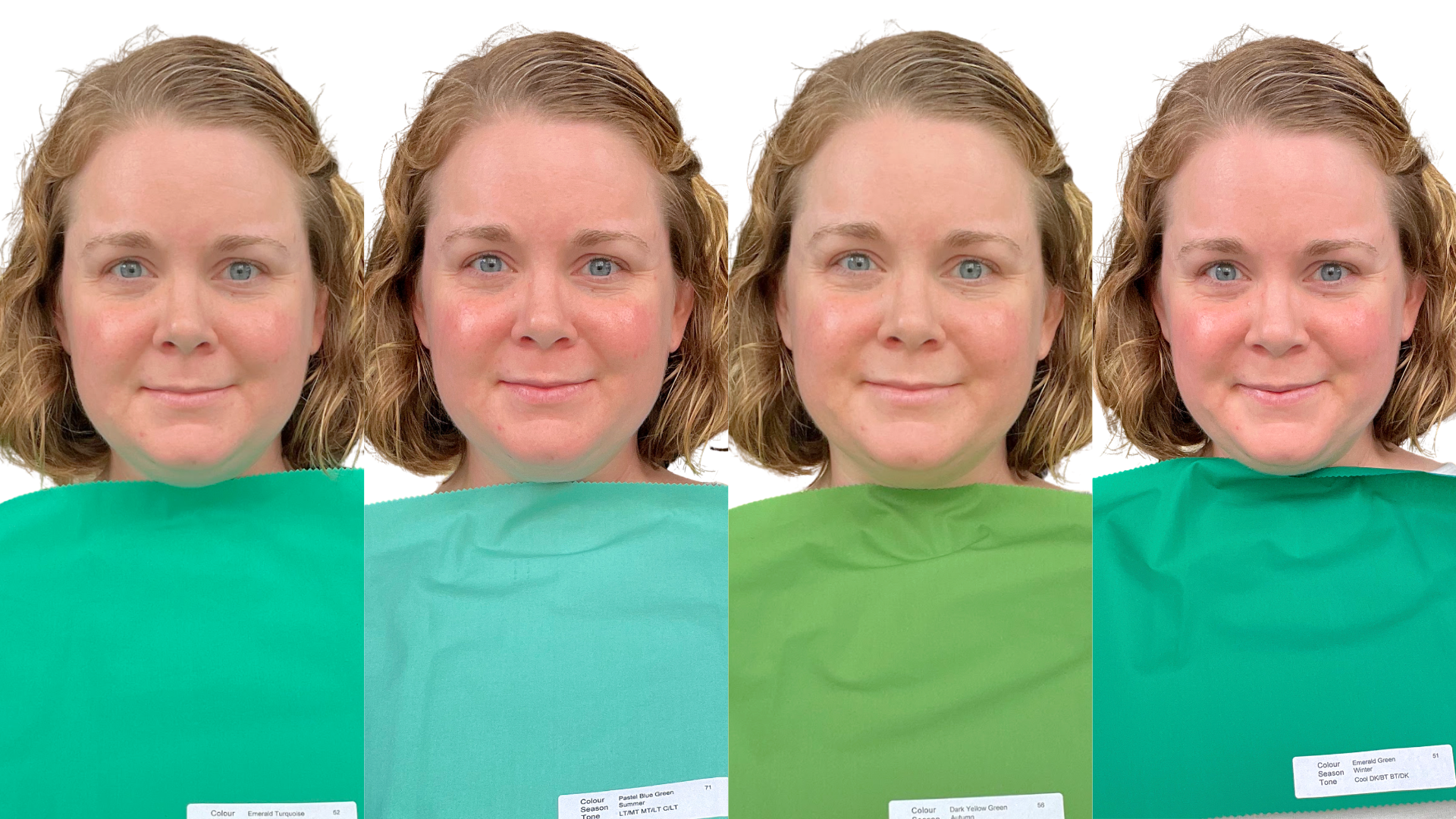
Notice how my fair, rosy-cheeked client Rosalie’s papillary flush appears least prominent in the warmest green of this group, #3. She is warm-toned.
Alternatively, if you have a low or non-existent papillary flush (often due to roughly equal eumelanin and pheomelanin in the skin), you will appear slightly more green when your skin diffuses light, creating the commonly-known “olive” complexion. This may cause you to look “warmer” on the surface, even if you’re cool-toned.
And, of course, high eumelanin may block papillary flush altogether, eliminating “cool” red tones and resulting in a “warm” appearance, even if pheomelanin is low. With proper draping, the correct temperature of color will always result in a more even, vibrant, and harmonious appearance.
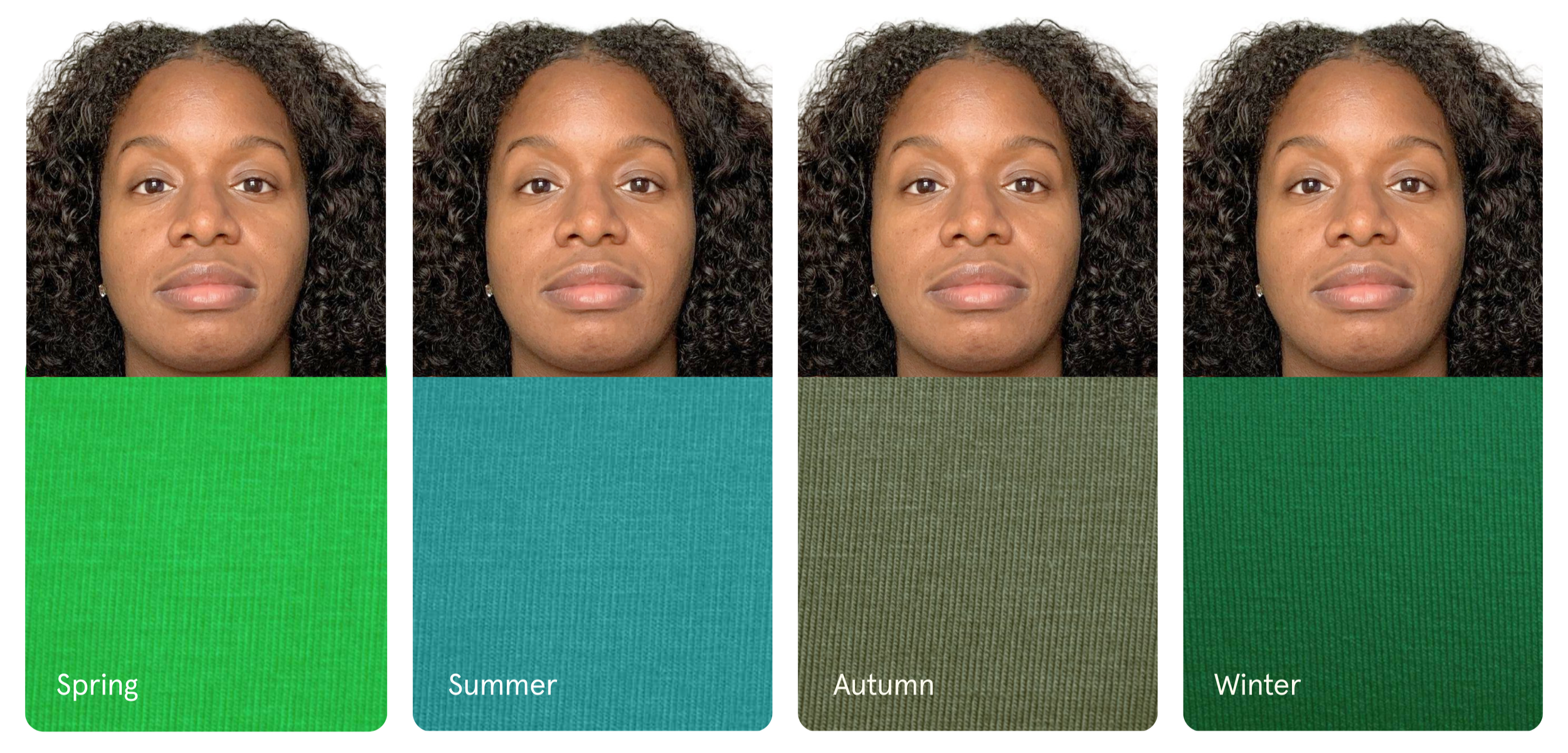
Monique’s complexion appears warm on the surface, but becomes most even and vibrant in cool, high saturation Winter colors. She is cool-toned.
To see your pheomelanin at work, and determine what temperature your undertone truly is, we must test the skin’s reaction to various color in quick succession, and this is where a trained professional analyst comes in.
Tanned in August or pale in February, flushing red in the heat, or not at all, the colors that harmonize with you are the same colors, thanks to pheomelanin.
Now let’s talk about more melanin-related clues we might look at during your color analysis. After all, your skin’s pheomelanin levels aren’t the only secret your coloring is hiding — and there are more myths we need to bust.
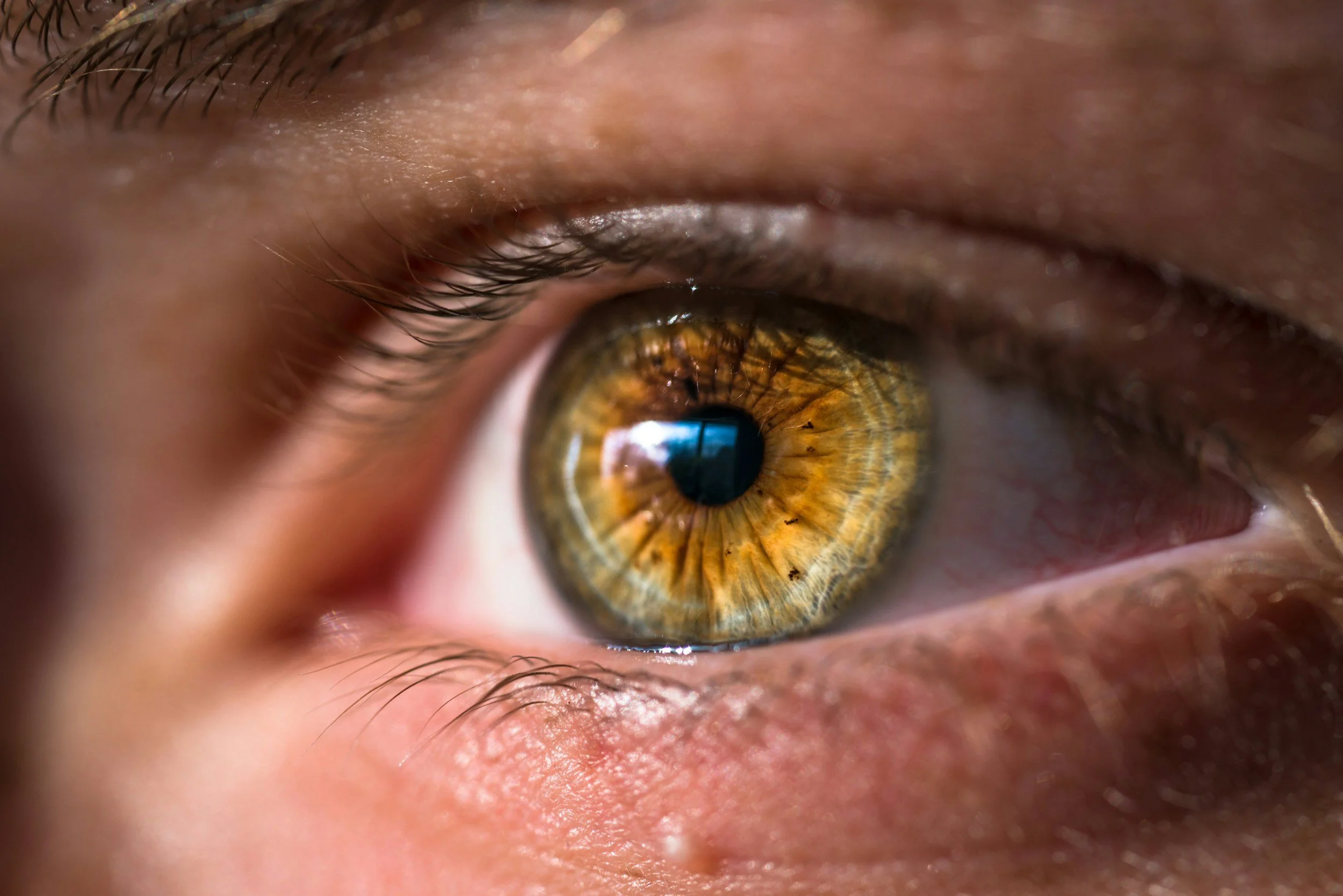
Your iris tell us a lot about your season (but not in the way you think)
An iris with Warm or Deep Autumn traits: pupillary ring, sunburst “cuts”, freckles, and white waves
Here's an assumption I'd love to retire: that your eye color helps determine your season. Soft, blue eyes = Summer. Warm, brown eyes = Autumn. Easy, right?
Not so fast.
Your eyes are part of this melanin story, too — but not in the ways you may expect. Every eye color, from near-black to hazel to icy blue, comes from eumelanin and pheomelanin (or lack thereof) in the iris. Here’s the kicker though, the quantities of eumelanin and pheomelanin in your irises — while genetically determined — are totally different from the quantities in your hair…which are different from the quantities in your skin.

Take my client Leslie for example, shown here.
Without a true understanding of melanin, common myths we hear often might try to put her in the Autumn season: dark hair, warm eyes, freckles, able to tan.
This would be a huge disservice to Leslie’s beauty and style journey.
Leslie is in actuality a Deep Winter.
Let’s break it down. Leslie has:
Light skin depth (low eumelanin)
Dark hair (high eumelanin)
A cool undertone (low pheomelanin)
Amber eyes (high pheomelanin).
It’s the lack of pheomelanin in the skin that makes her cool-toned. We had to run the proper tests to see it.
Put her in an Autumn bronzy-brown and her eyes may match, but her skin turns sallow and patchy.
Yet look how her skin glows and her eyes stand out uniquely in her vibrant, cool jewel tones and silver jewelry.
So the “textbook” hair-skin-eye color combos we see often on folks in each season? That’s not diagnostic, it’s correlation. And a good color analyst doesn’t fall for it, she tests each client thoroughly.
So, we just learned that iris color is a red herring, but we love to check your eyes during your analysis anyway.
Why?
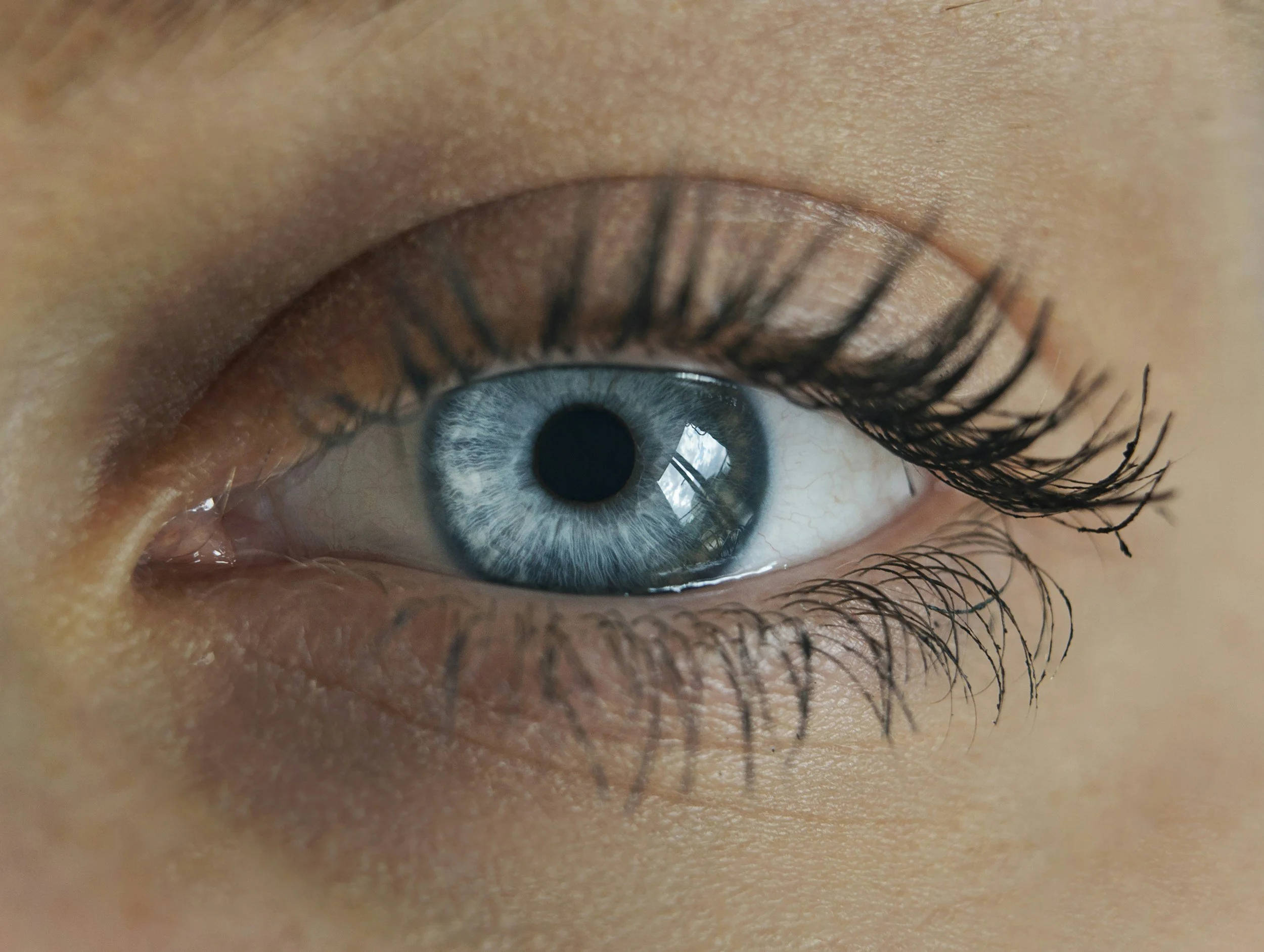
The color of your eyes is irrelevant to your analysis. It’s the structure of your iris that holds the secret codes.
An iris with Cool Winter traits: bold limbal ring and white waves
Lean into a mirror (good light, please) and you'll see your iris isn't a flat circle of color. It's textured. A 2016 study of iris surface features across people of diverse ancestry catalogued several common ones, plus we’ve added the ones we look for during analysis: (Royal Society Open Science, 2016)
Fuchs' crypts, little window-like openings in the surface of the iris (a Summer trait)
Pigment spots, “freckles” of black, brown, or orange sitting on the iris (a Spring and Autumn trait)
Limbal ring, the dark border around your iris, separating it from the sclera (a bold, heavy one is a Winter trait)
White waves, thread-like strands of white radiating from the pupil (a Winter trait, as seen in the image above)
The pupillary ring, a “flower” or “flame” formation around the pupil (a Spring trait when ringed with yellow, a Winter trait when a rusty color on a blue eye, or an Autumn trait when uneven and furled)
Sunburst “cuts”, dark, uneven slash-like lines radiating from the pupil, often combined with a furled pupillary ring (an Autumn trait)
The researchers found that iris texture traits showed up at significantly different rates from one ancestry group to the next, implying that these formations are genetic, not random.
At Rise Styling, we've been collecting data on these iris structures and their associated color analysis results since 2020. And here's what we keep seeing: these structural iris features are not color-dependent, and correlate more strongly with a person's color season than their hair or eye color. This is why we don’t care if your hair is dyed — it doesn’t play a part in your analysis!
Context and saturation: where the magic (and the mess) happens
Knowing your undertone is a great start. But it's not the whole story, because color never shows up alone. It always shows up next to something.
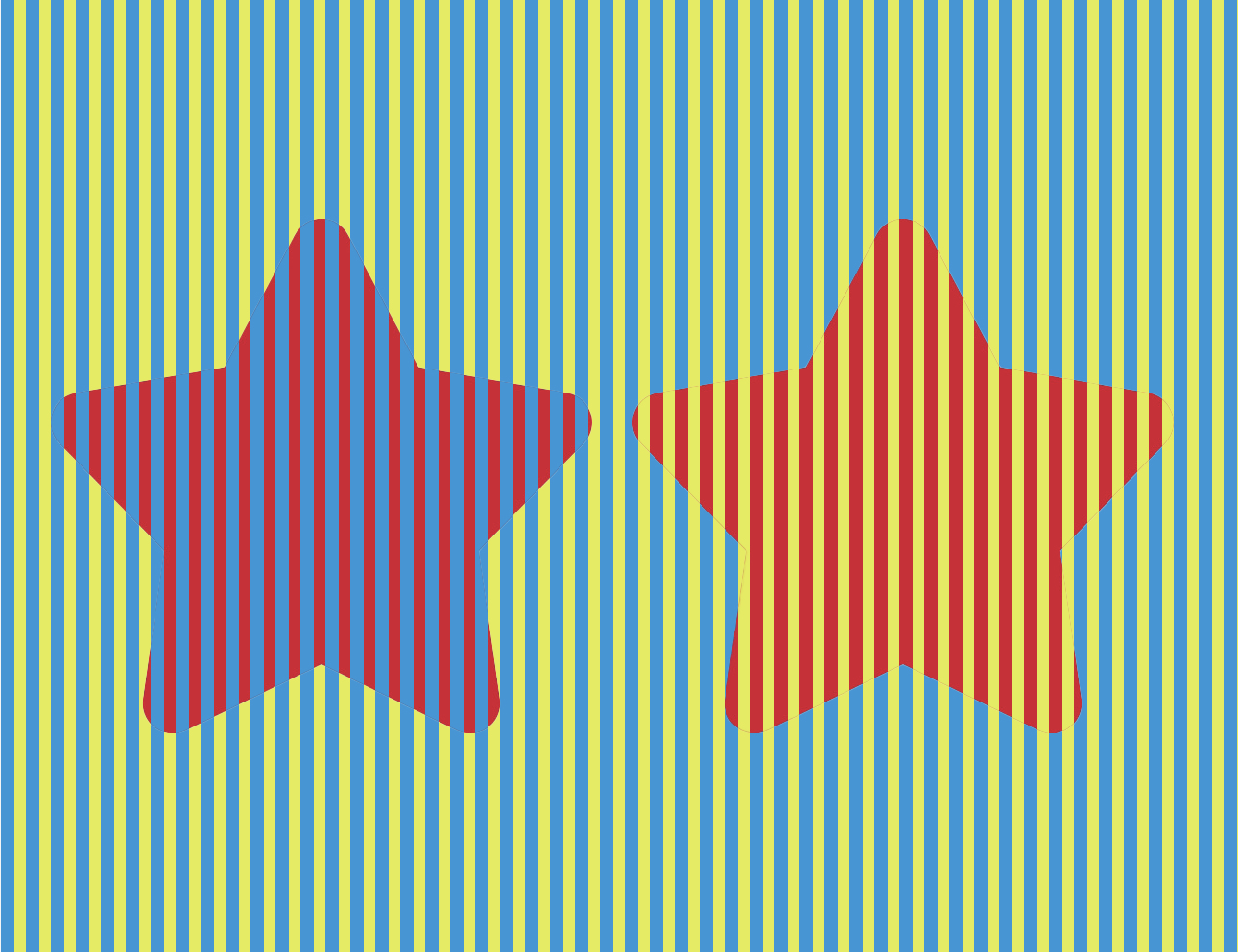
The color scientists at Datacolor have a demo I love: two identical red stars, set behind different striped overlays. They look like two different reds.
The red star on the left appears cool-toned, as the stripes influence our eyes to perceive the red through a context of blue.
Similarly, the red star on the right appears decidedly warm-toned, due to the visual proximity of the yellow stripes.
In truth, the reds are exactly the same.
Our brains alter color like this automatically — there’s no stopping it (Datacolor). This fact will never cease to delight me!
Now picture this: you're the star. And the stripes are the blouse, the scarf, the lipstick you put right up next to your face. Without even trying, our eyes perceive the color of YOU differently depending on the context of the colors you’re wearing. The goal isn’t to make you more beautiful (you already are!); the goal is information.
Your undertone (or pheomelanin level) is your temperature from birth, and never changes. Your undertone’s temperature is either harmonizing with the temperature of the color placed on you, allowing your skin to look like itself, or the color changes the appearance of your skin. Your skin isn’t actually blotchy, red, or drained of life, it’s your brain navigating context. Your season is a whole rainbow of colors that share temperature and saturation, and that all allow you to look like YOU.
Saturation is the other piece, and it's sneakier. Datacolor notes that when saturation levels compete, our brain selects the most dominant color in view, and everything nearby must compete for visual importance, win or lose. (Datacolor) This is completely subconscious and automatic. In plain English: the wrong intensity of color can register as more important than YOU in the brains of those around you. We see this in occur every single color analysis session.
Here's the part that surprises my clients most. Your personal coloring may not look "bright" or "soft" in the mirror, until it's supported with the right saturation of color. Put a warm-toned, soft-saturation woman in electric fuchsia and the energy of the color becomes gaudy. She looks distant in a way people can feel. Put that same color on a cool-toned, bright-saturation woman and the color calms into an elegant statement. She looks regal. Same color, different faces, totally different alignment.
Just like the red stars, your face is your face. It’s its own perfect, honest color, exactly as it is. Colored clothing and accessories add context to your coloring, and we can create whatever context we wish once we understand the science of your unique face.
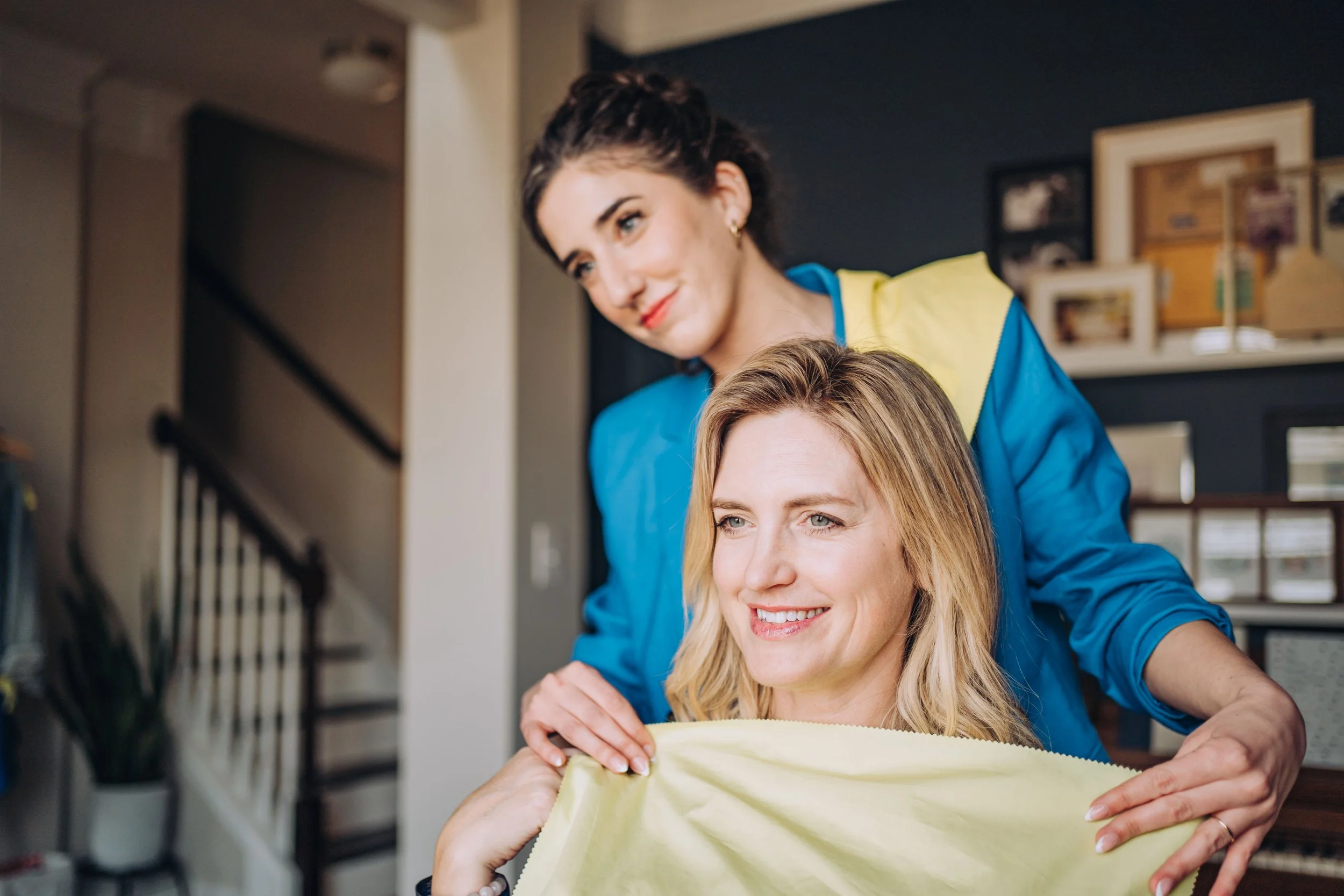
Rise Styling certified color analyst Lydia in Northern Illinois shows a Spring client her best colors
Here's what I don't want you to miss
Human coloring is gorgeously, endlessly varied. Every face is its own mix of depth, temperature, and saturation, and no shortcut chart is ever going to capture all of that. Trained color analysts don't guess. We test, color after color, watching for the same reactions to show up again and again. It's pattern recognition, and it takes practice to see it.
But color analysis isn't really about colors. It's about you walking out the door each morning feeling well-represented, so your energy goes to making an impact. Not to second-guessing your lipstick.
You have places to be. Let's stop letting the wrong colors steal your shine before you get there.
If you're ready to find out what your melanin has been trying to tell you all along, our team of skilled, certified color analysts are ready to unlock your season with you. We focus on bringing you into the loop, from your unique undertones to your saturation needs, so you can see that your season’s colors were written in the stars from the beginning.
Come see what you've been missing. We have a seat saved for you!
Did you find this post helpful? Share it on Pinterest or send the link to a friend!
Sources
Melanin: What Is It, Types & Benefits, Cleveland Clinic
MC1R, Eumelanin and Pheomelanin: Their Role in Determining the Susceptibility to Skin Cancer, Nasti & Timares, Photochemistry and Photobiology
Eye Color, AncestryDNA Traits Learning Hub
Analysis of Iris Surface Features in Populations of Diverse Ancestry, Royal Society Open Science, 2016
Why Can't We Agree on Color?, Datacolor
