
ColorKit™ Case Study: Deep Autumn Jessica
Gorgeous Jessica is on a mission to bring clarity and direction to her style - starting with color! She’s been curious about her season for a while, and the ColorKit™ experience will get to the bottom of her true season by working a series of targeted tests and observations.
First, meet Jessica! Jessica is a mama who came to us to learn which colors suit her best, so she can get out of her comfort zone, shop smarter, create a customized makeup look that glows, and embrace what makes her unique.
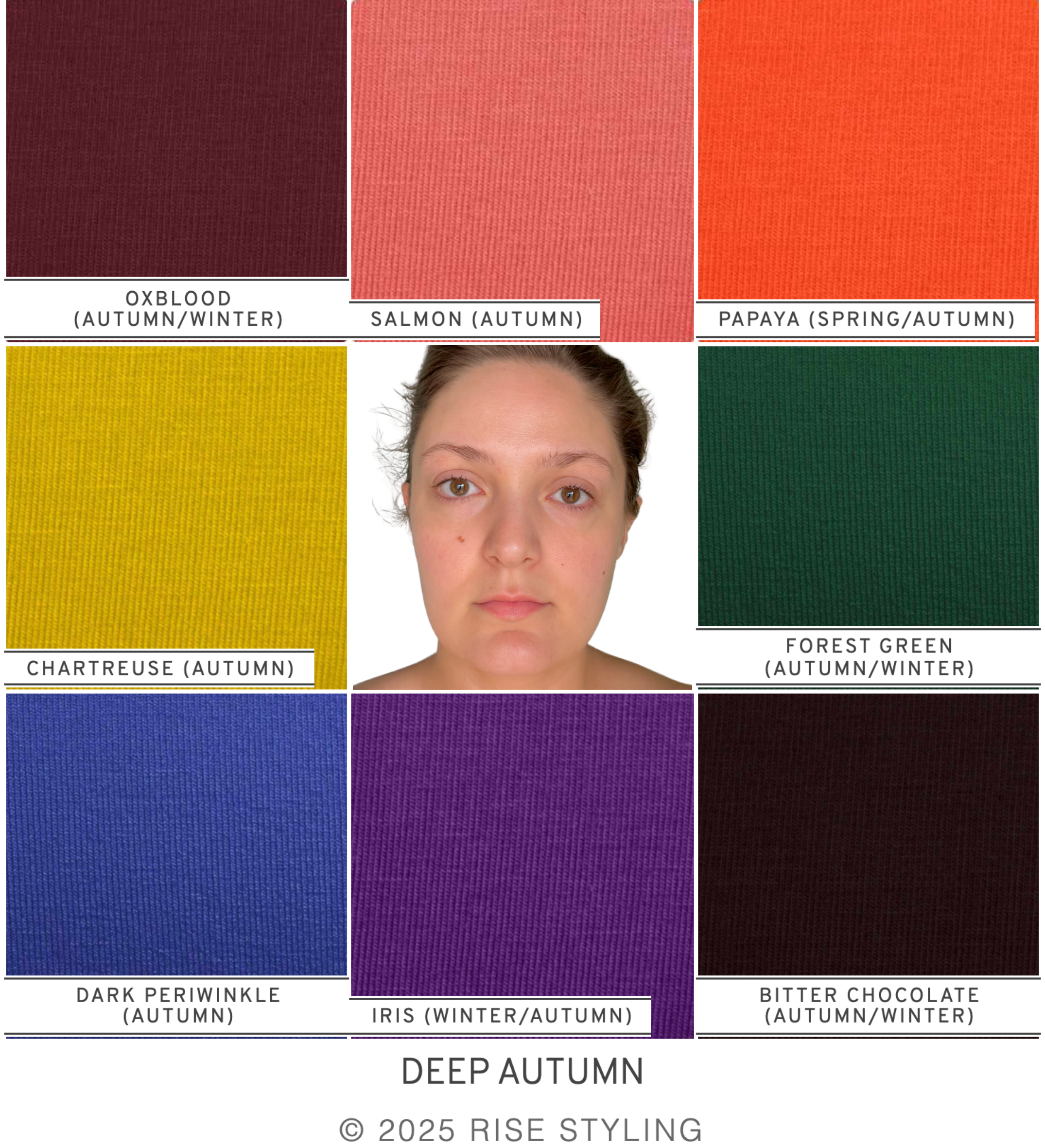
I just can’t get over how stunning she is in her Deep Autumn colors! Read on to see every step we took to arrive here.
When we begin every color analysis, our first order of business is to determine whether you have COOL or WARM undertones.
The skin color we can see on the surface is your overtone, not your undertone. This is the layer of your skin that contains the type of melanin that adapts to sun exposure.
The type of melanin that determines undertone lies below the surface, and does not adapt to sun exposure. It is invisible to the naked eye, and remains constant for your entire life.
Your undertone's temperature shows itself in subtle ways only when observed in close proximity to varying colors in quick succession. A single color in a single instance isn't enough to observe undertones, especially when fabric finish and lighting are ignored.
The solution is to create a controlled environment with natural lighting, precise colors in a consistent texture, and targeted comparisons that isolate specific criteria: TEMPERATURE, VALUE, and CHROMA.
In this section of your ColorKit™ results report, we are isolating TEMPERATURE, so that your undertones can makes themselves known.
Let’s see this in action on ColorKit™ client Jessica.
Slide through the images below to view Jessica alternating between wearing cool colors (left) and warm colors (right):
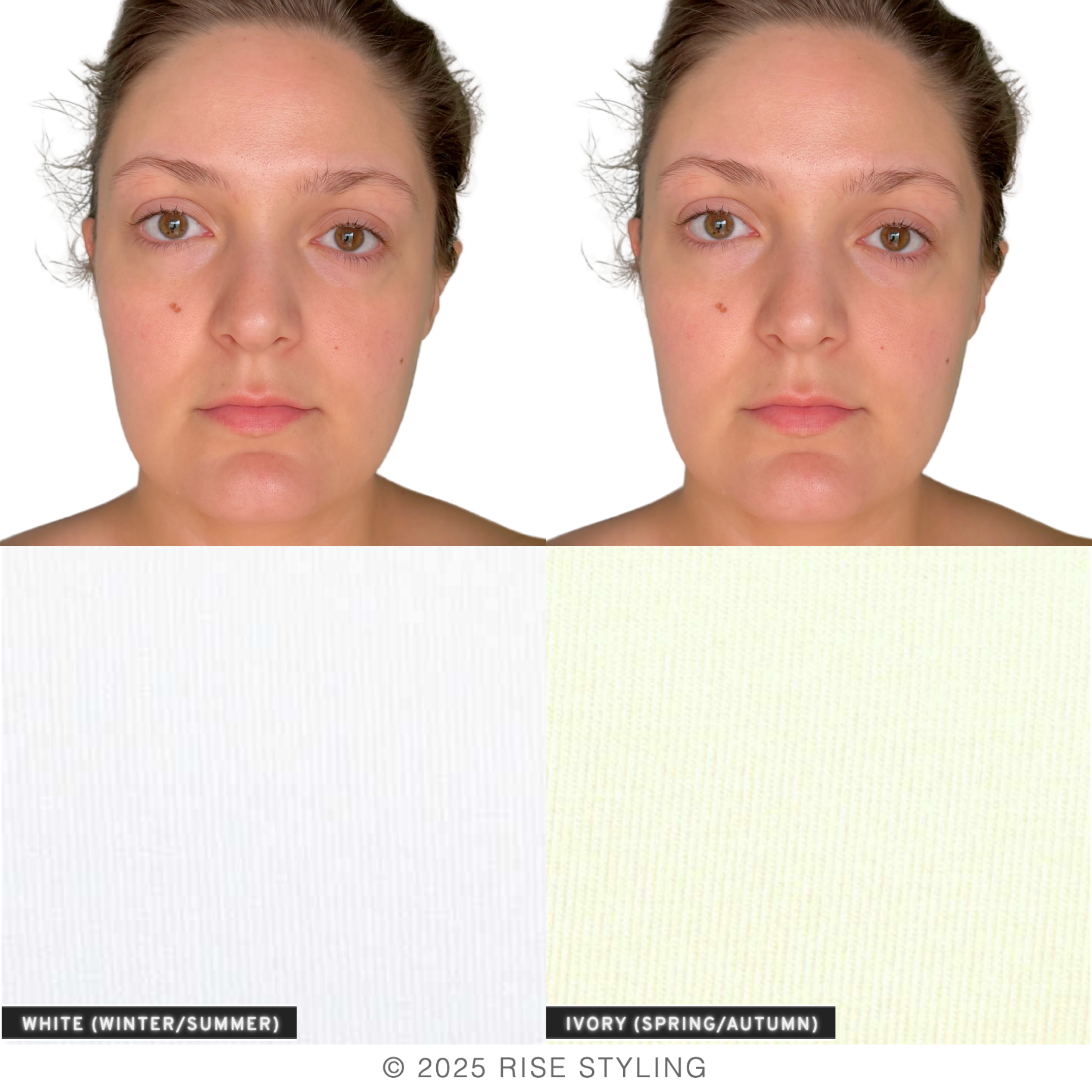
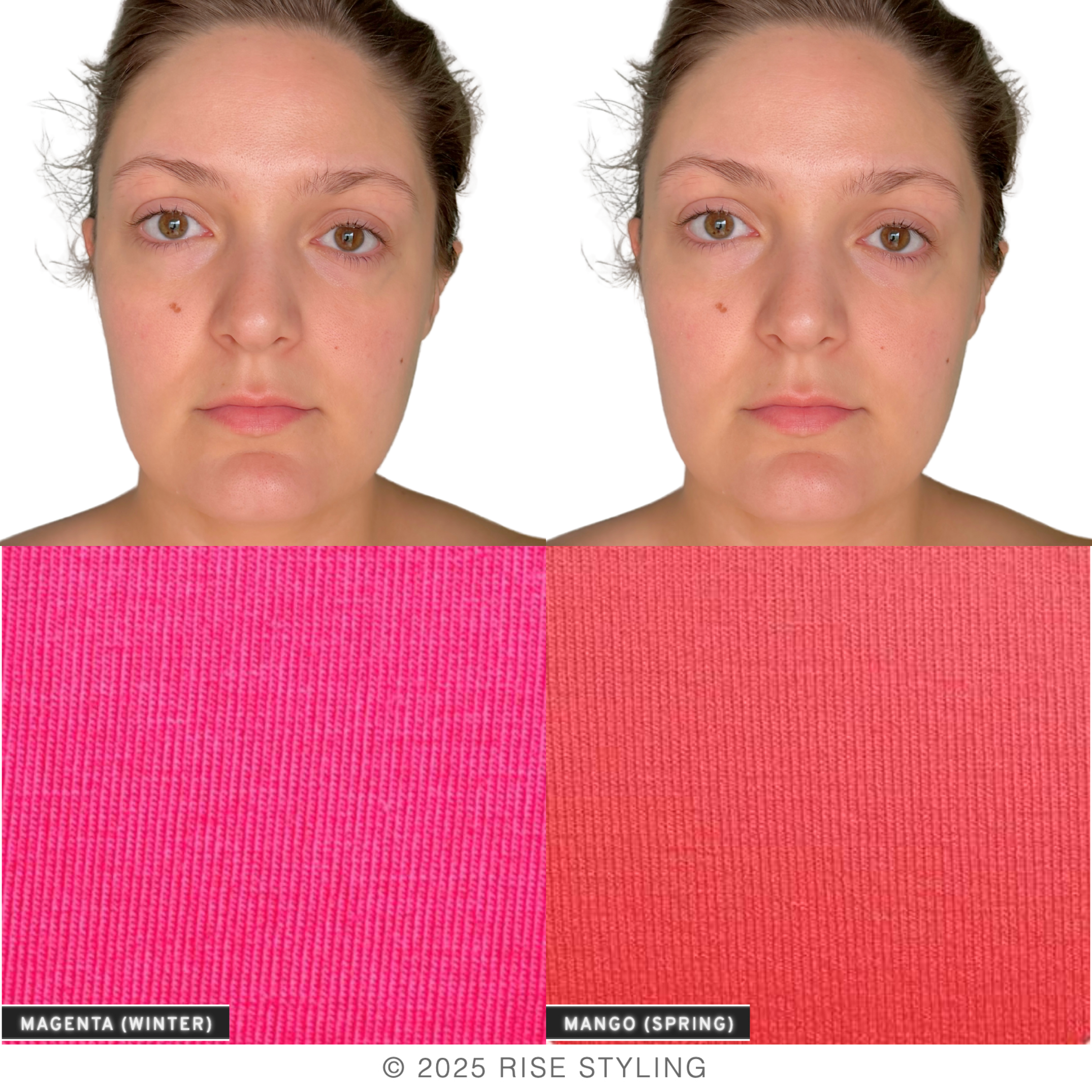
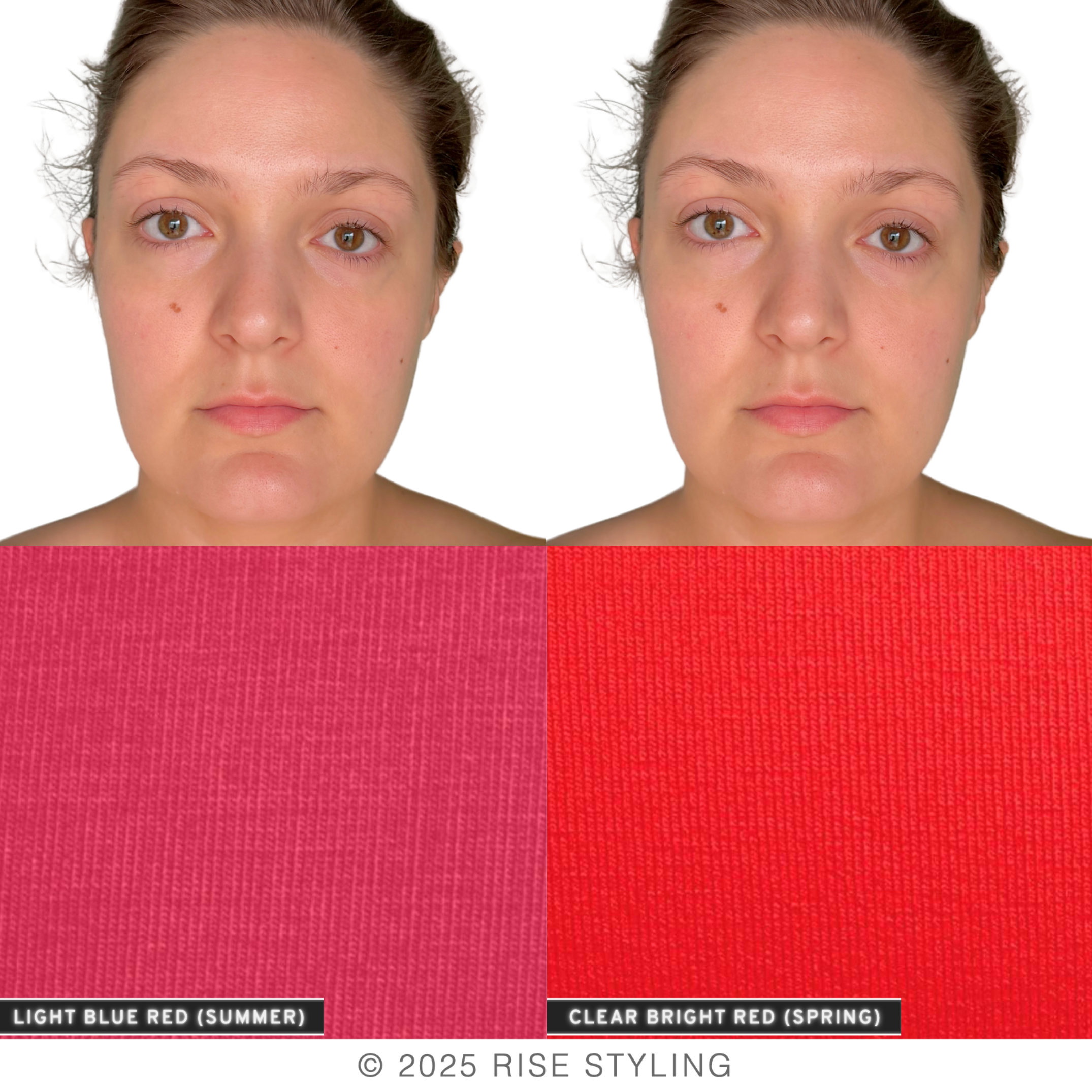
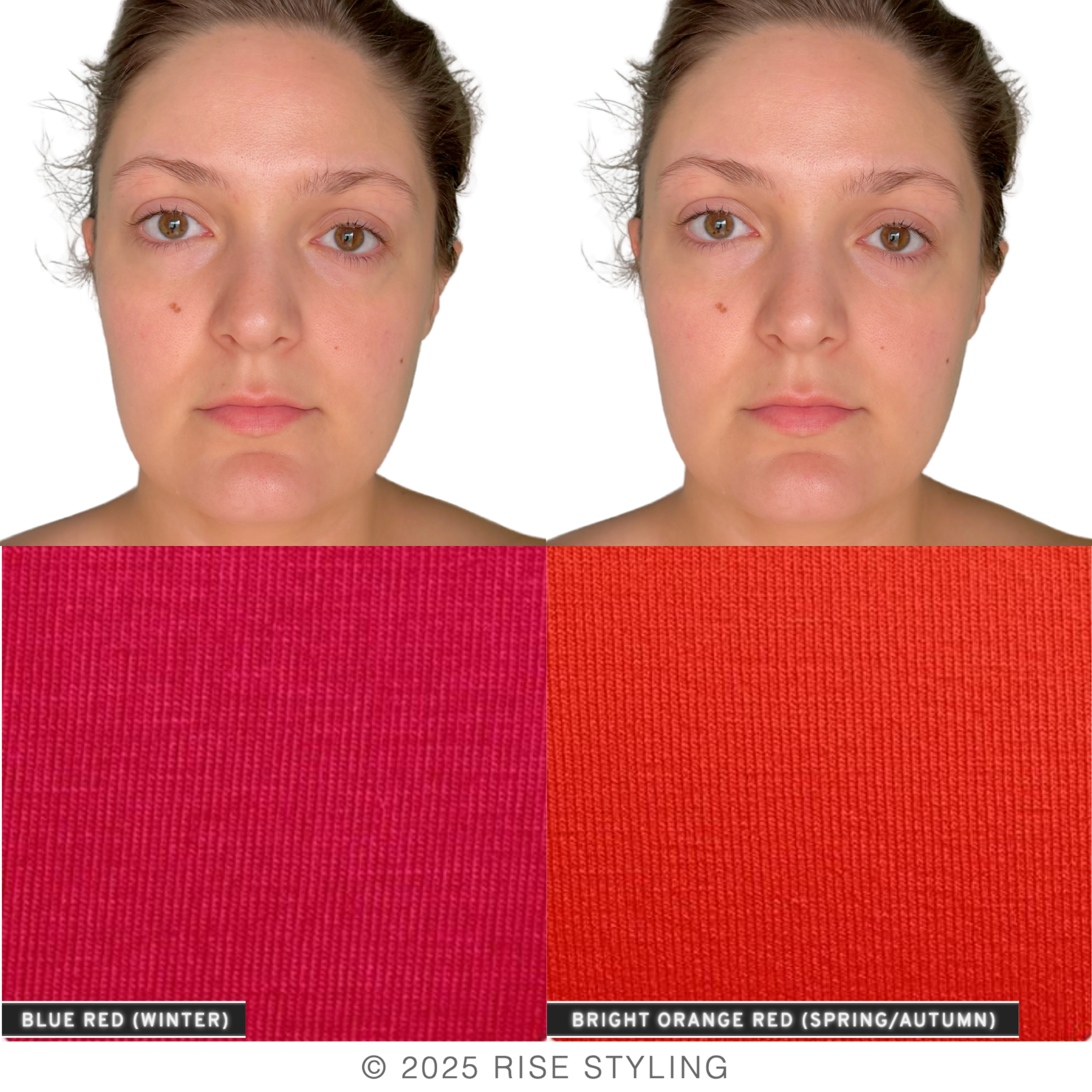
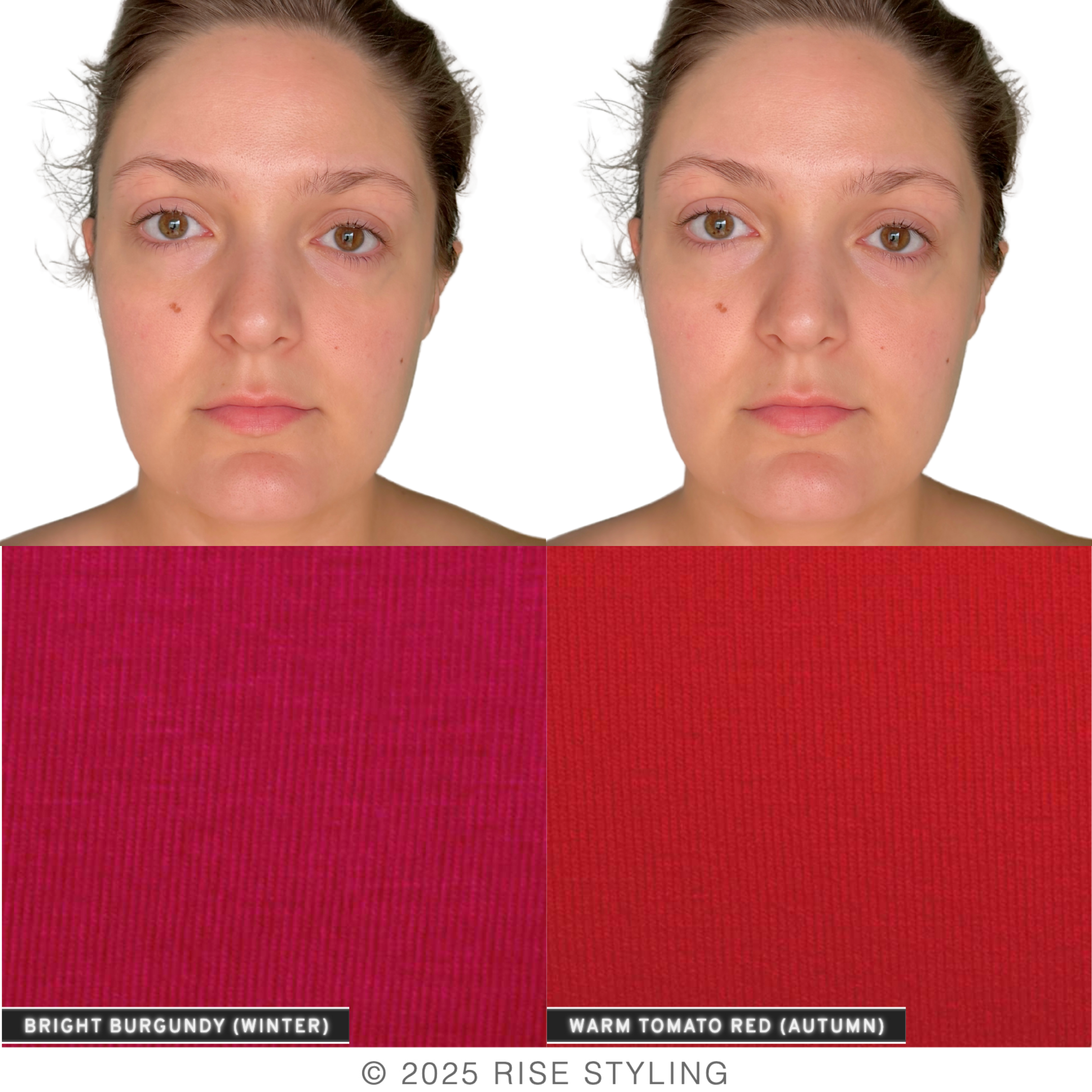
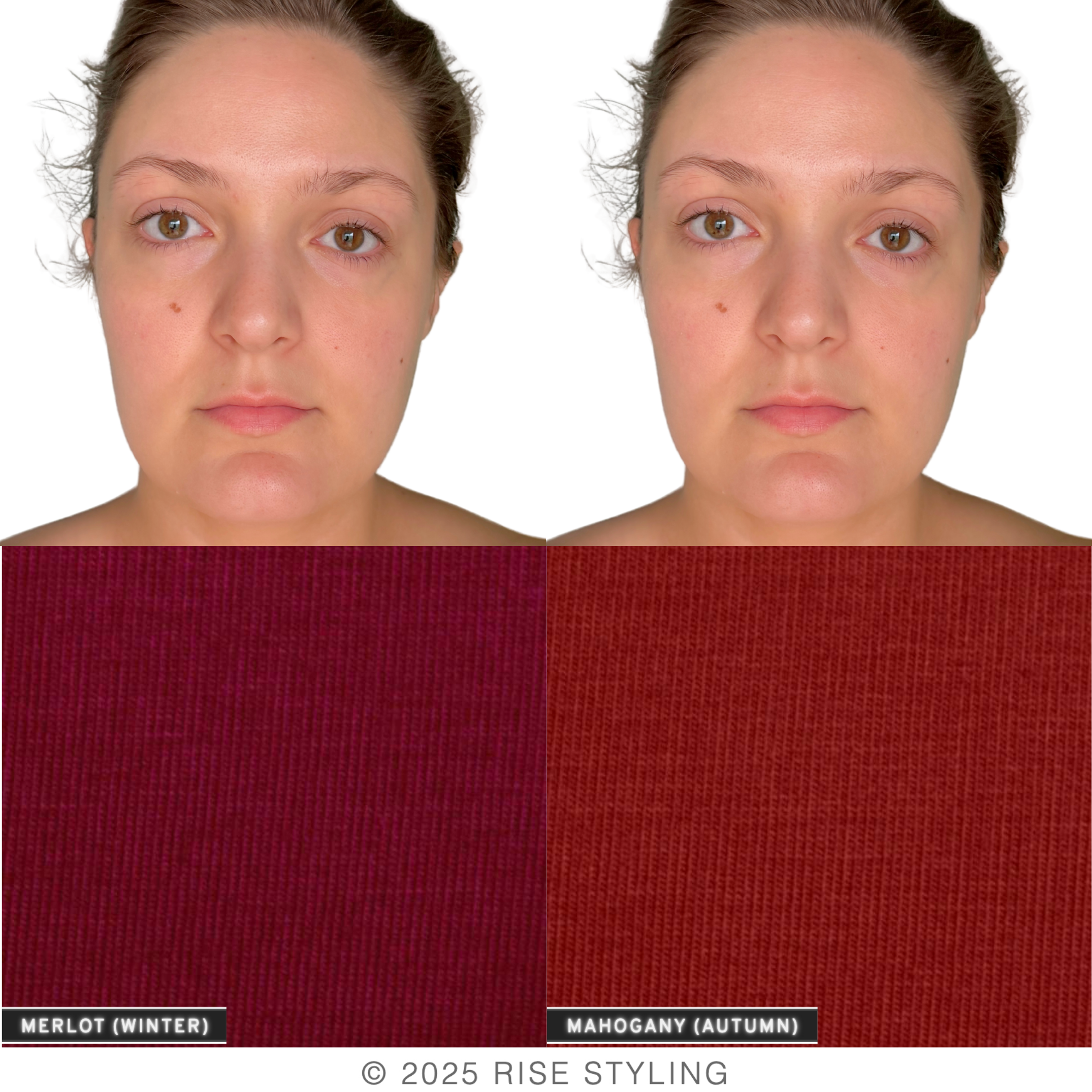
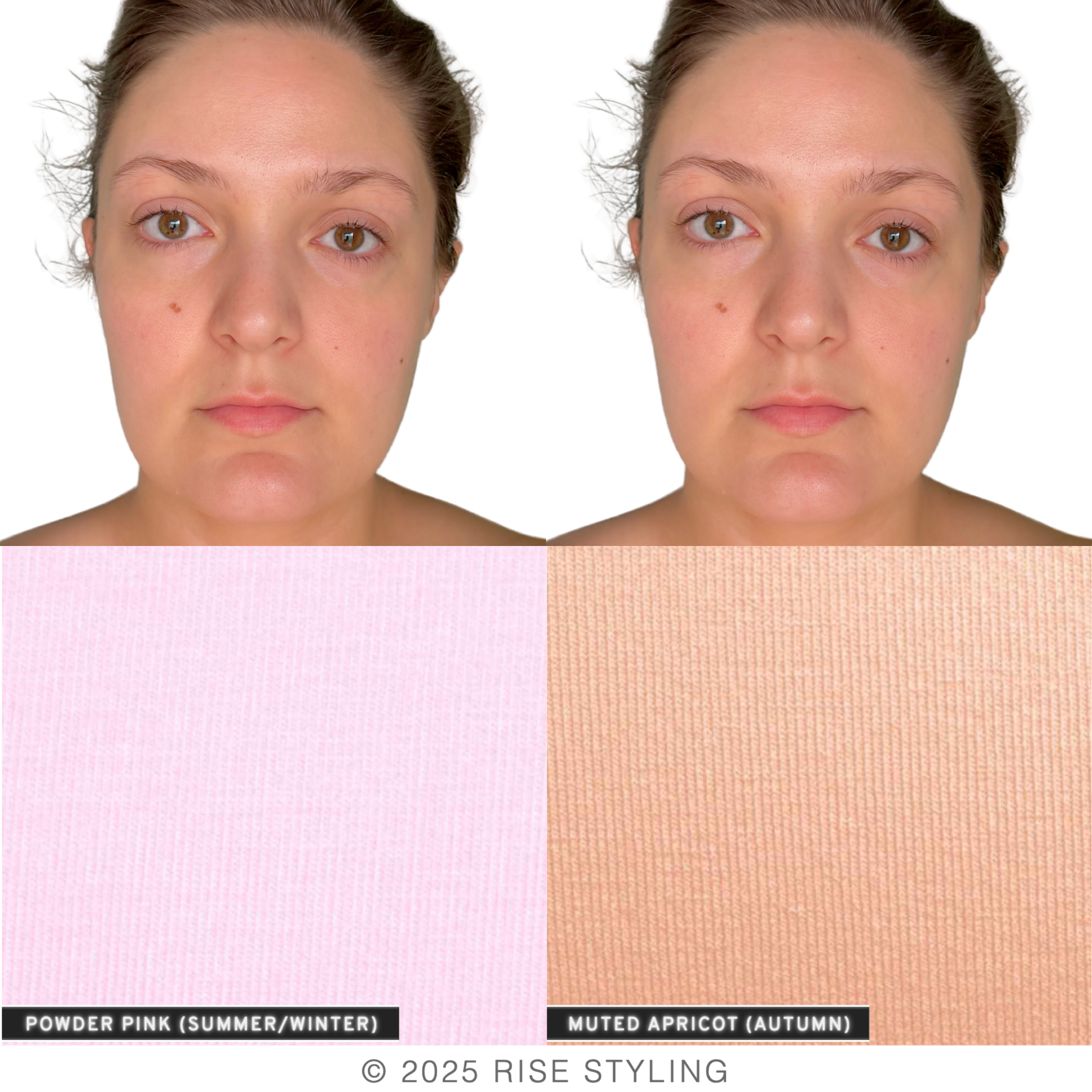
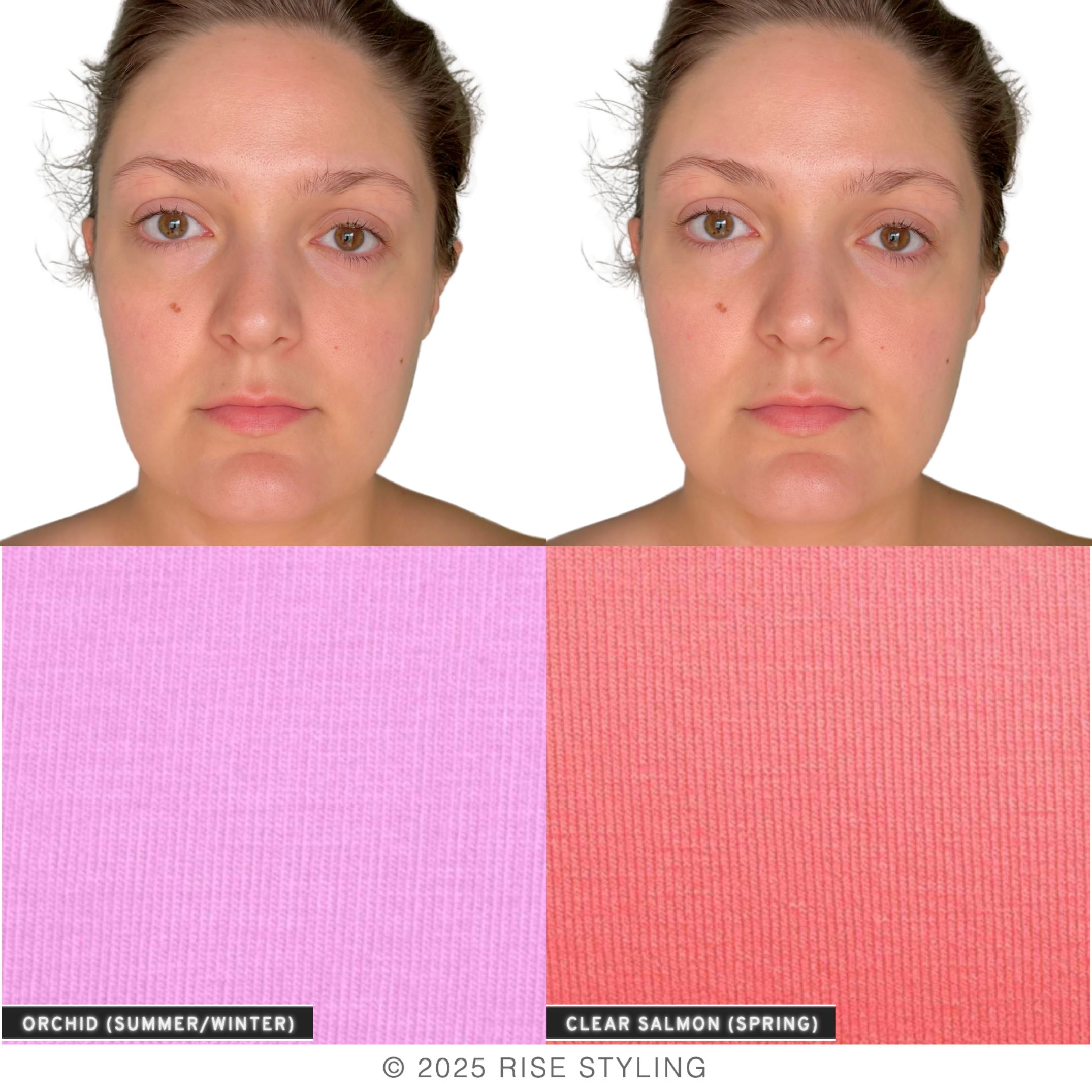
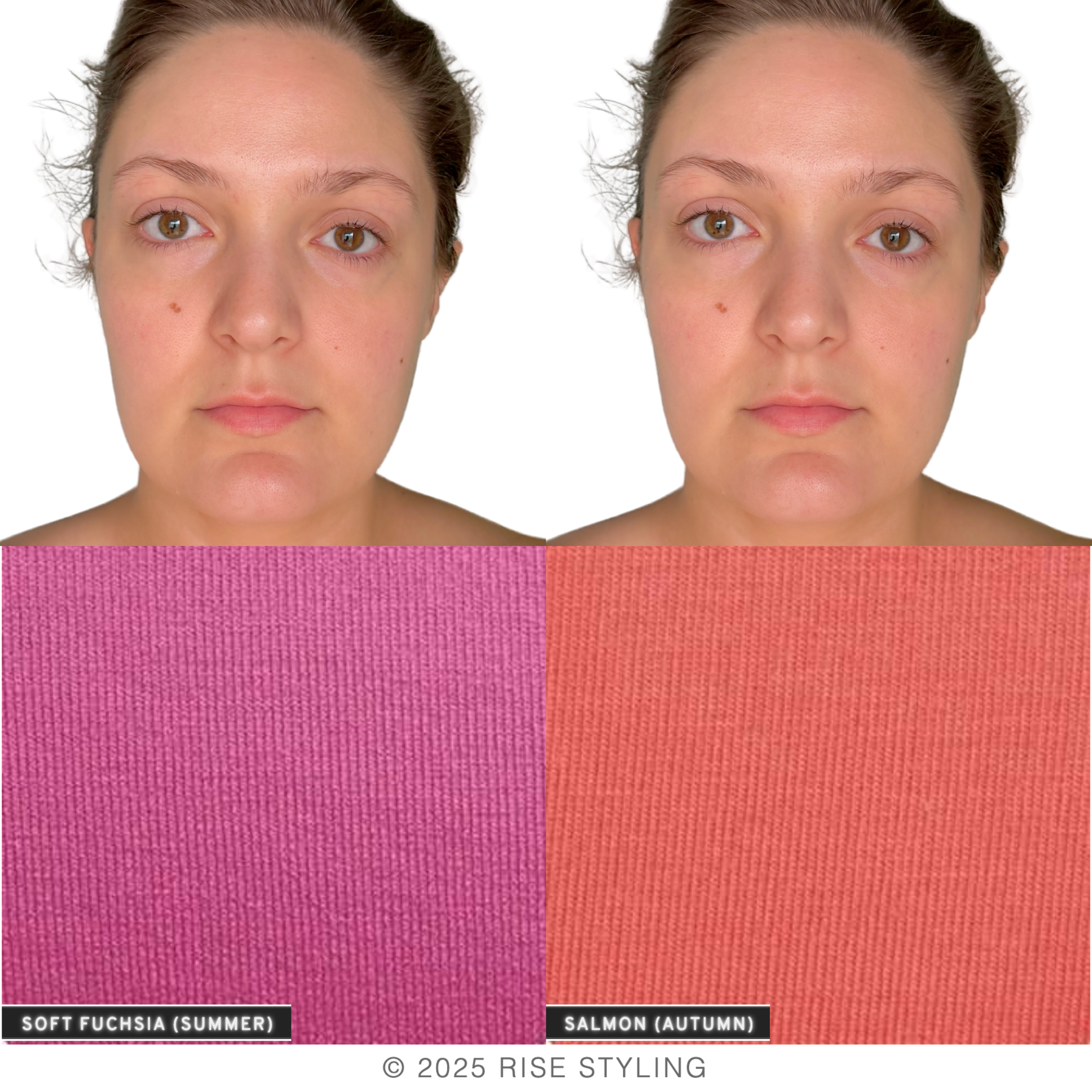
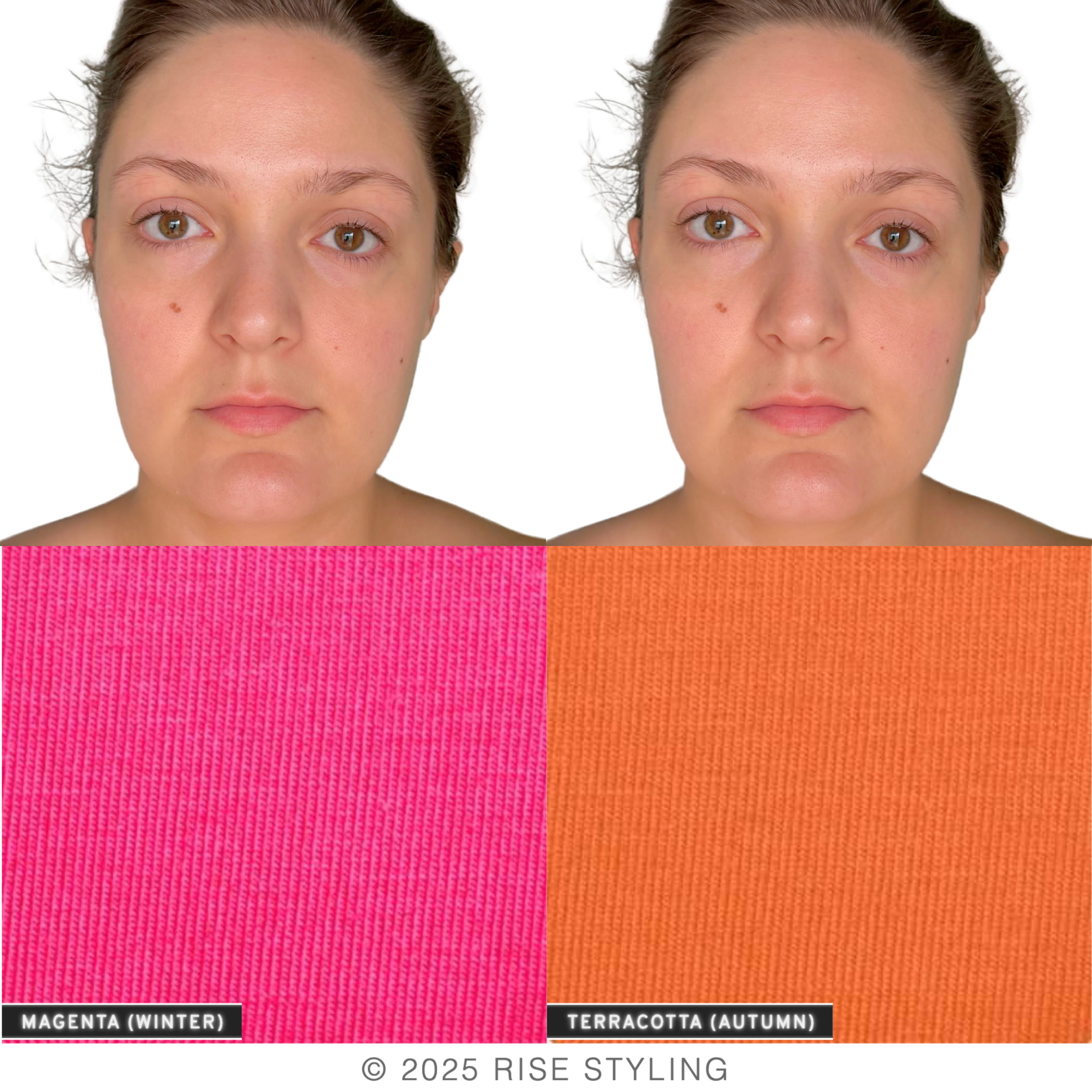
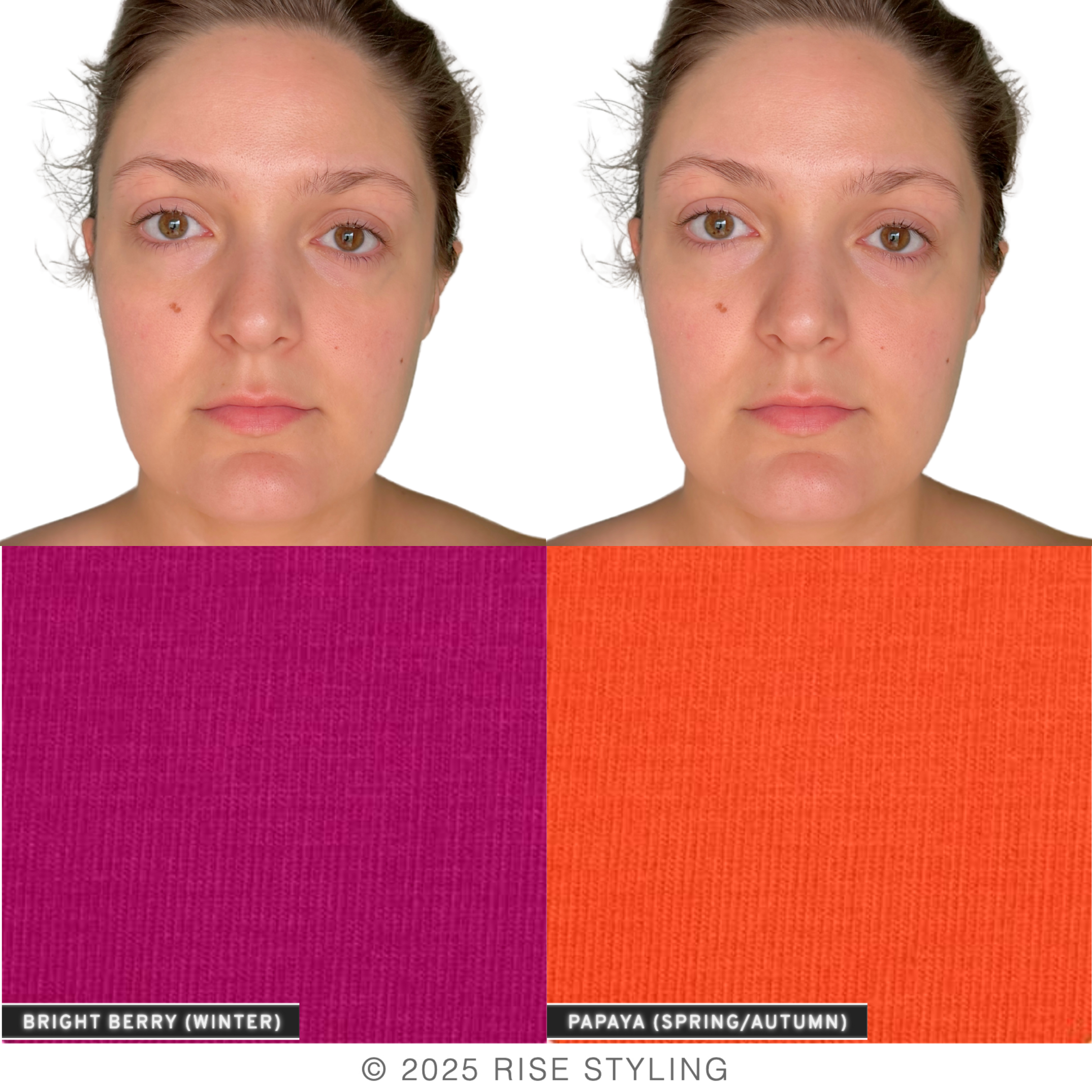
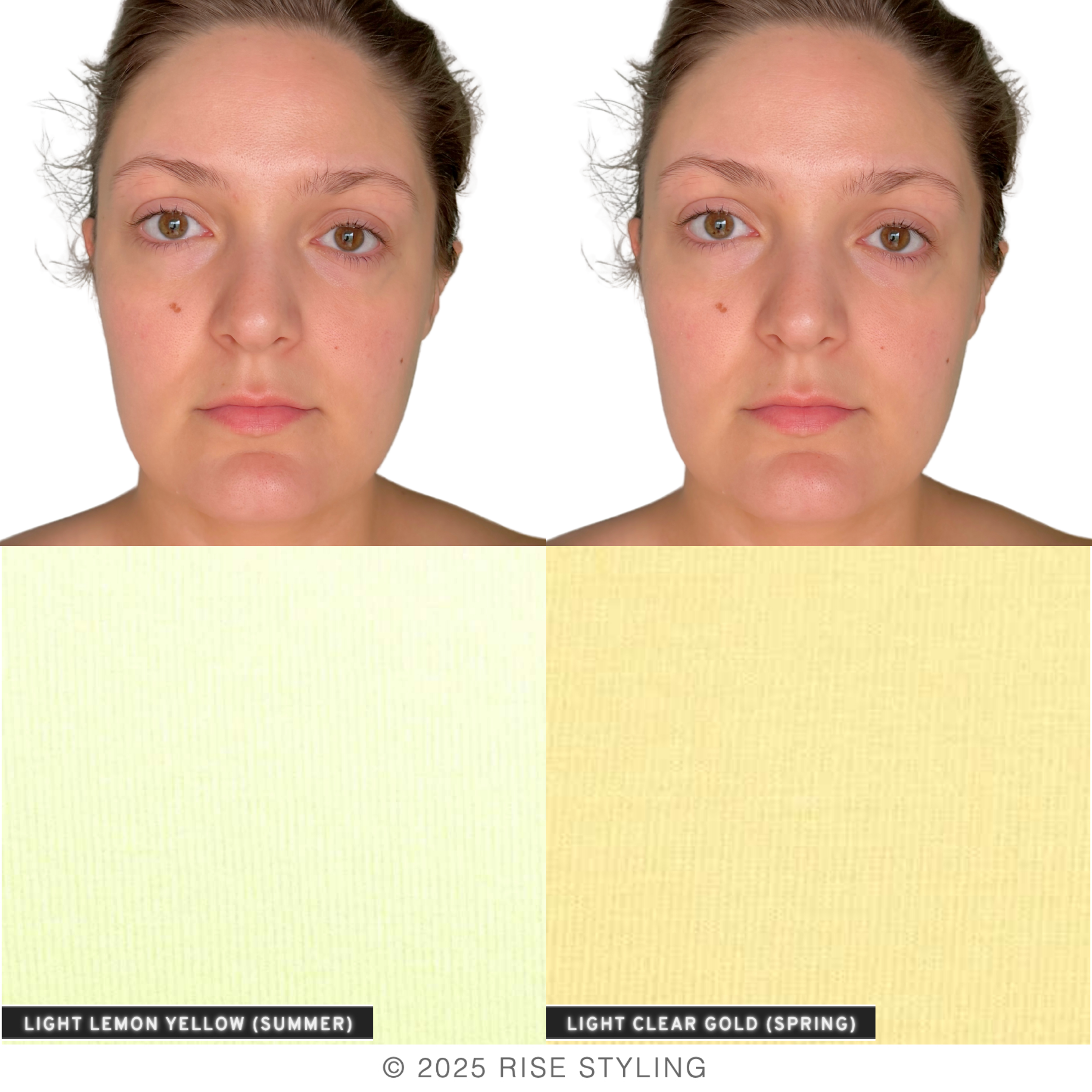
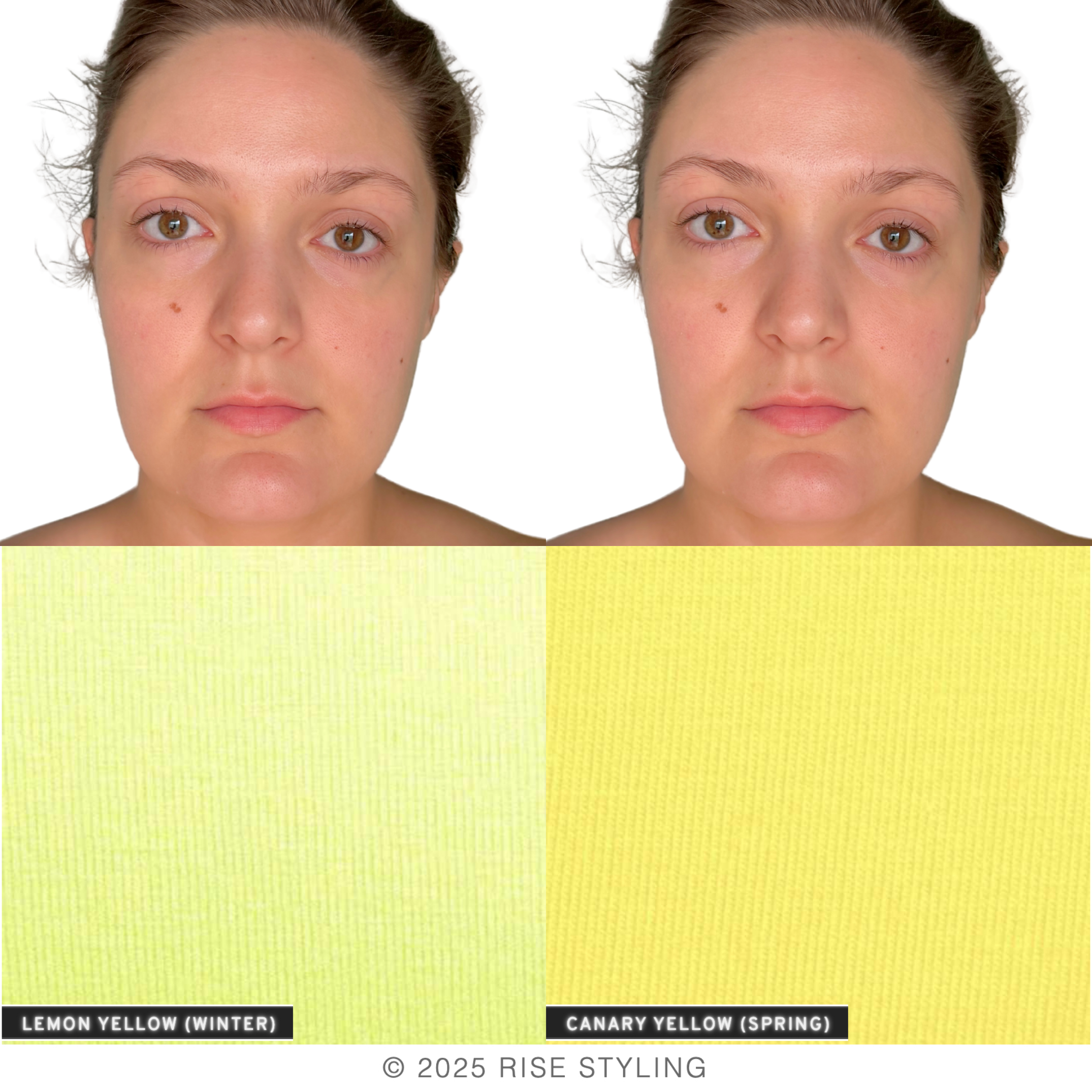
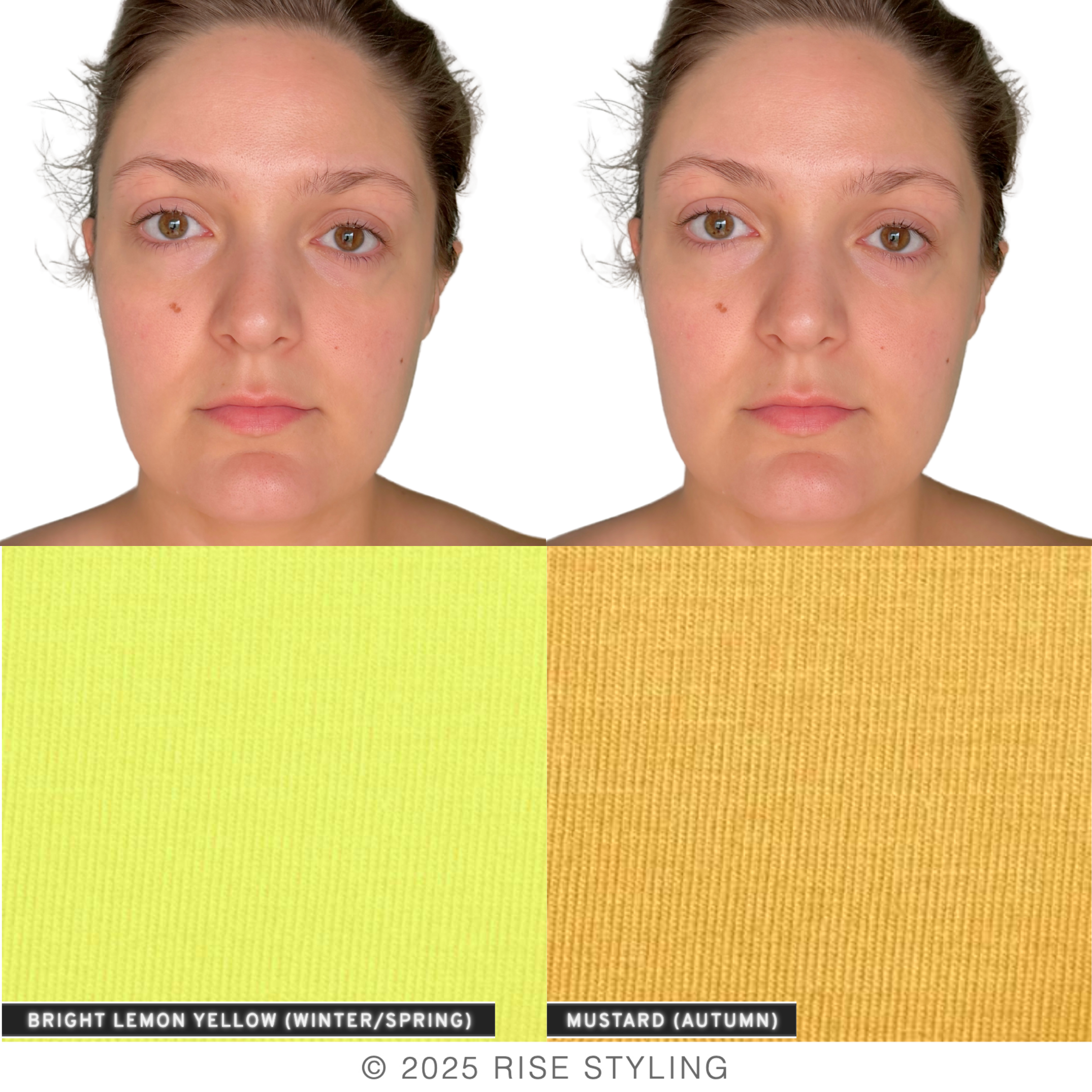
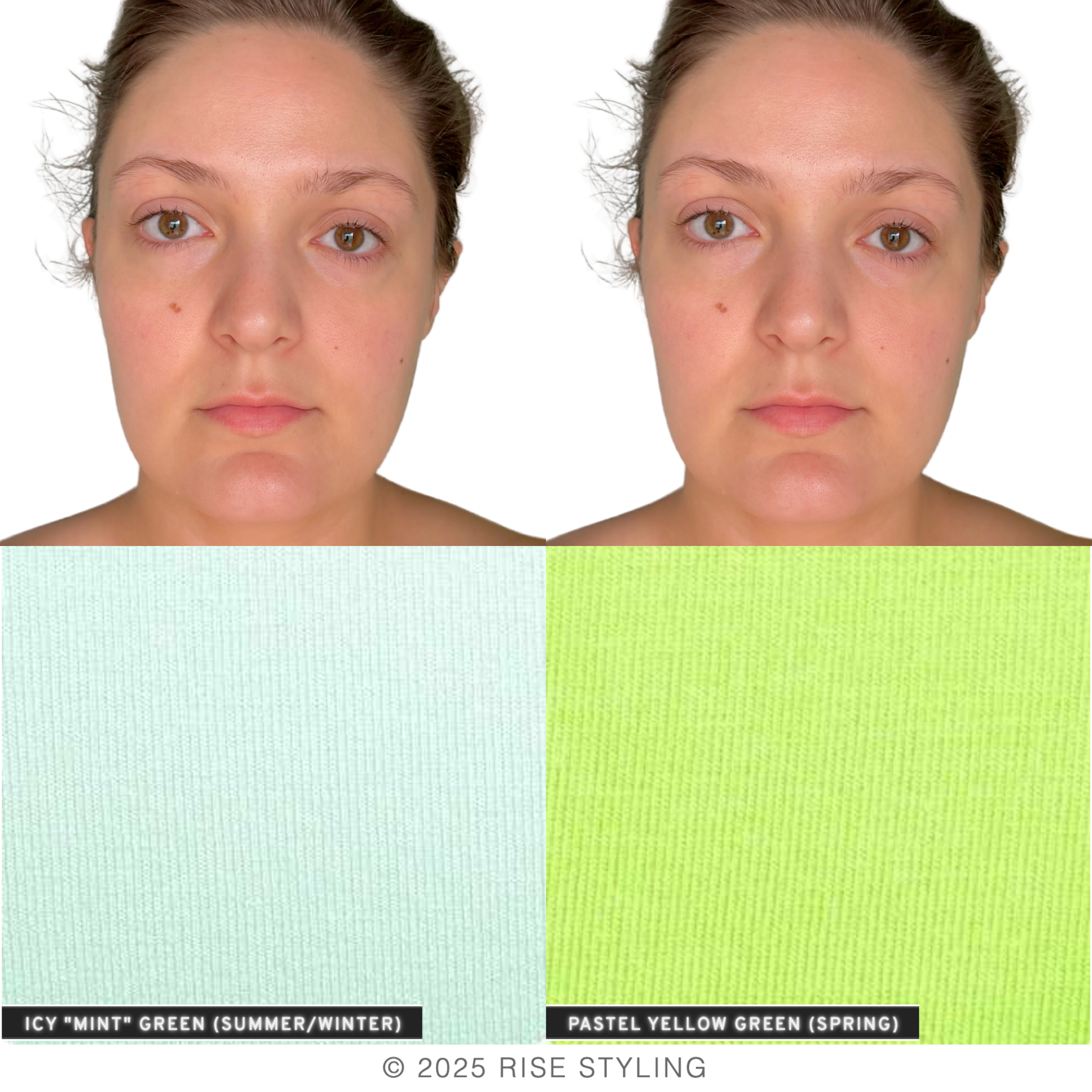
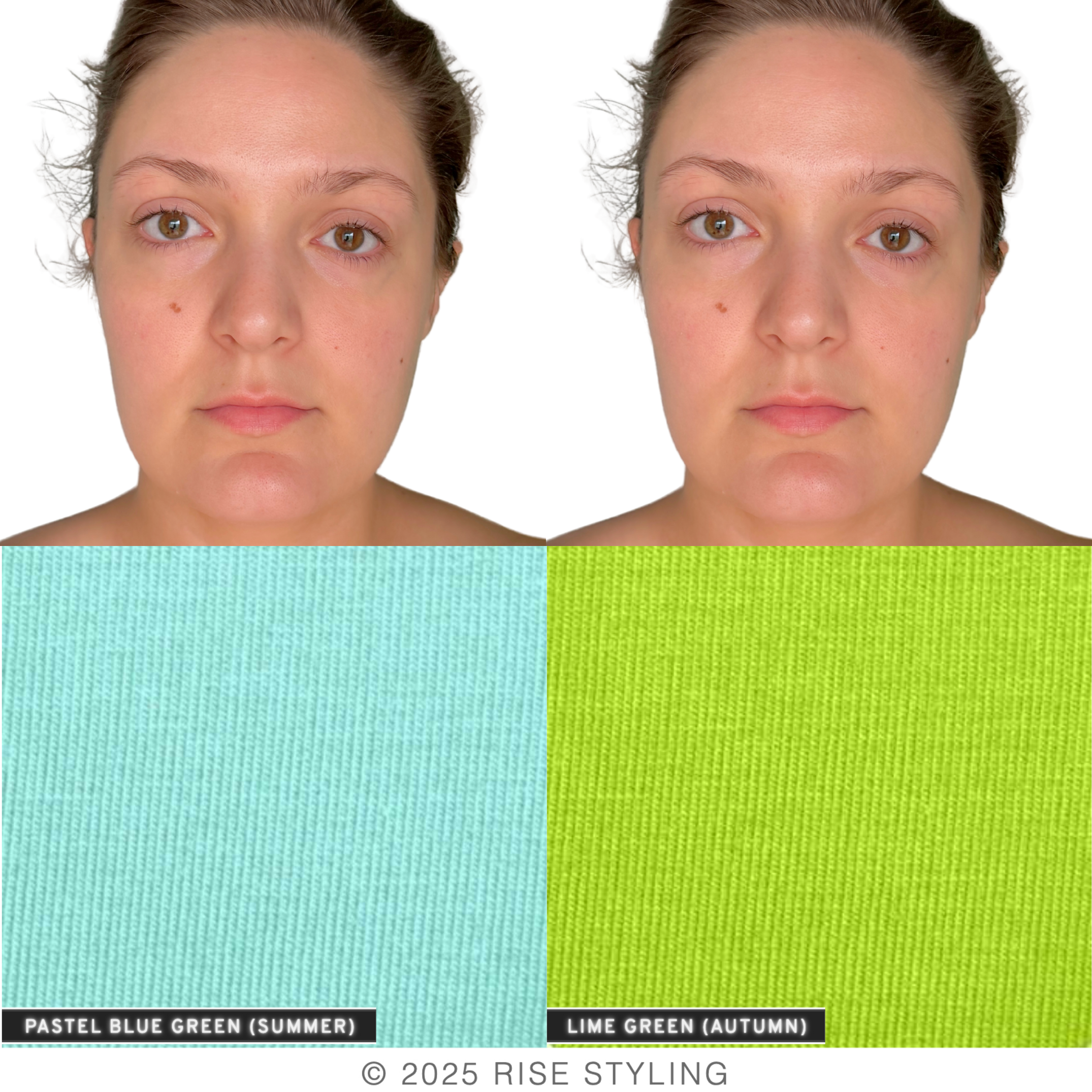
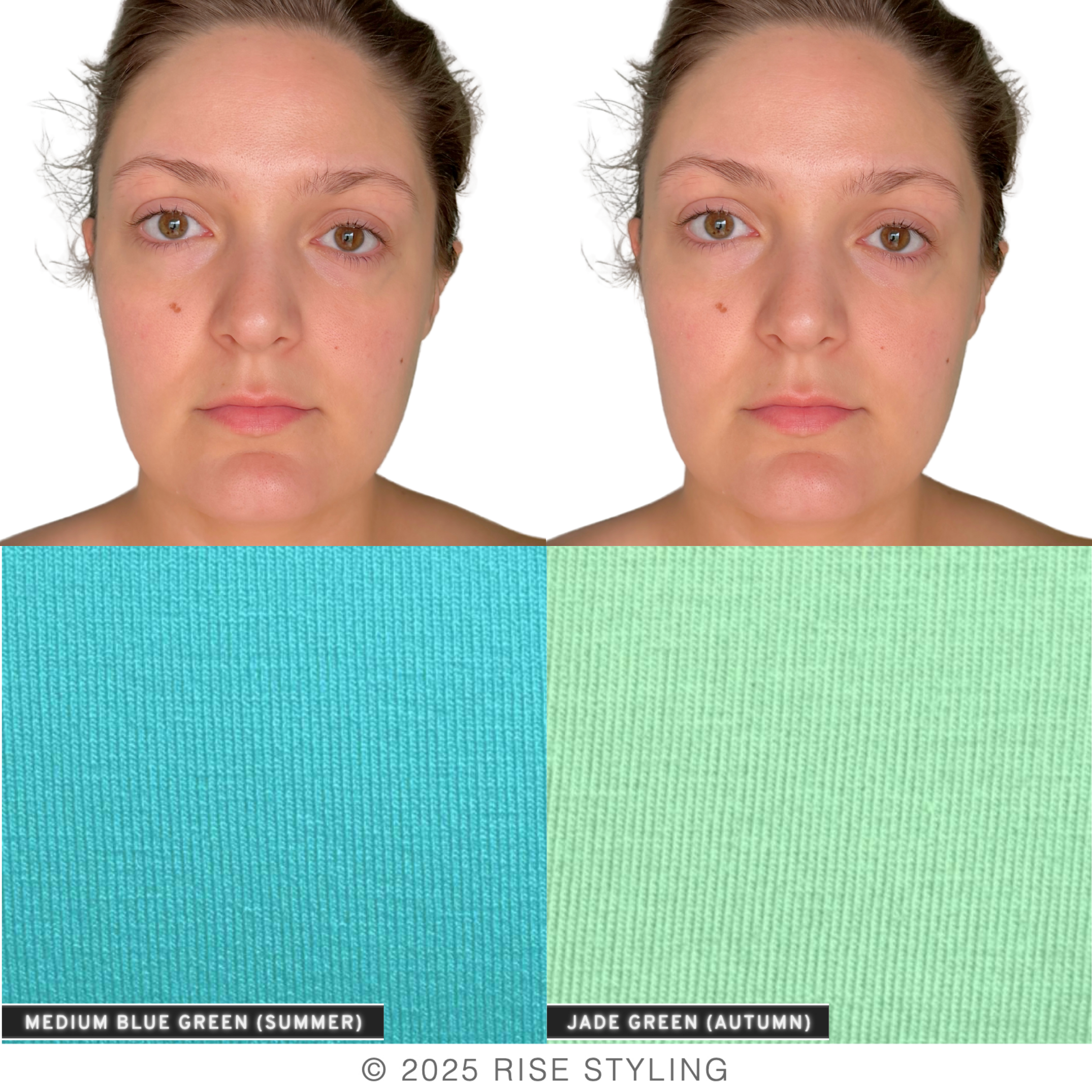
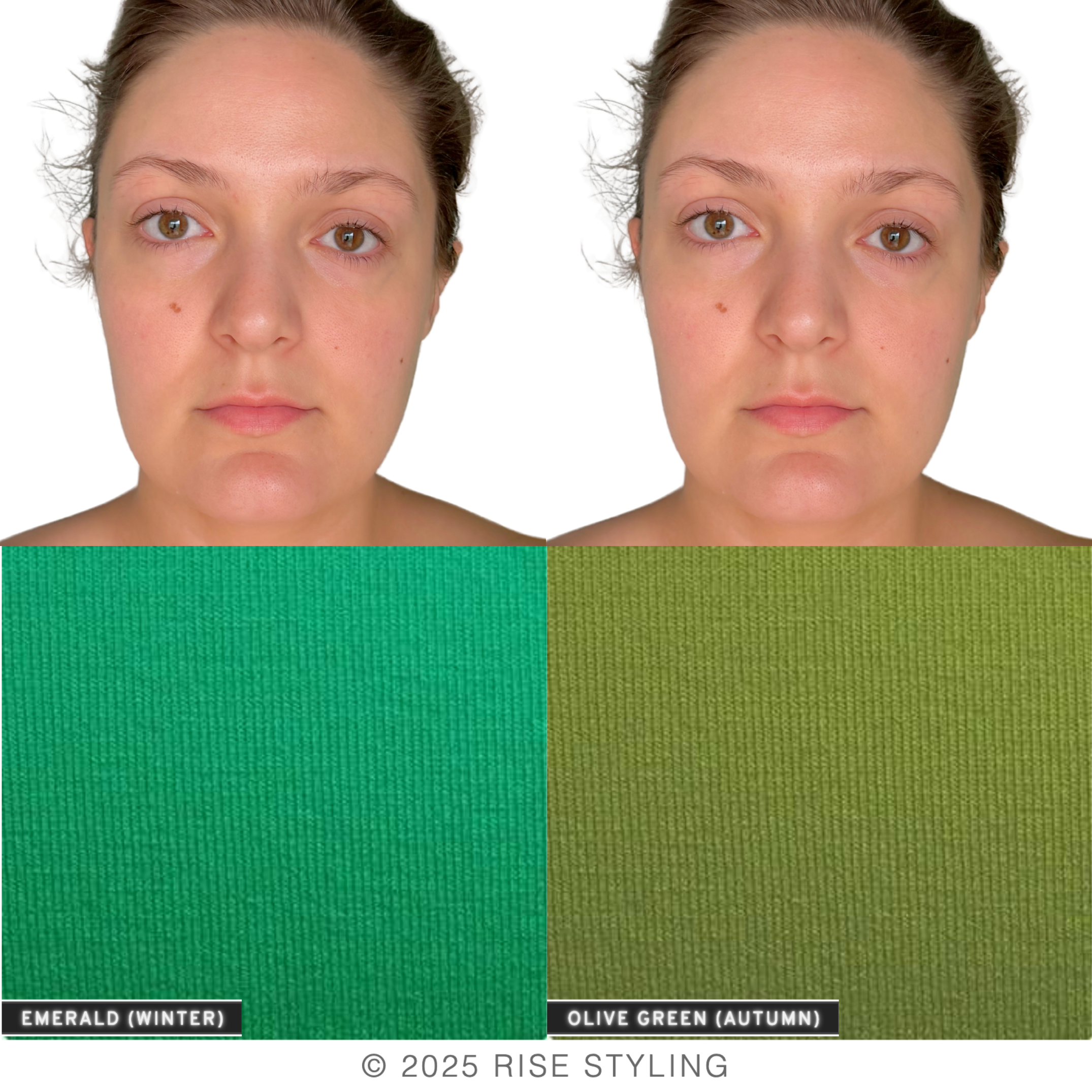
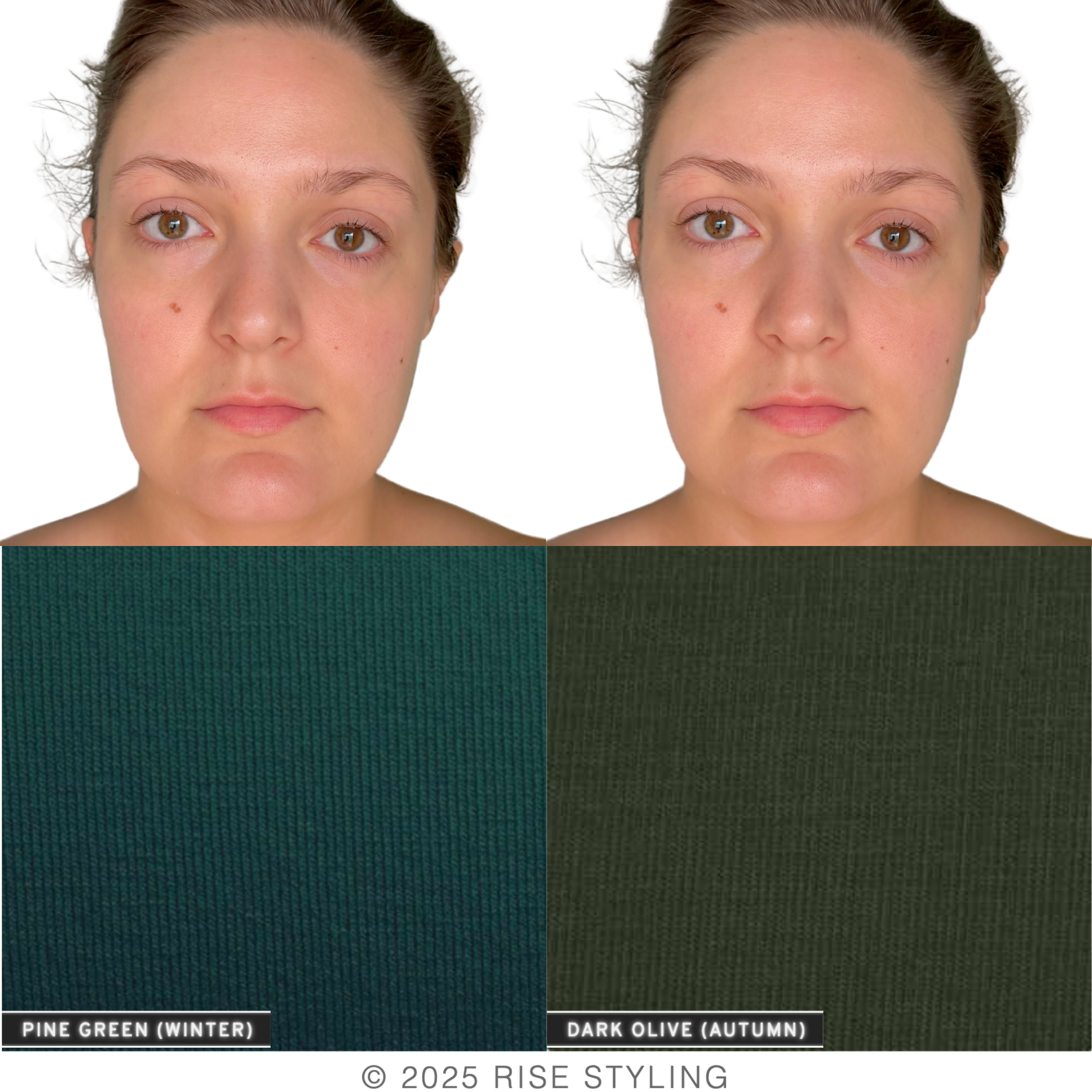
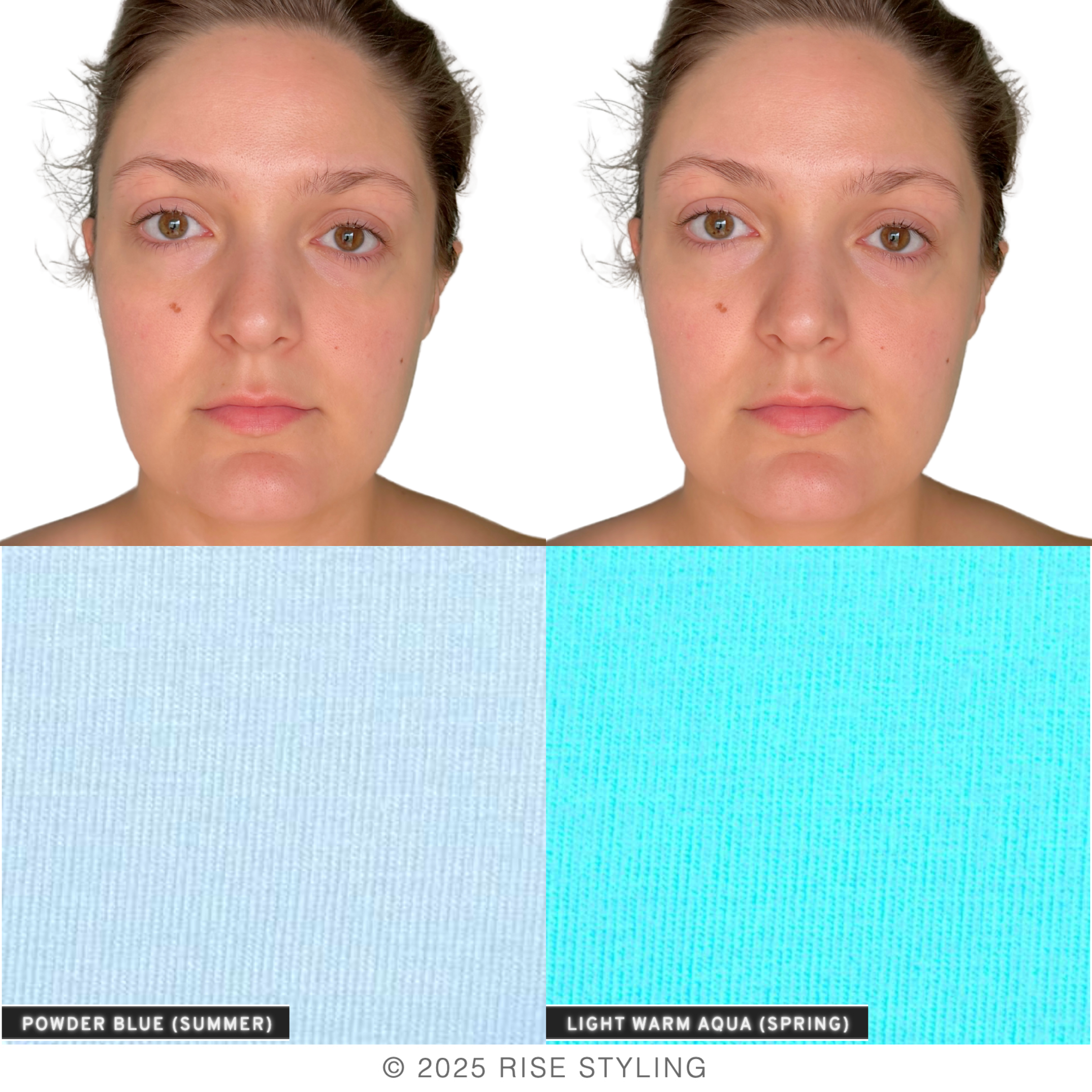
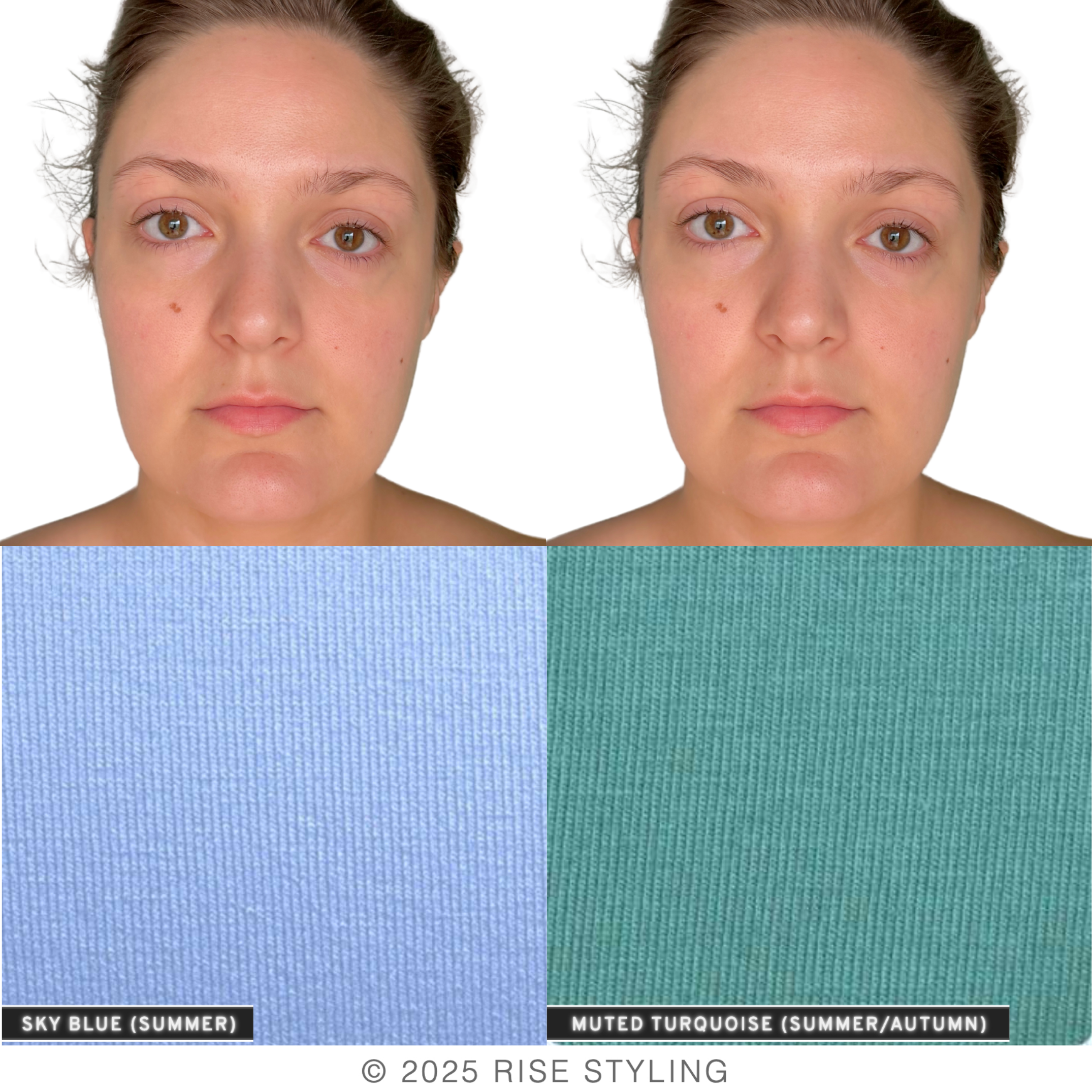
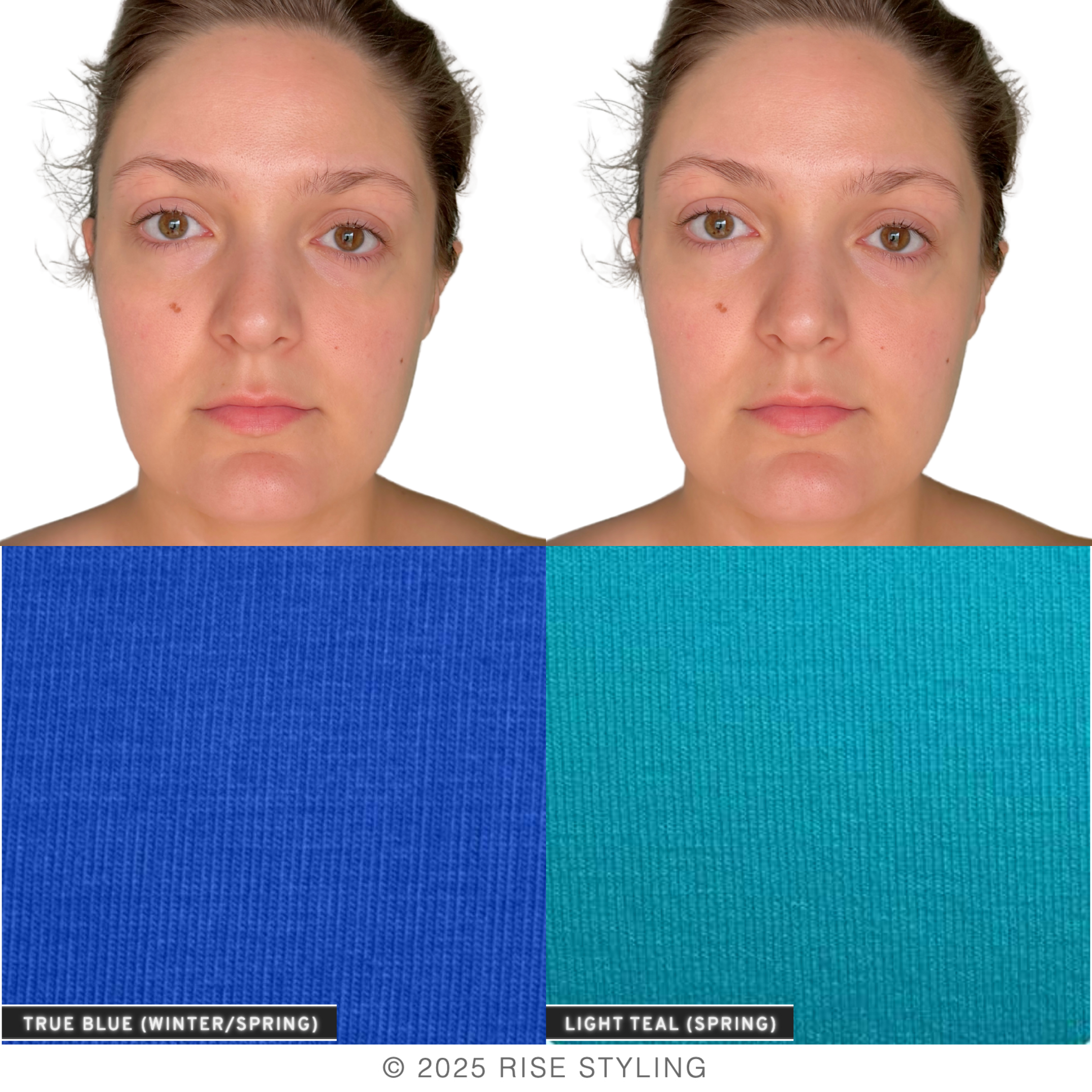
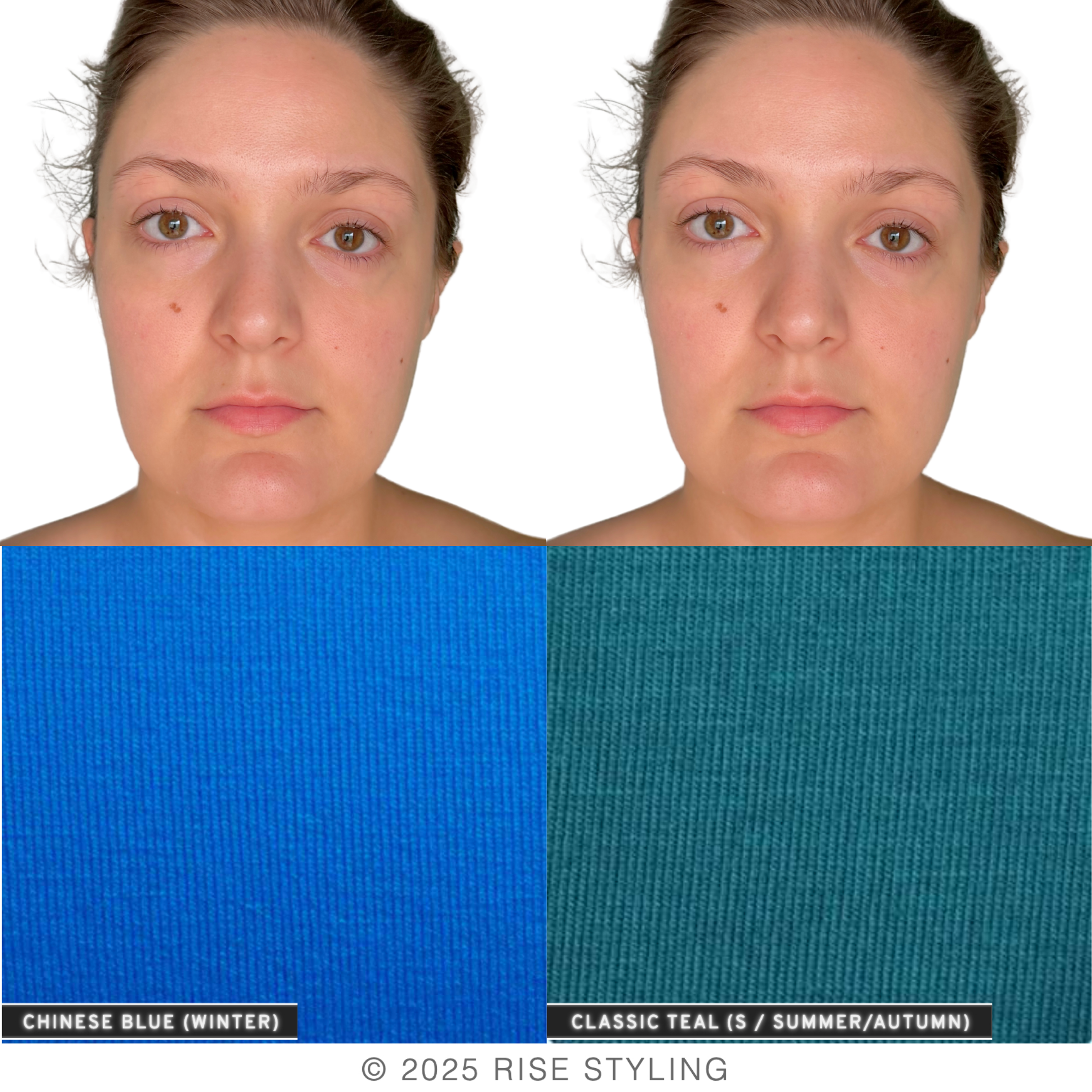
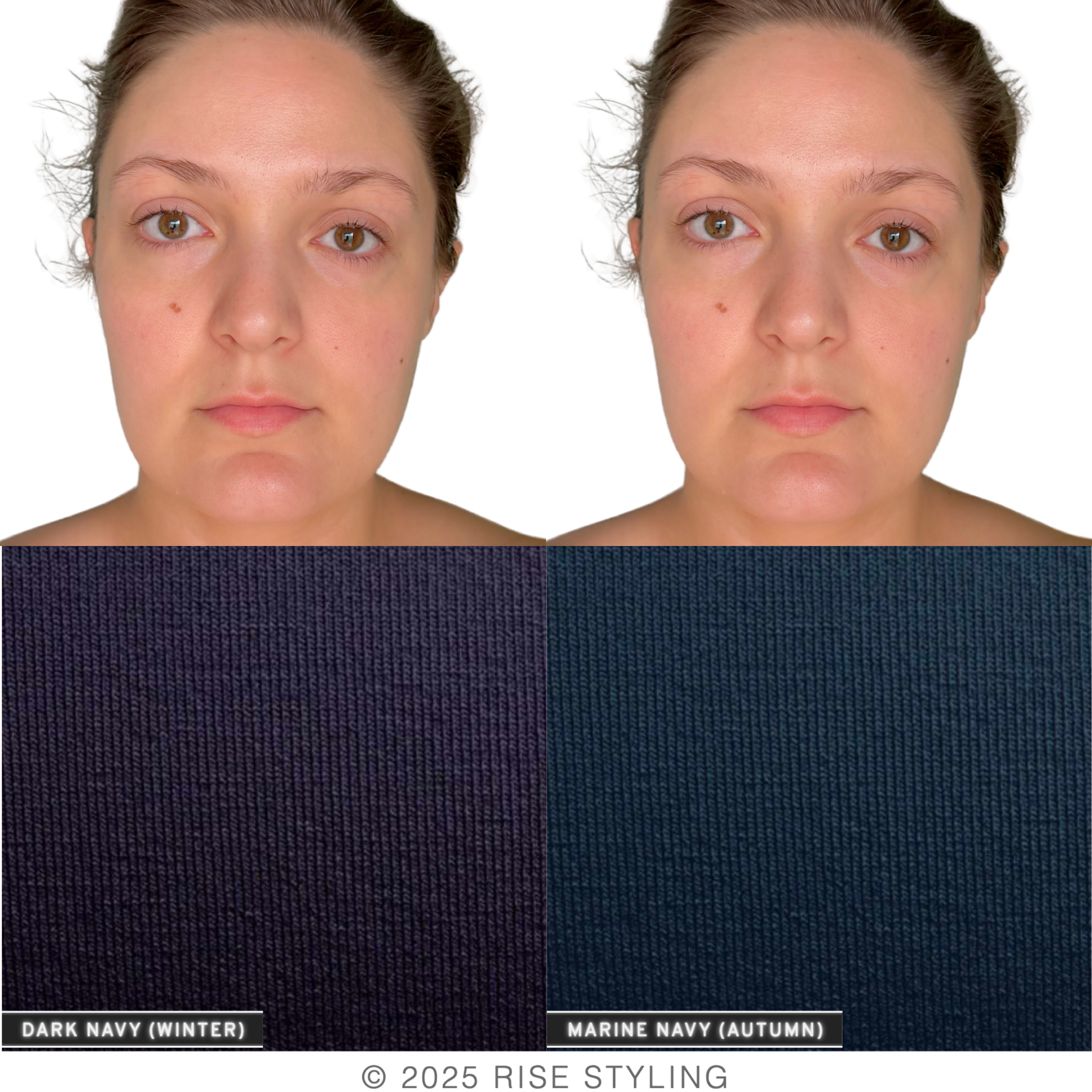
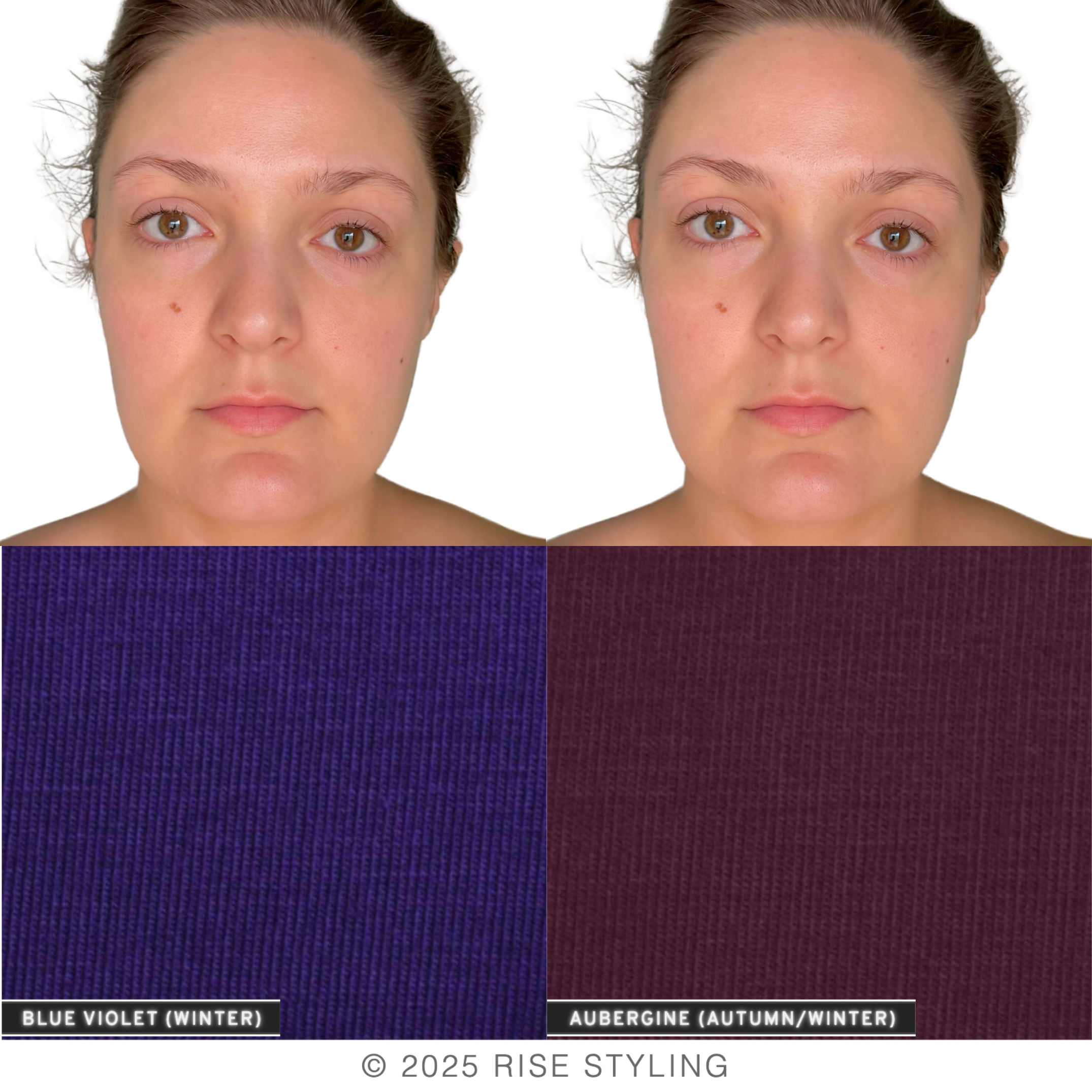
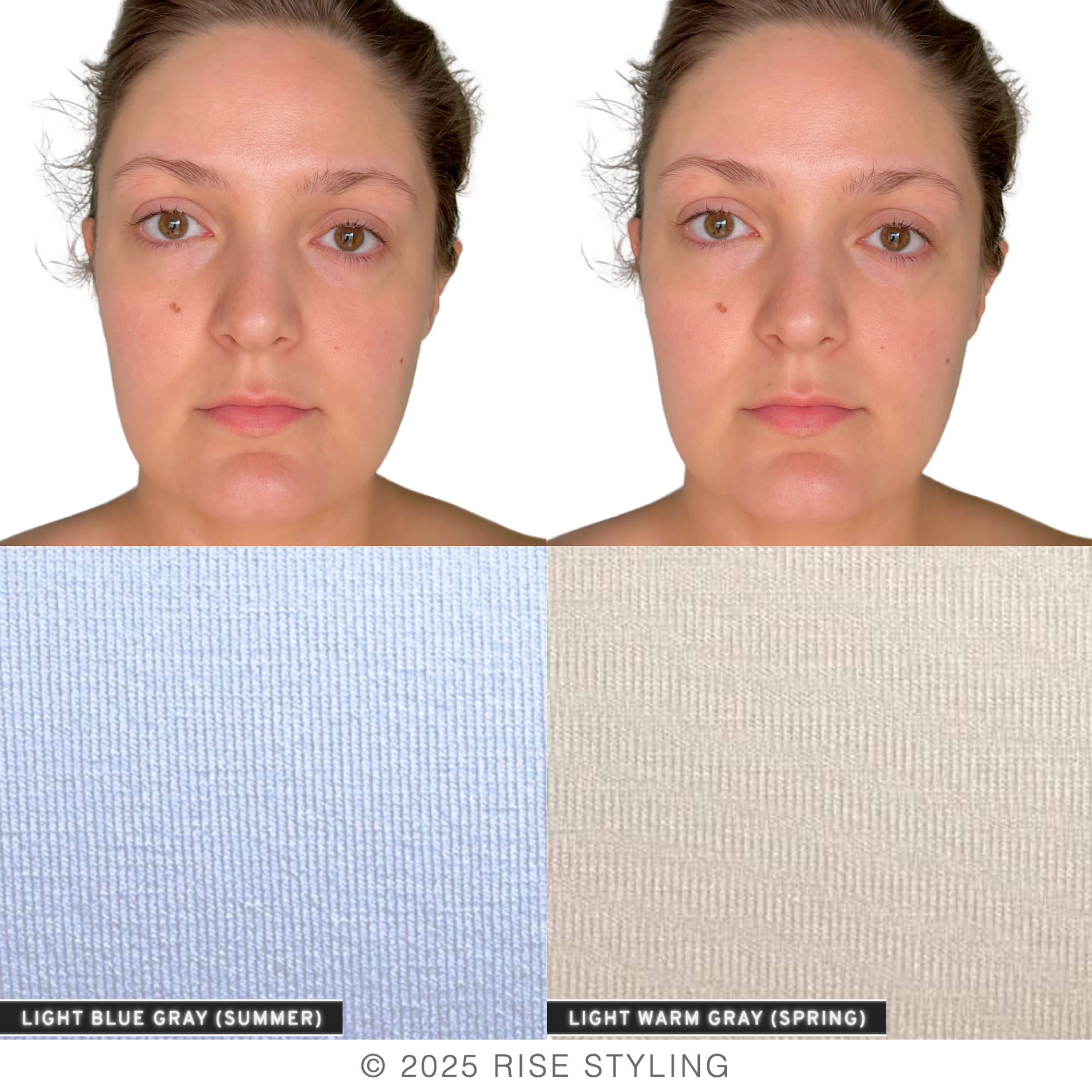
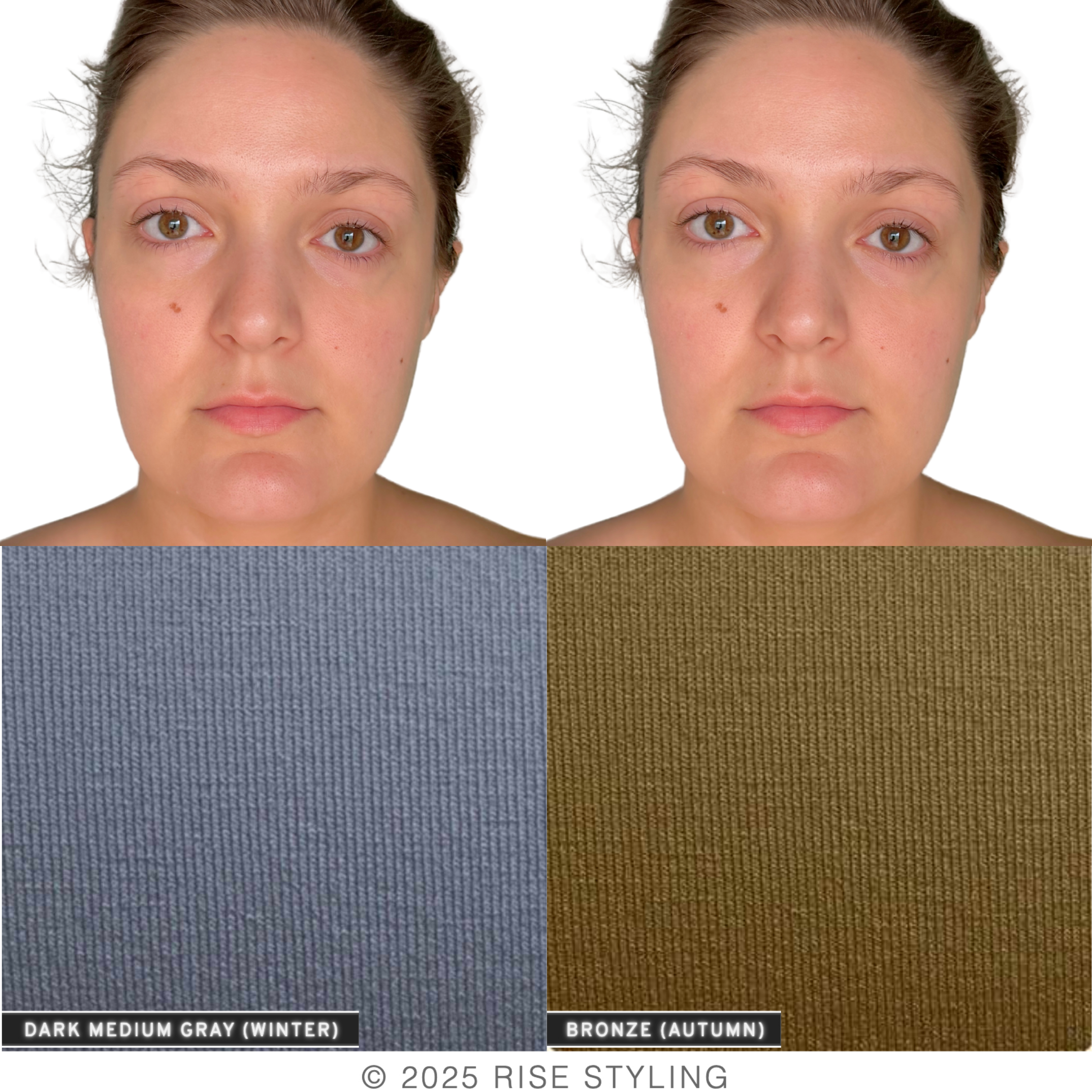
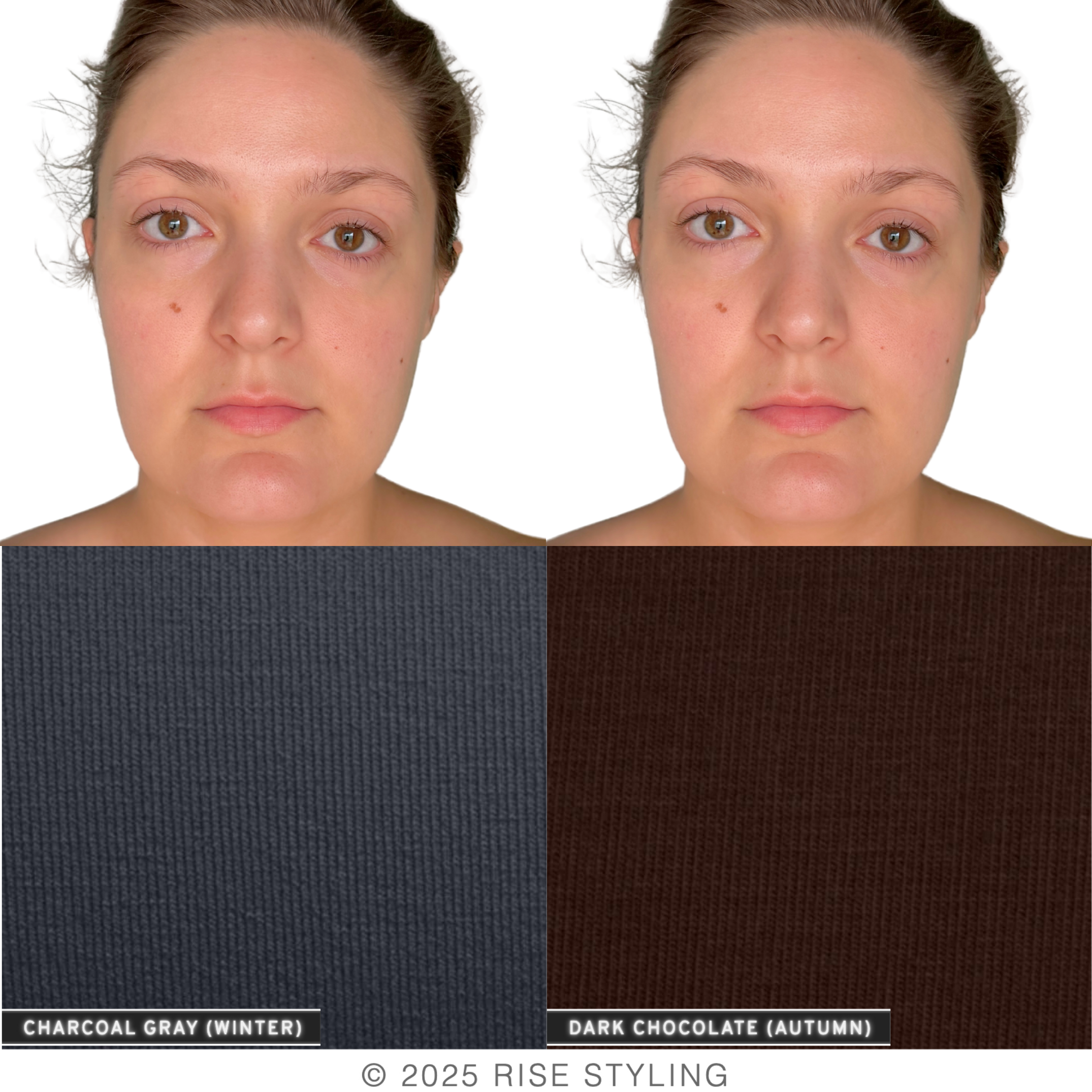
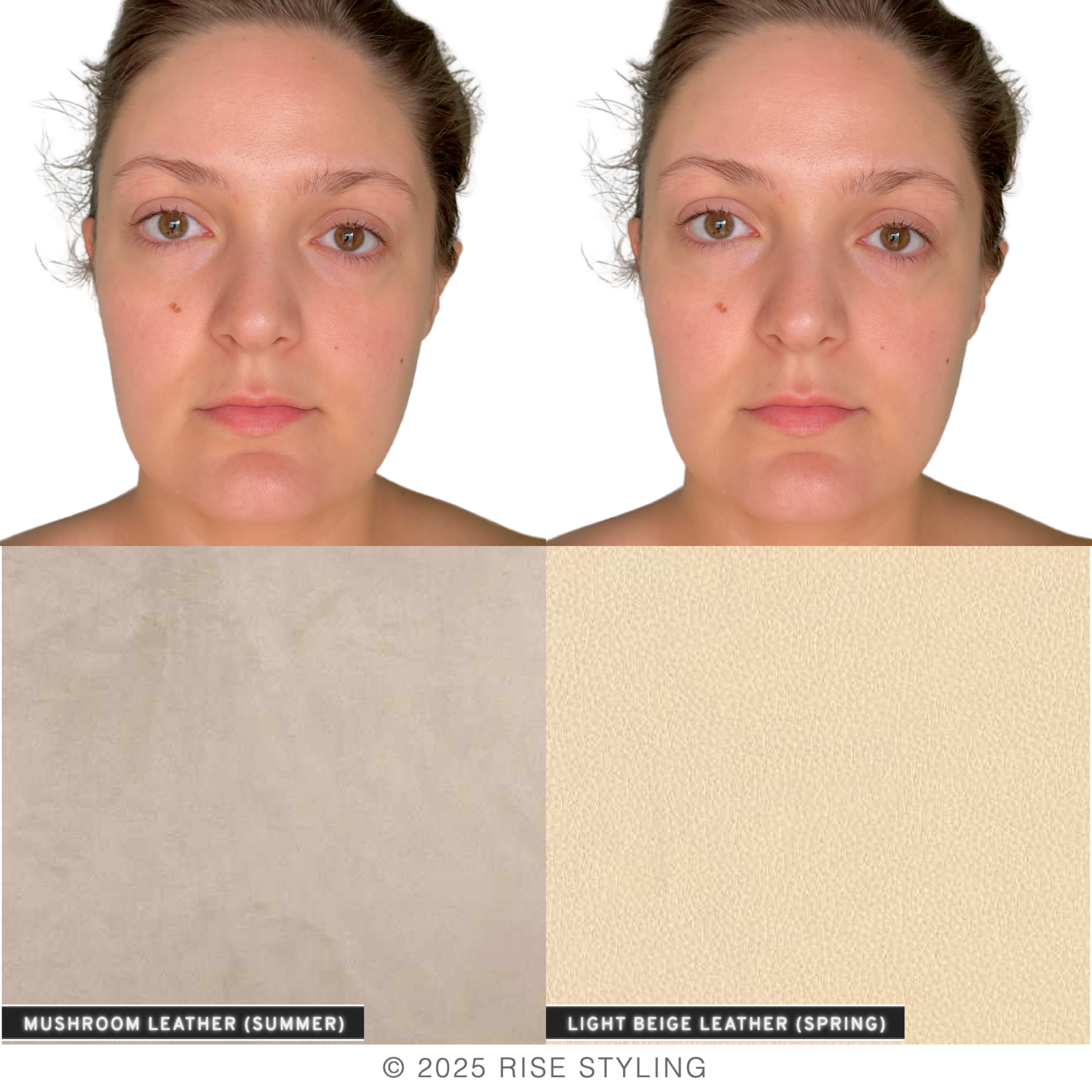
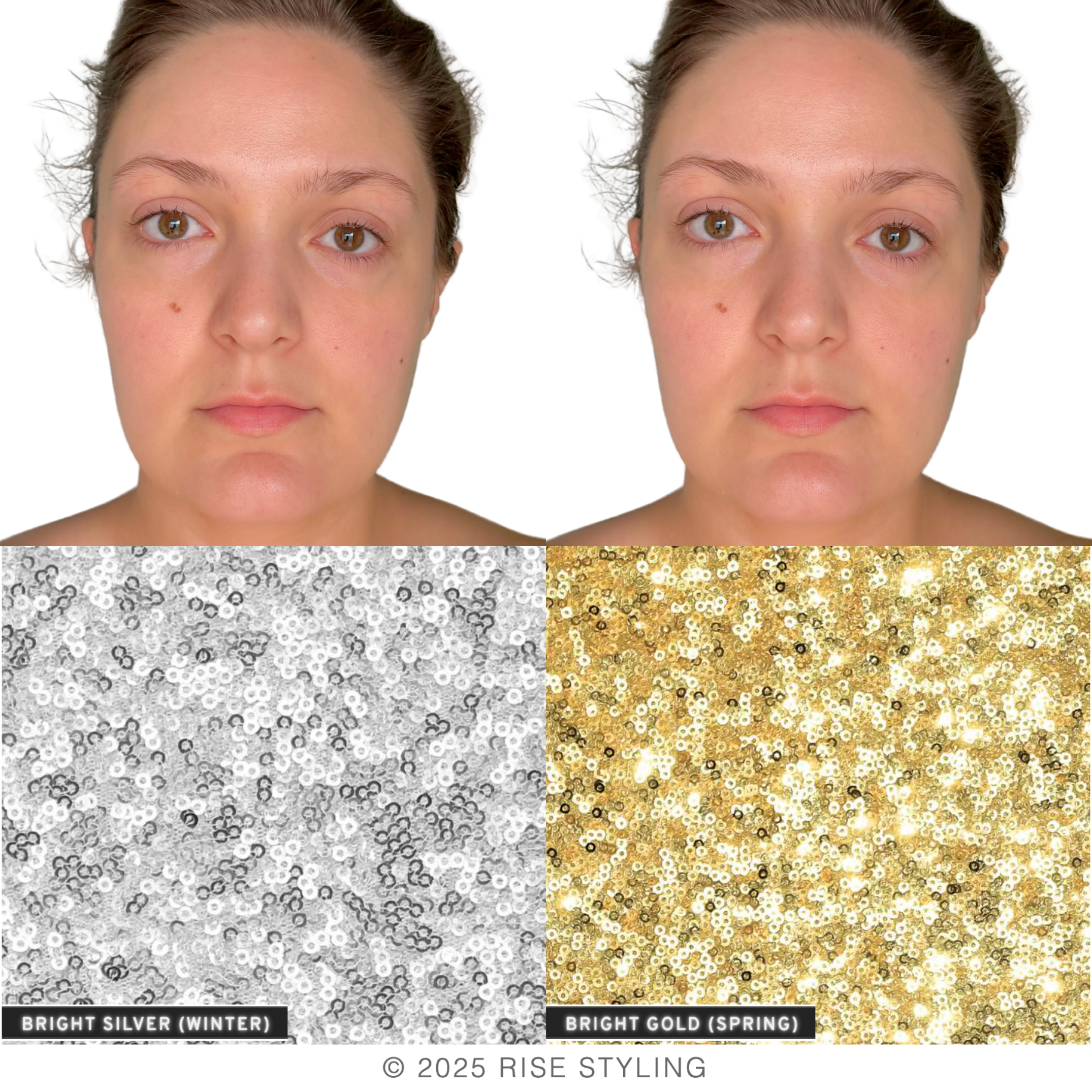
Overall, her undertones are quite WARM. Within each isolated comparison, the majority of the warm colors appear more harmonious with her complexion, shadows are diminished, and her areas of natural pink (lips, cheeks) appear refreshed.
Does that mean that cool-leaning colors cannot work for her, ever? Not at all!
Your season has three main criteria: Temperature (warm or cool), Value (light or deep), and Chroma (soft or bright). For any color to qualify for its season, it must satisfy only two out of the three criteria.
Therefore, even the warm seasons will contain some “cool” colors, as long as they are LIGHT & BRIGHT (Spring) or SOFT & DEEP (Autumn).
The purpose of this first test in your analysis is to first reveal which temperature of colors are BETTER than fine (warm or cool).
Now that we know Jessica is WARM, we can eliminate two of the four parent seasons for her:
WINTER (cool)
SPRING (warm)
SUMMER (cool)
AUTUMN (warm)
In the next test, we aim to find out if she needs warm AND bright (Spring) or warm AND soft (Autumn). This is how we determine her parent season!
In the images below, we are comparing all WARM colors, varying only the CHROMA (saturation) within each comparison. Does Jessica need lower chroma (soft, Autumn) or higher chroma (bright, Spring)?
Slide through to view Jessica alternating between wearing Spring colors (left) and Autumn colors (right):
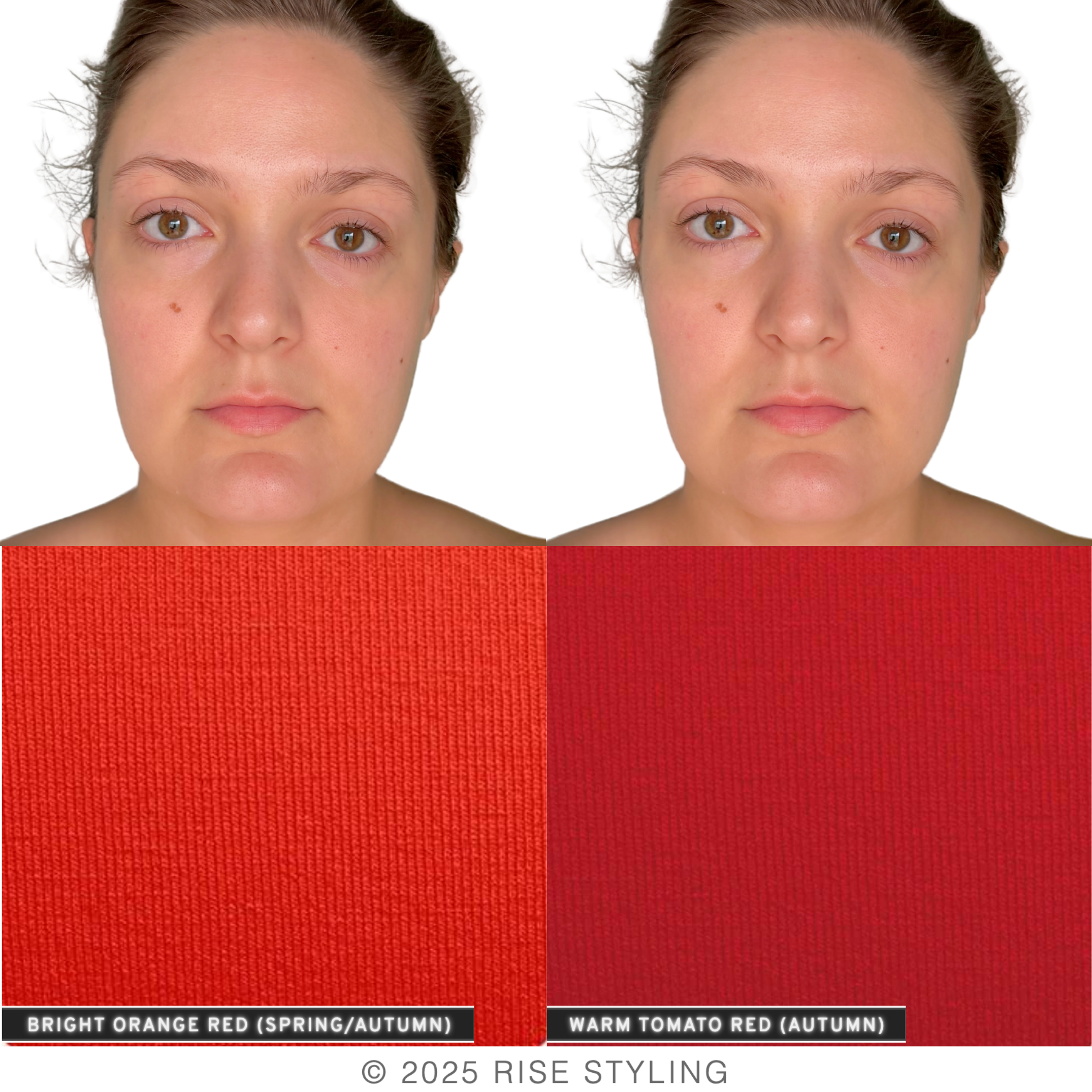
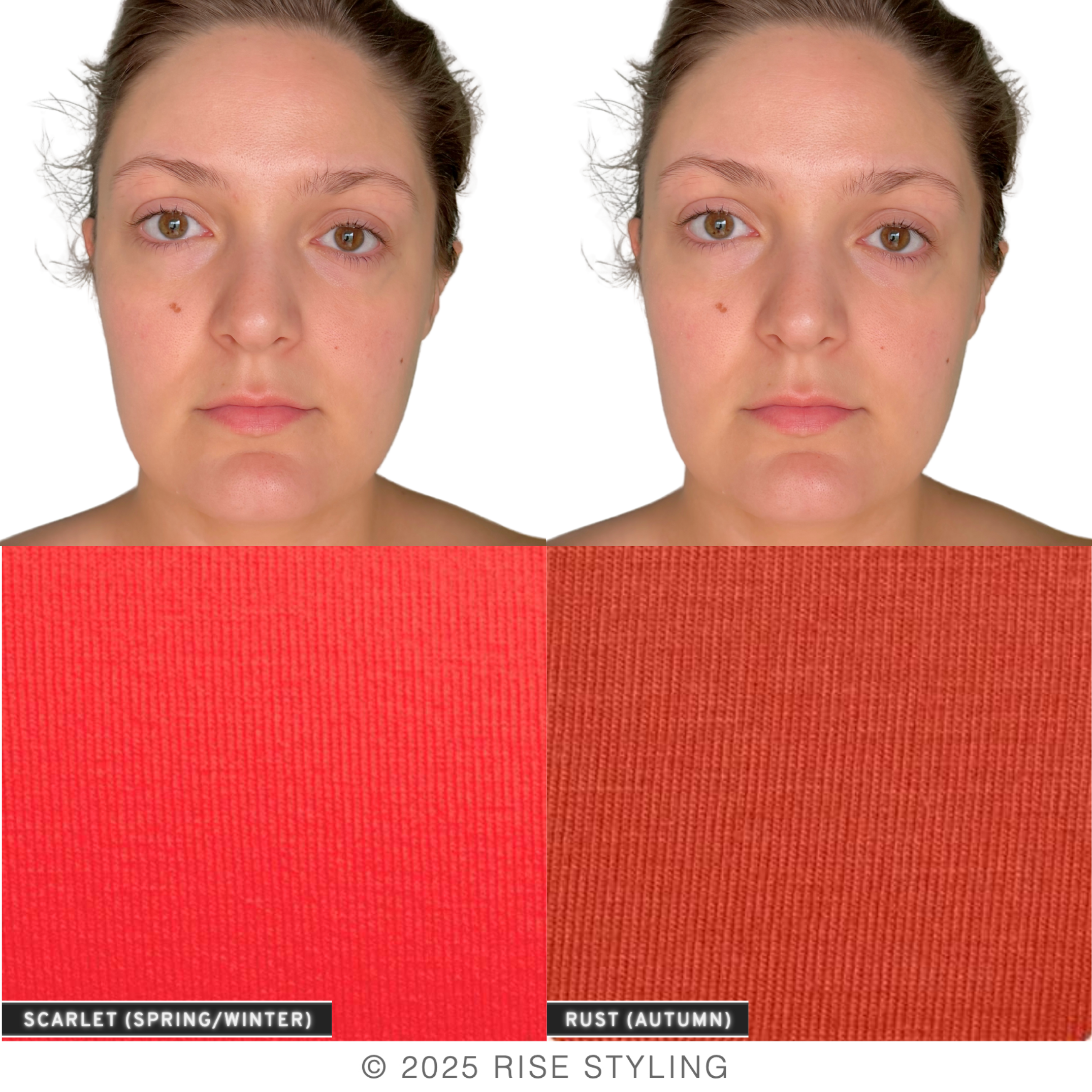
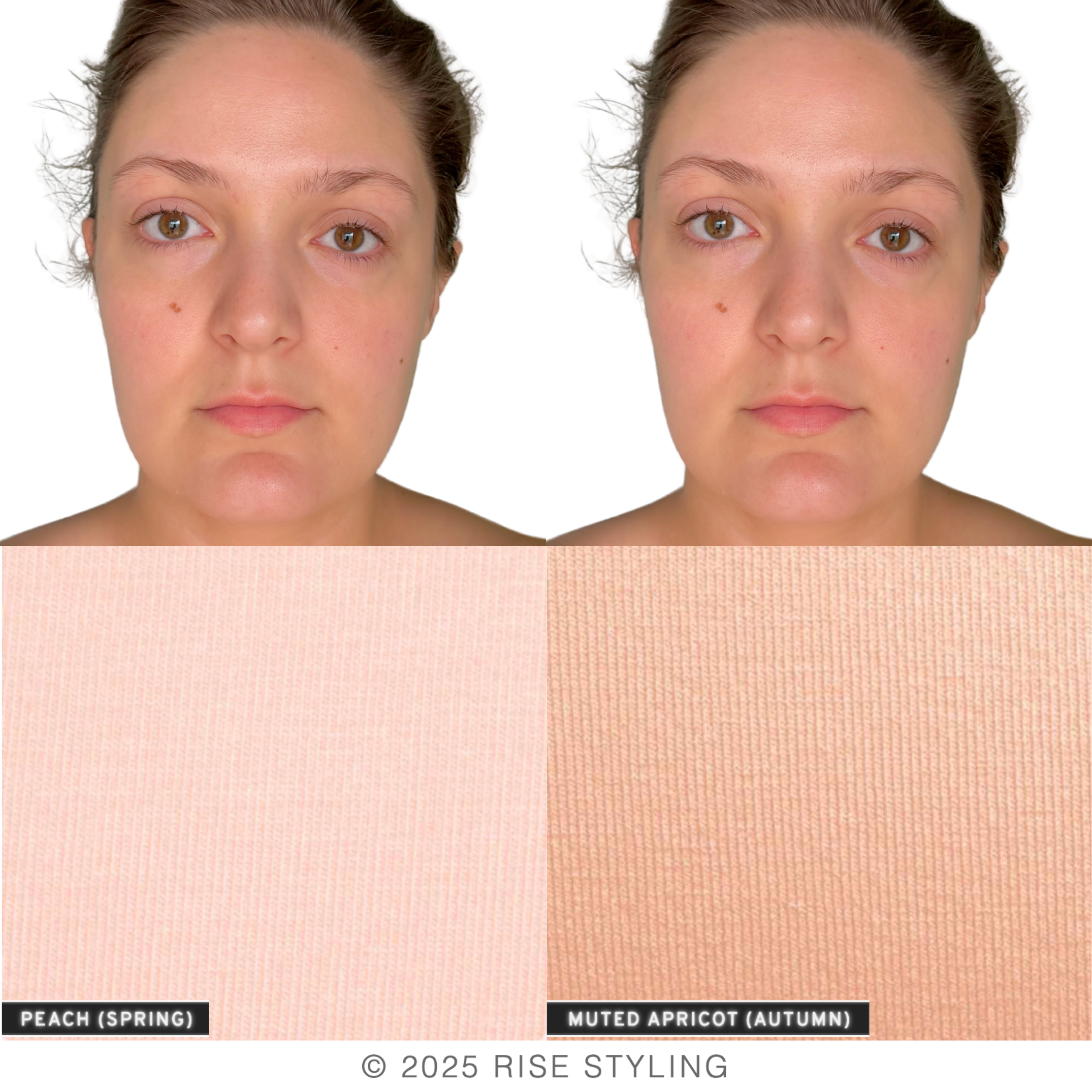
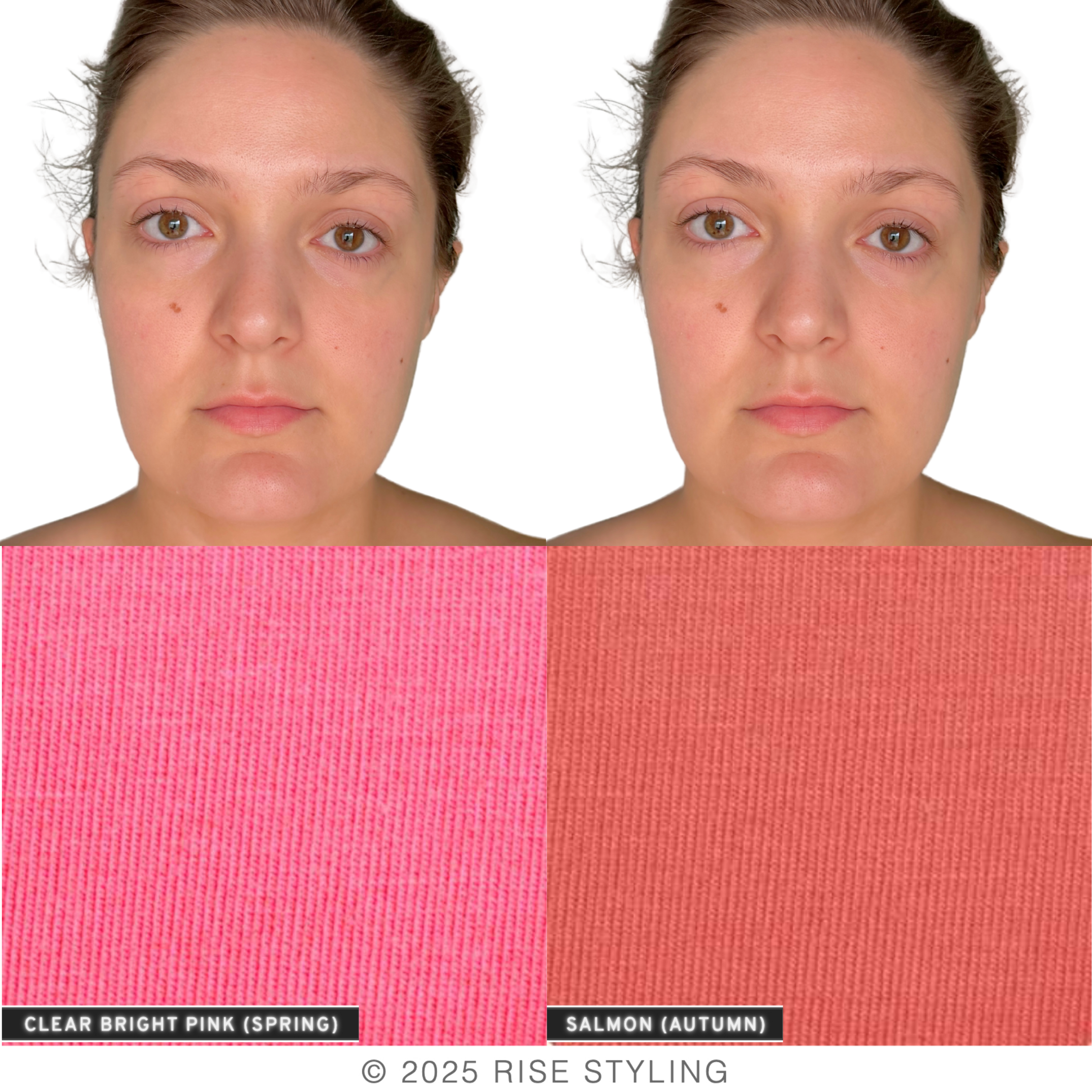
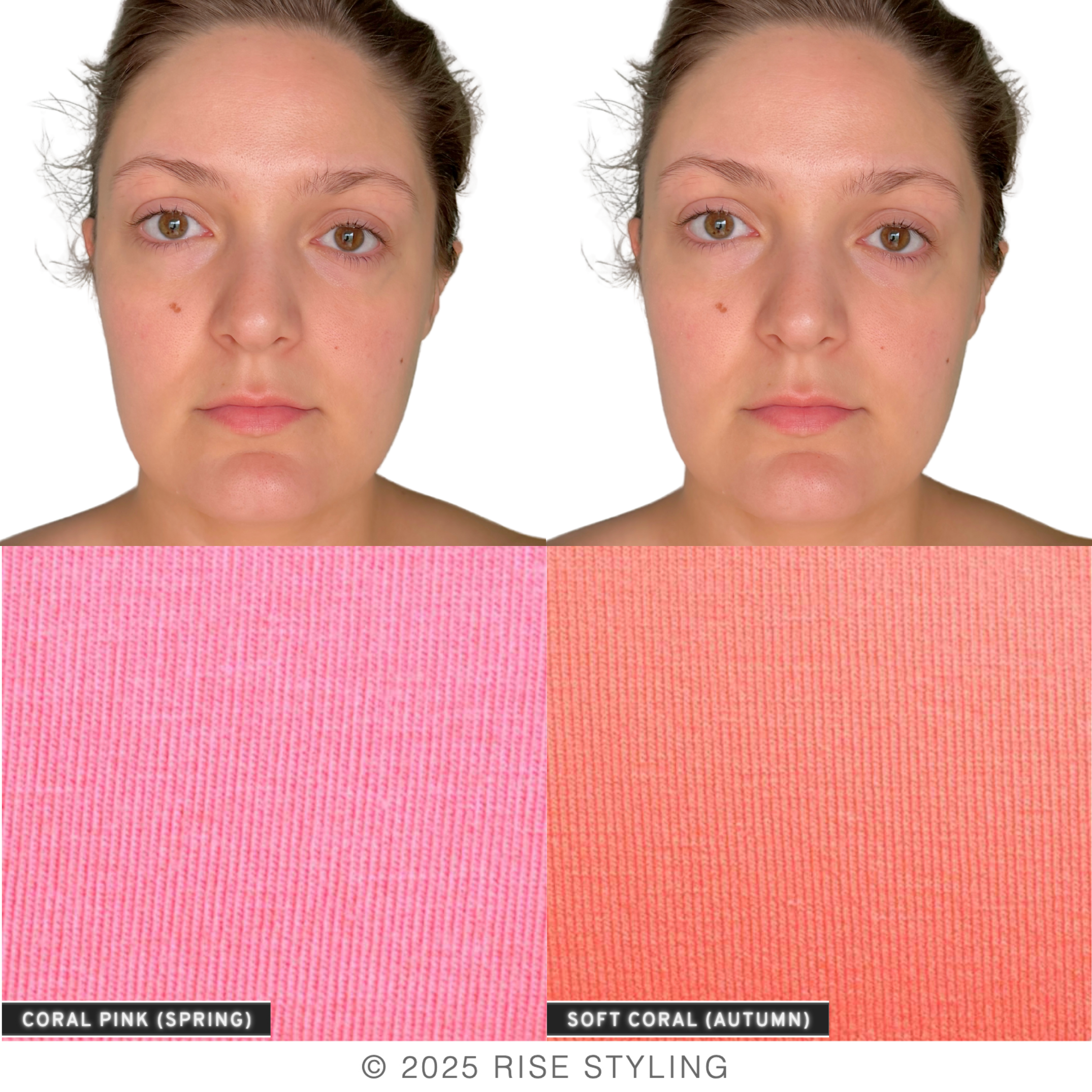
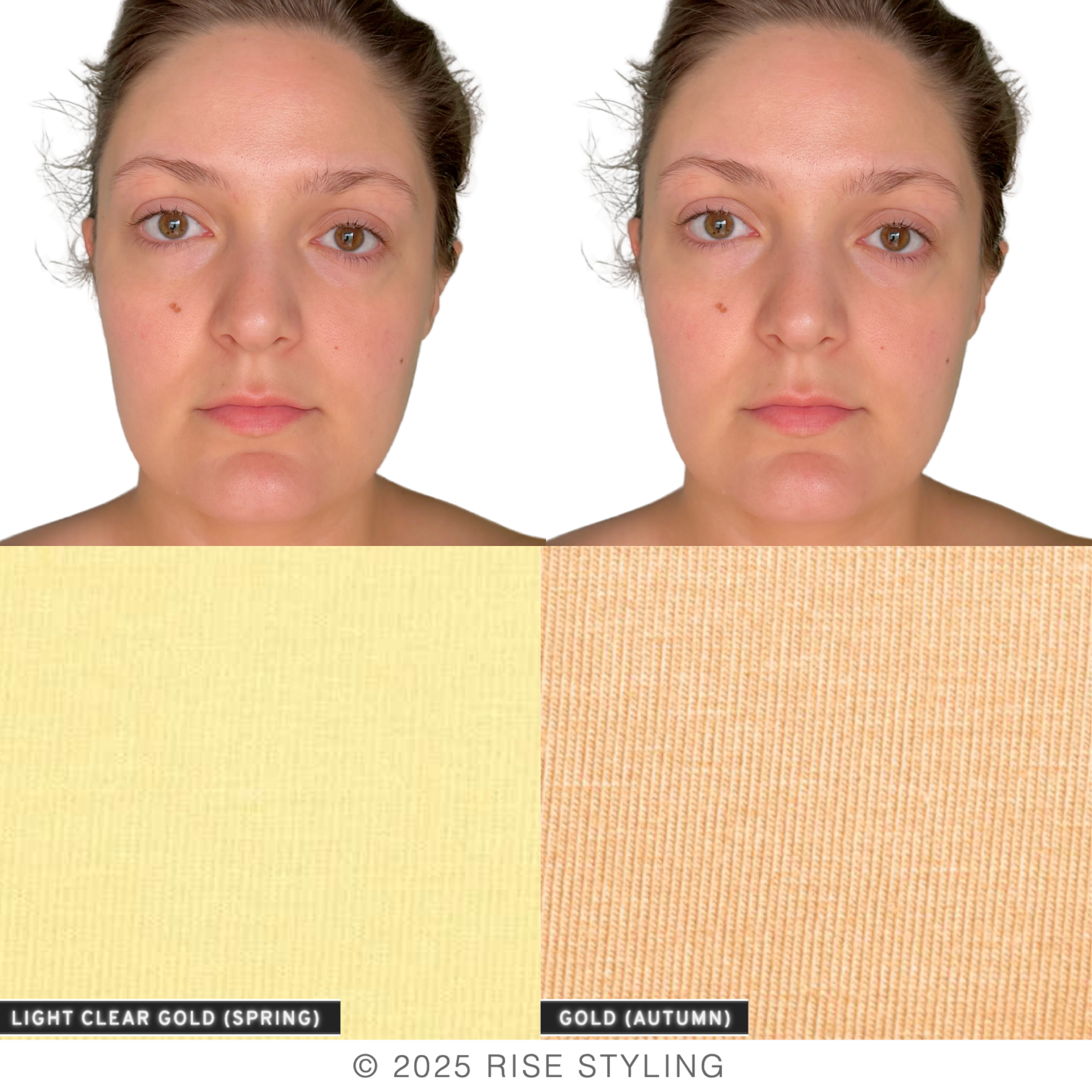
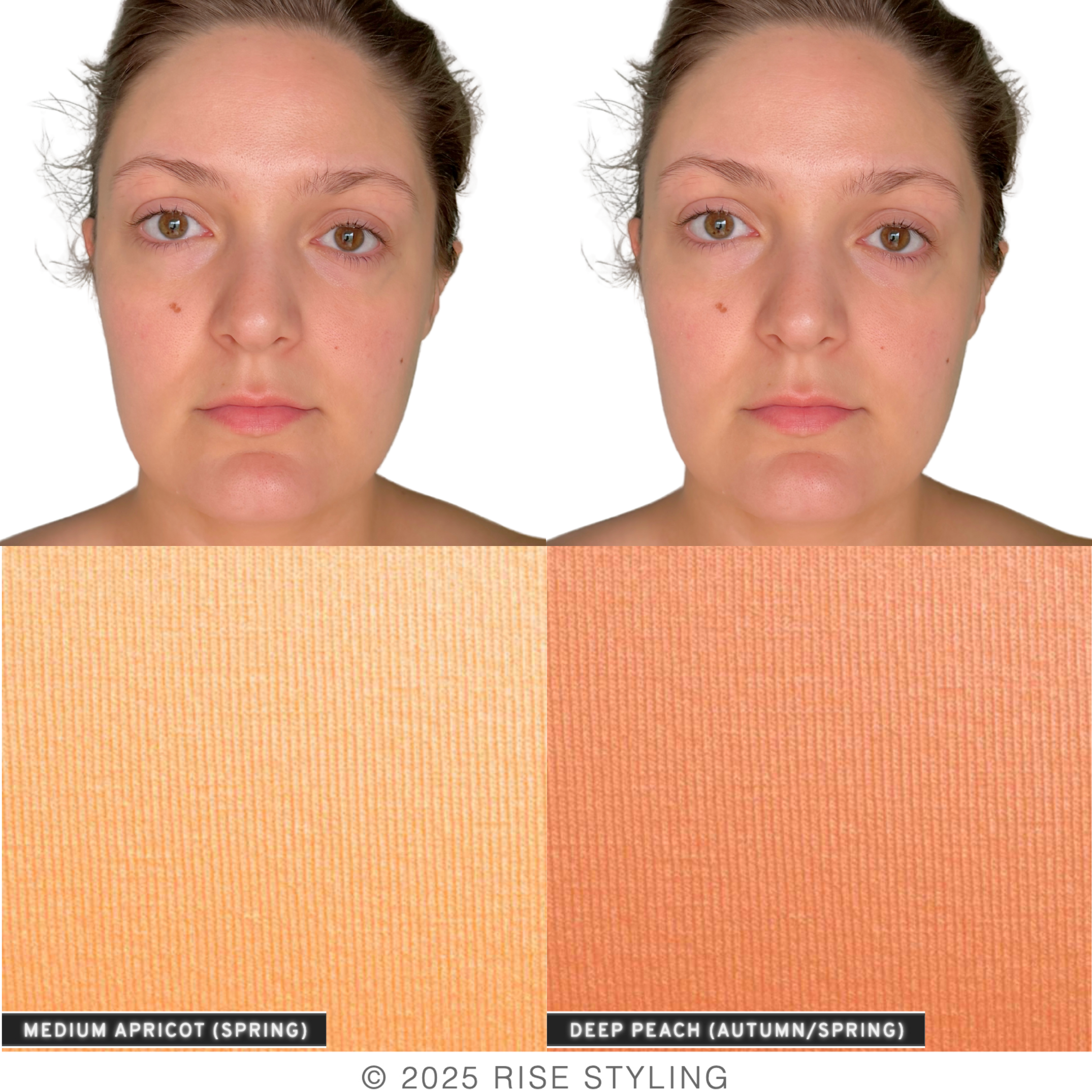
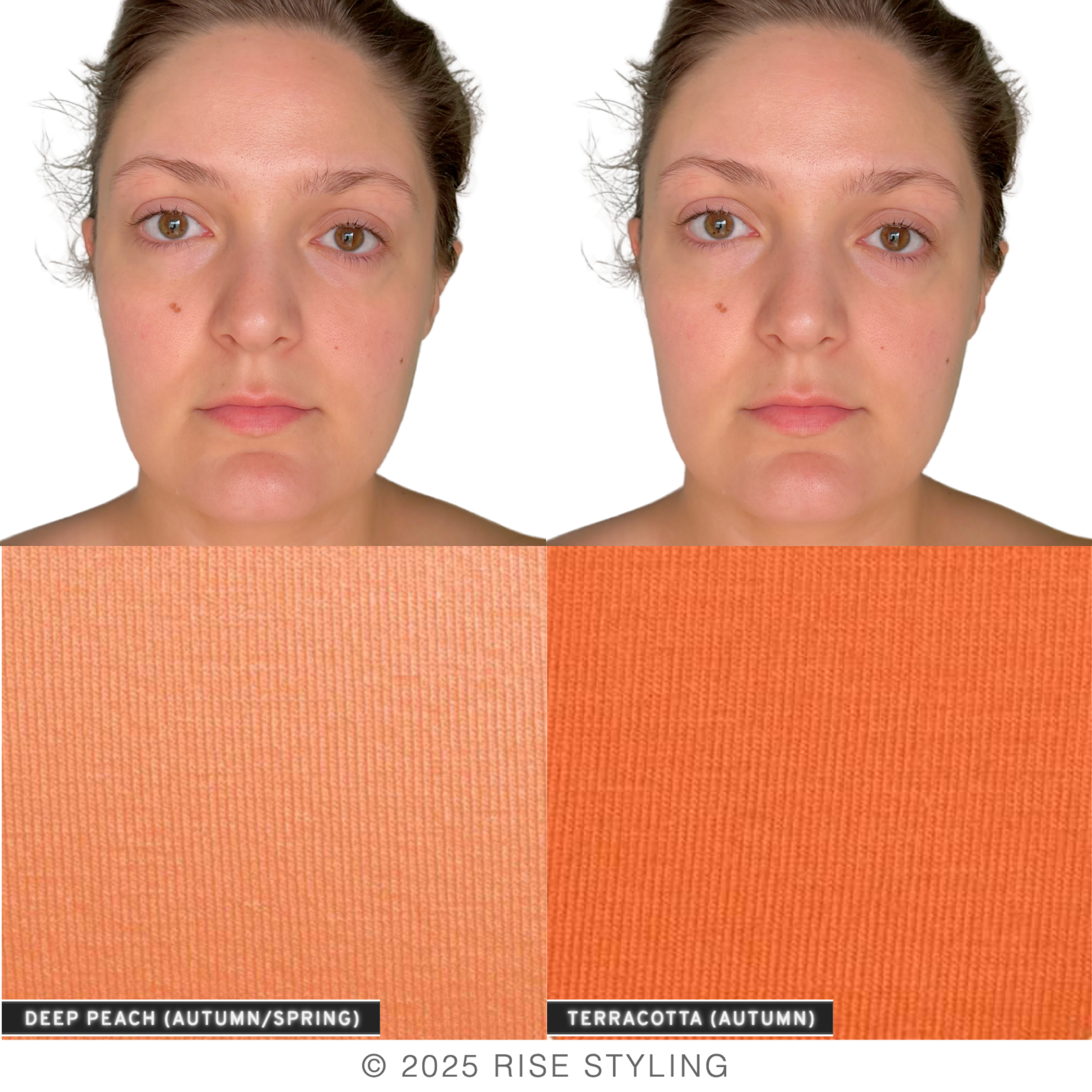
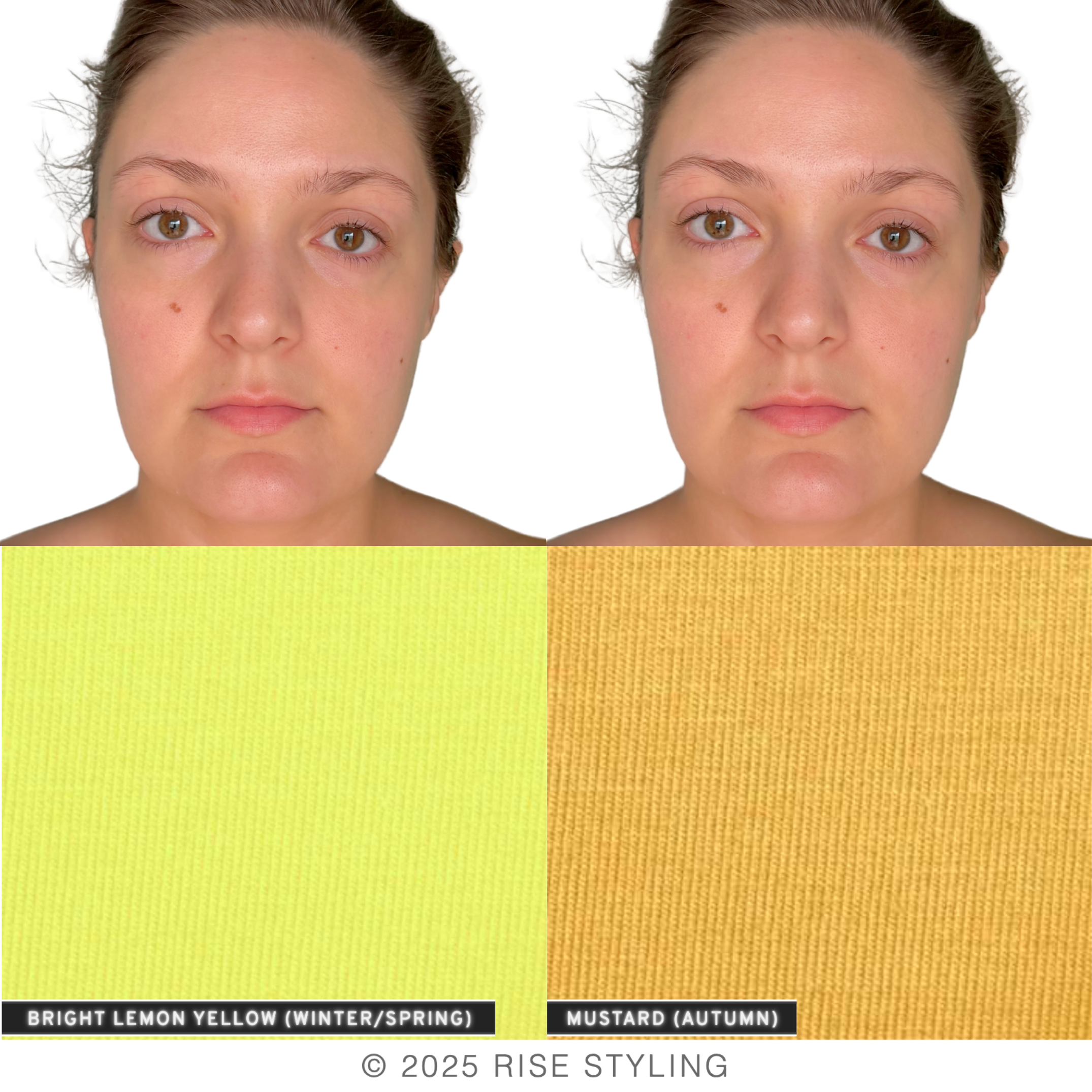
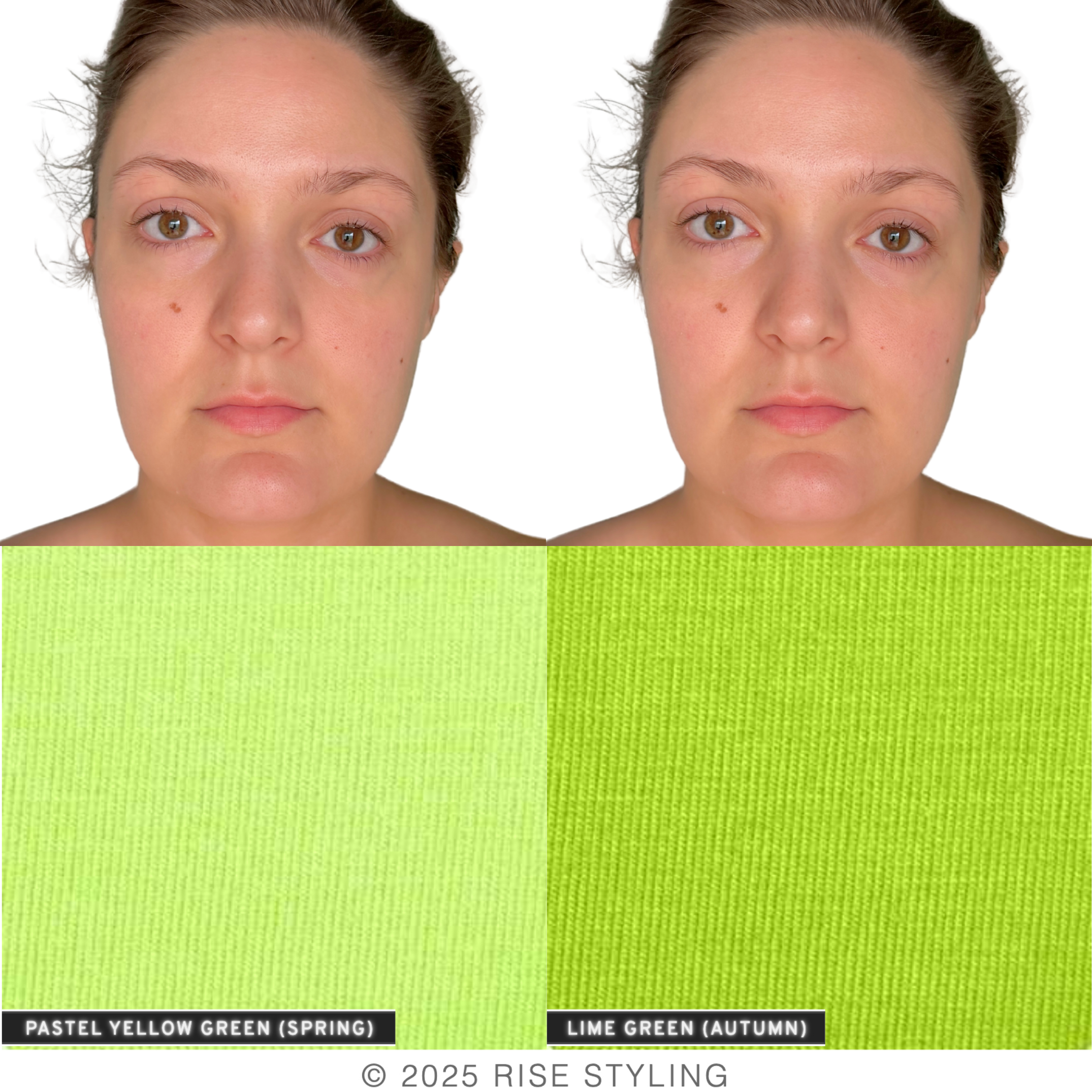
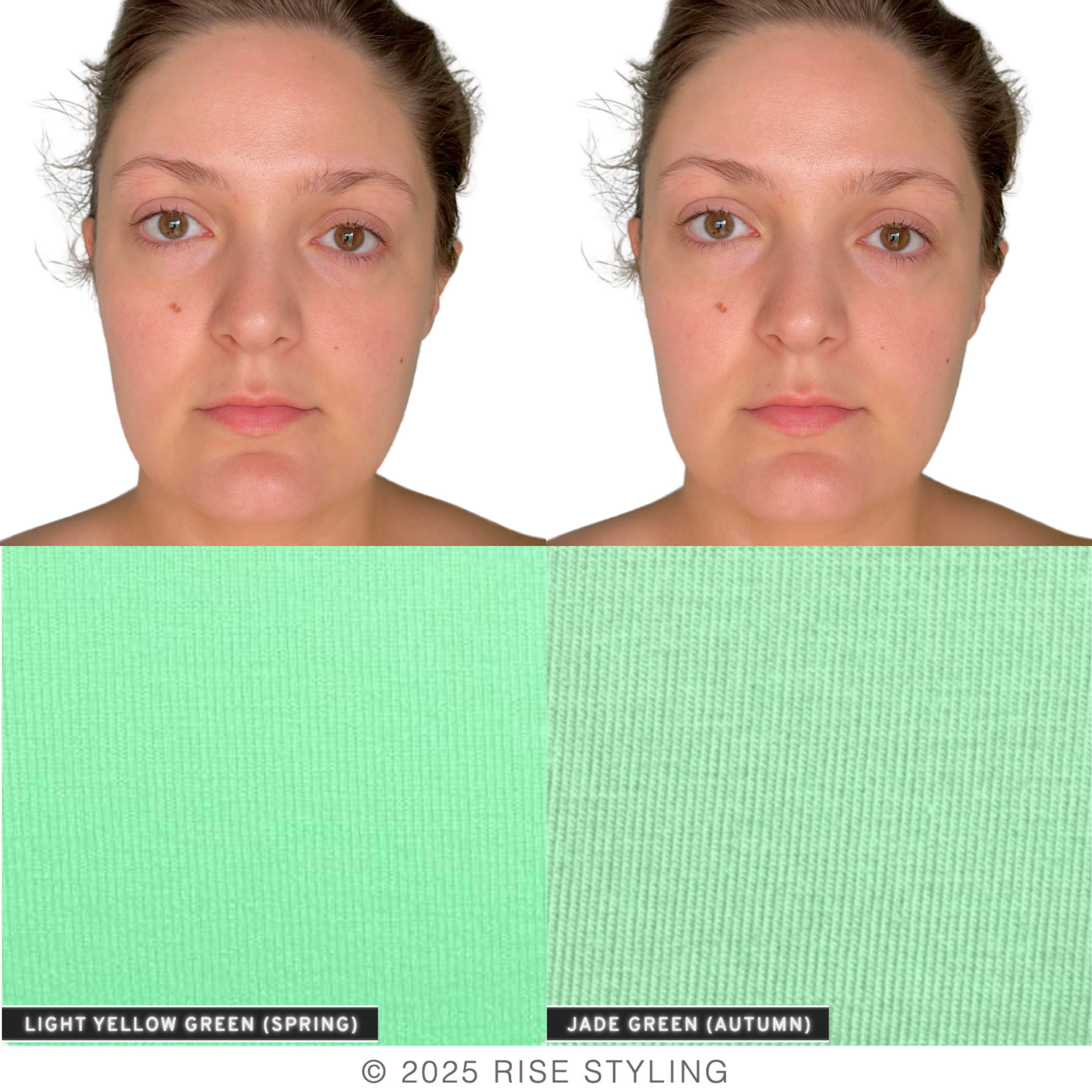
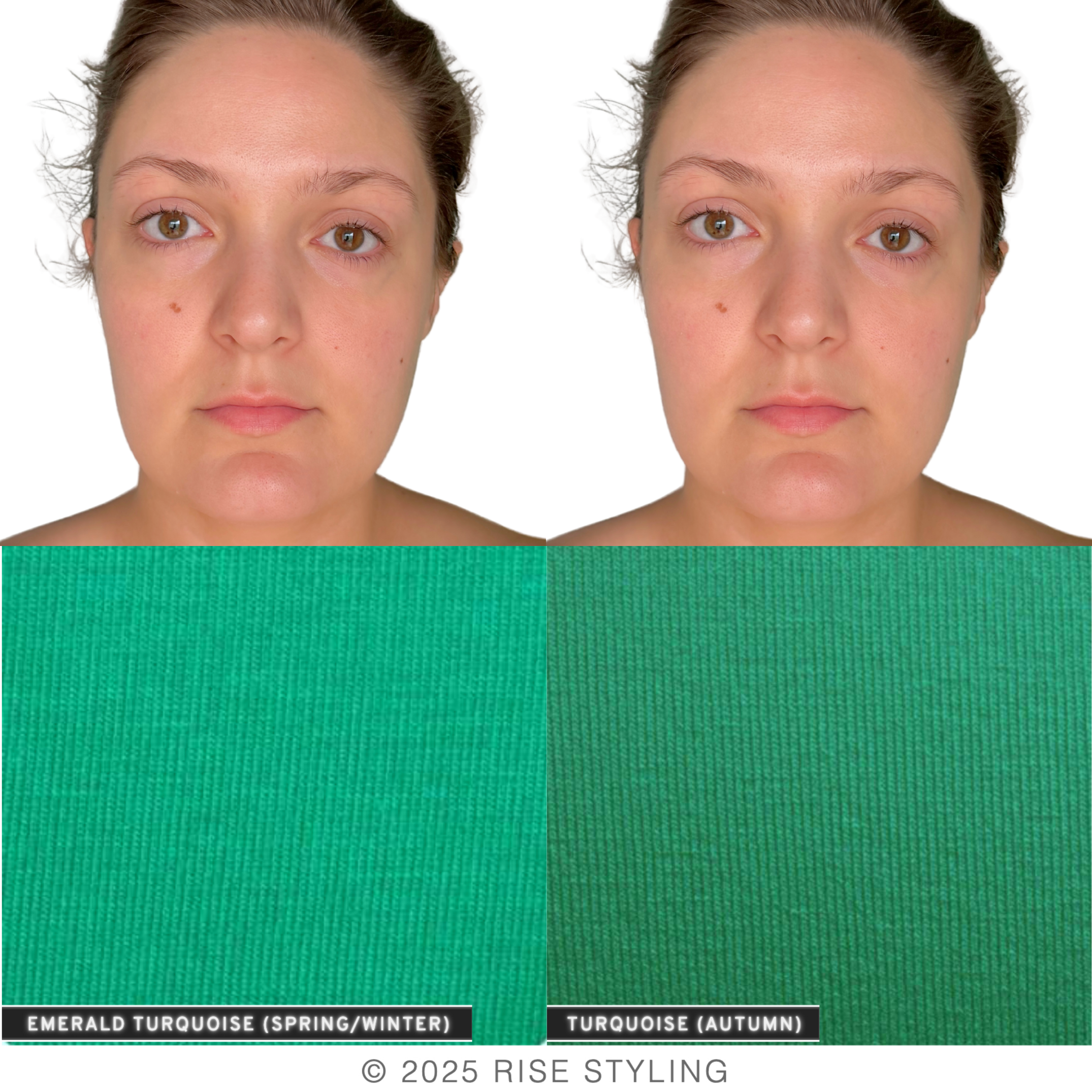
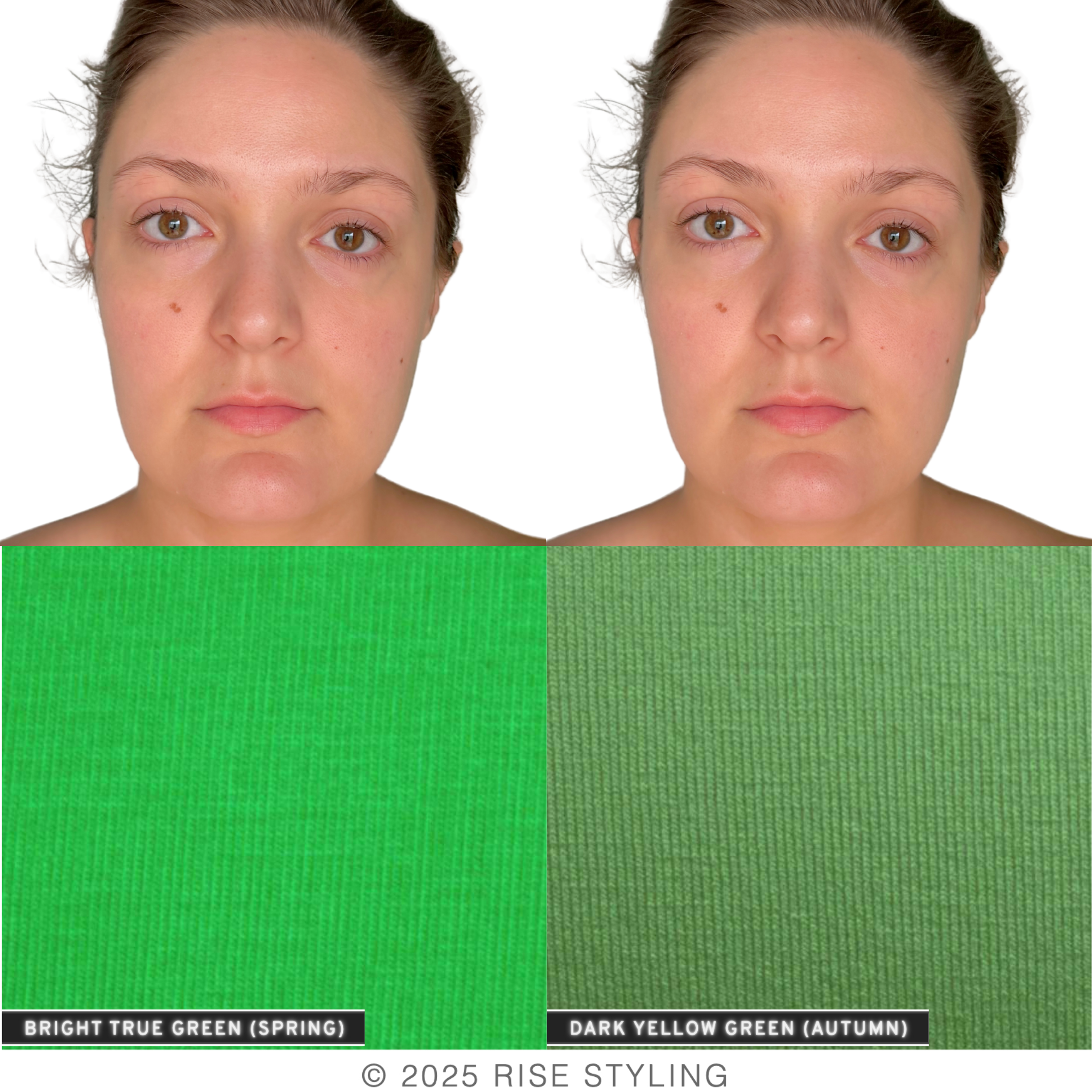
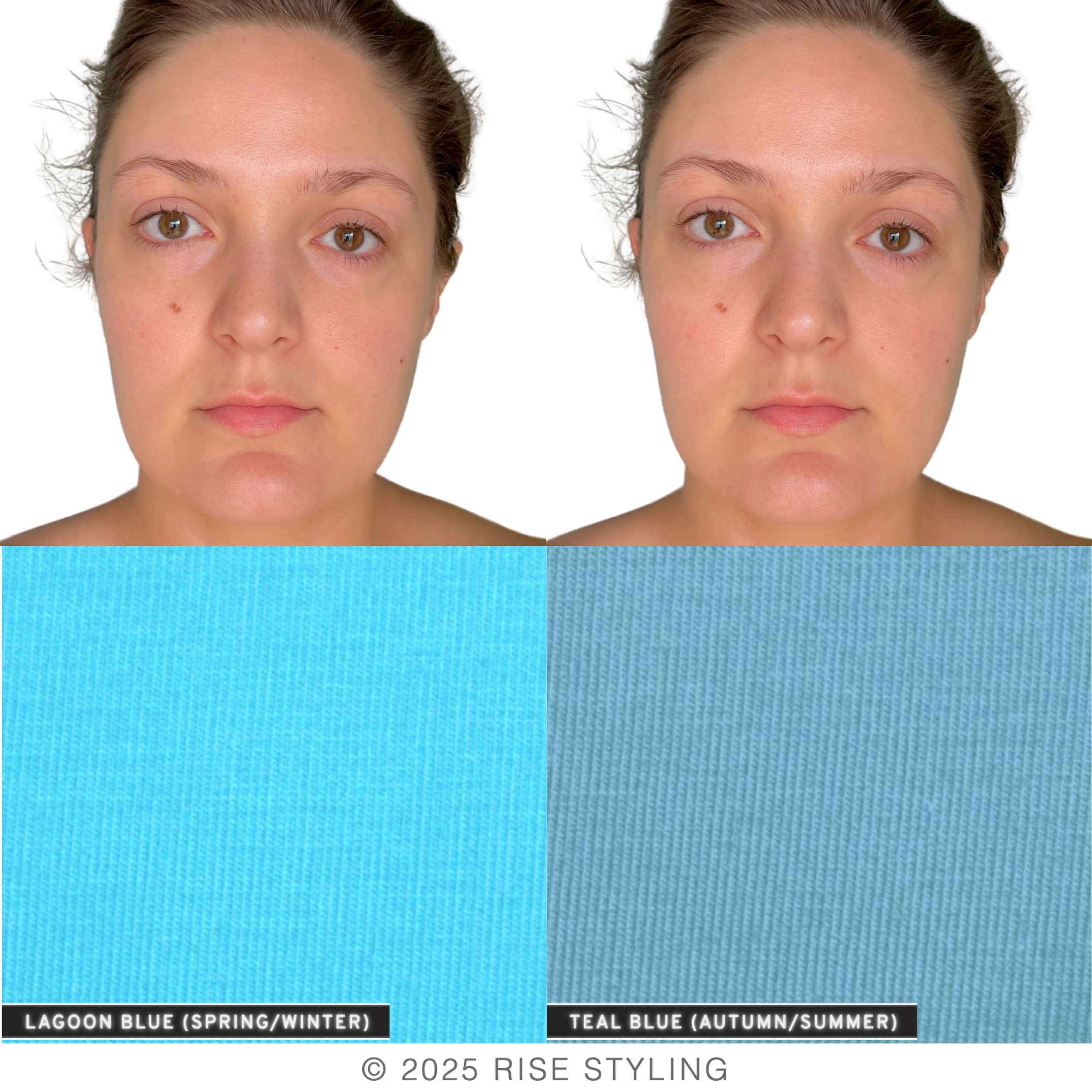
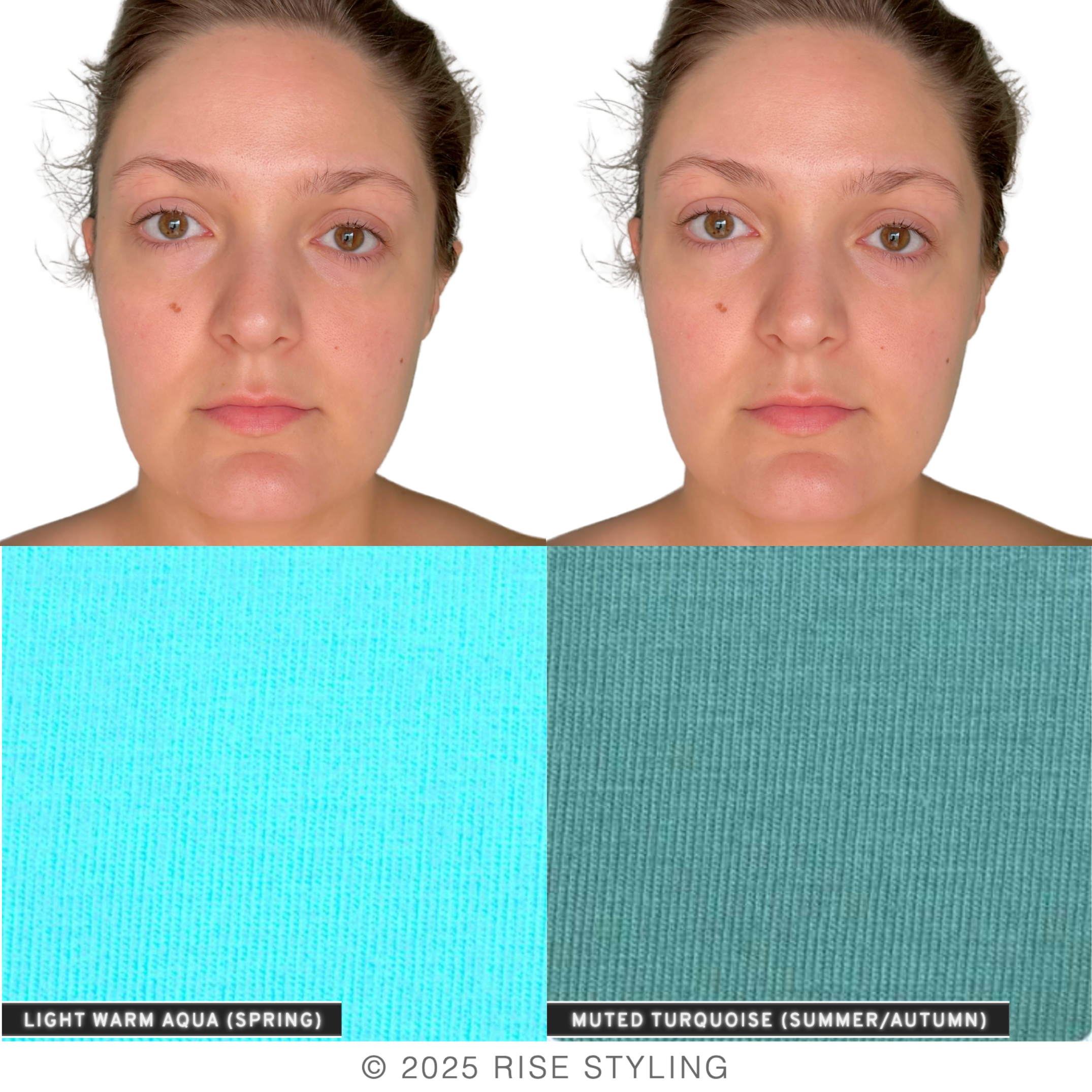
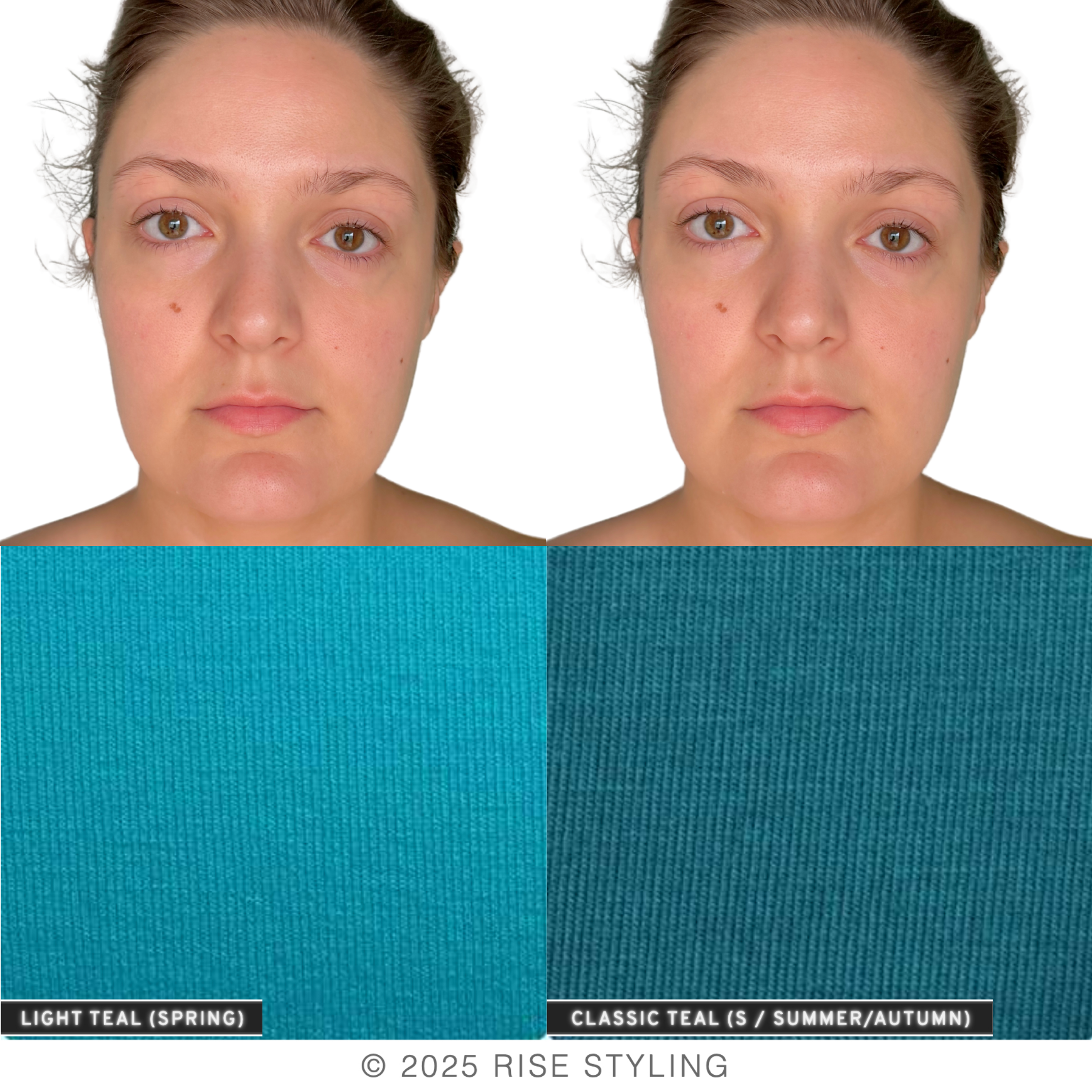
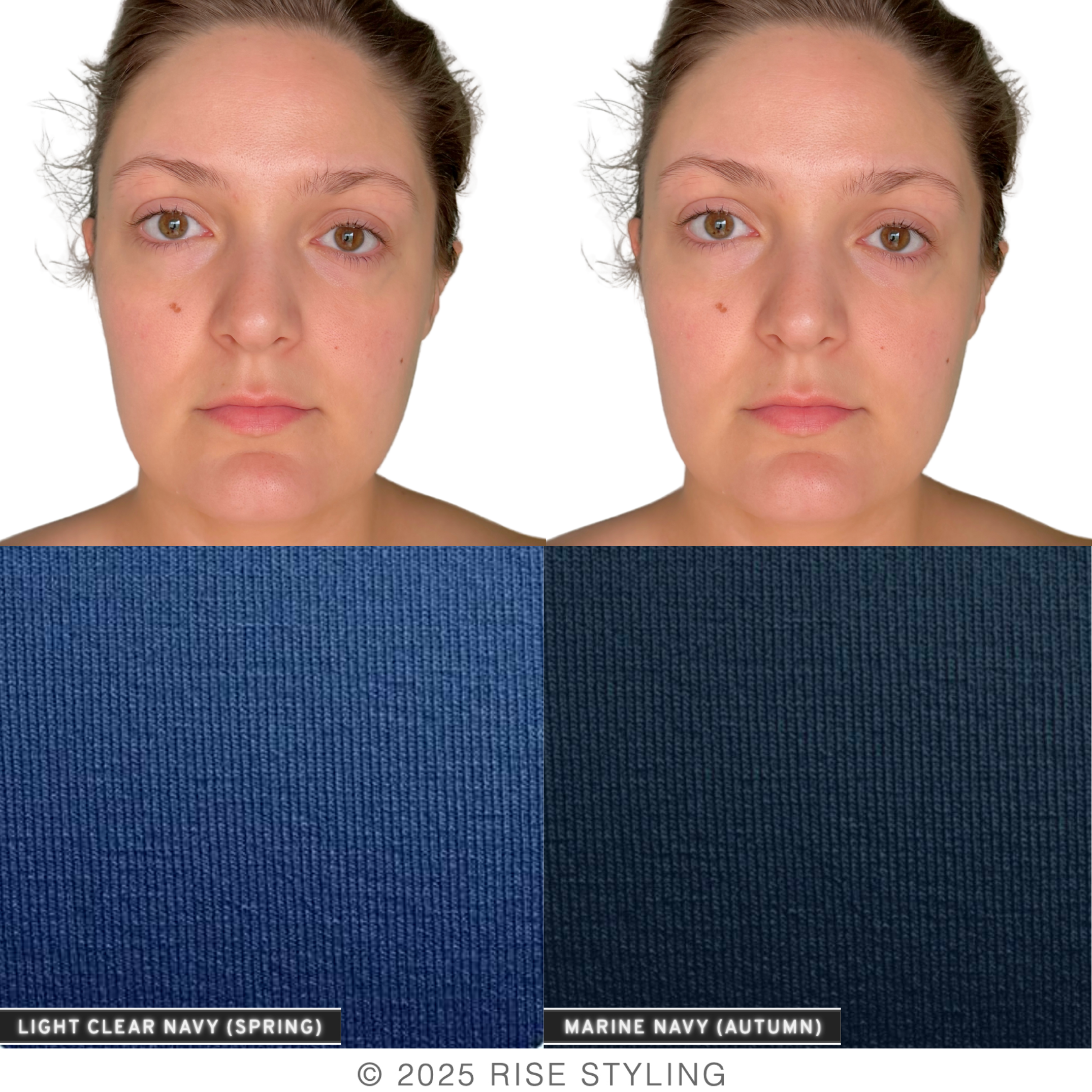
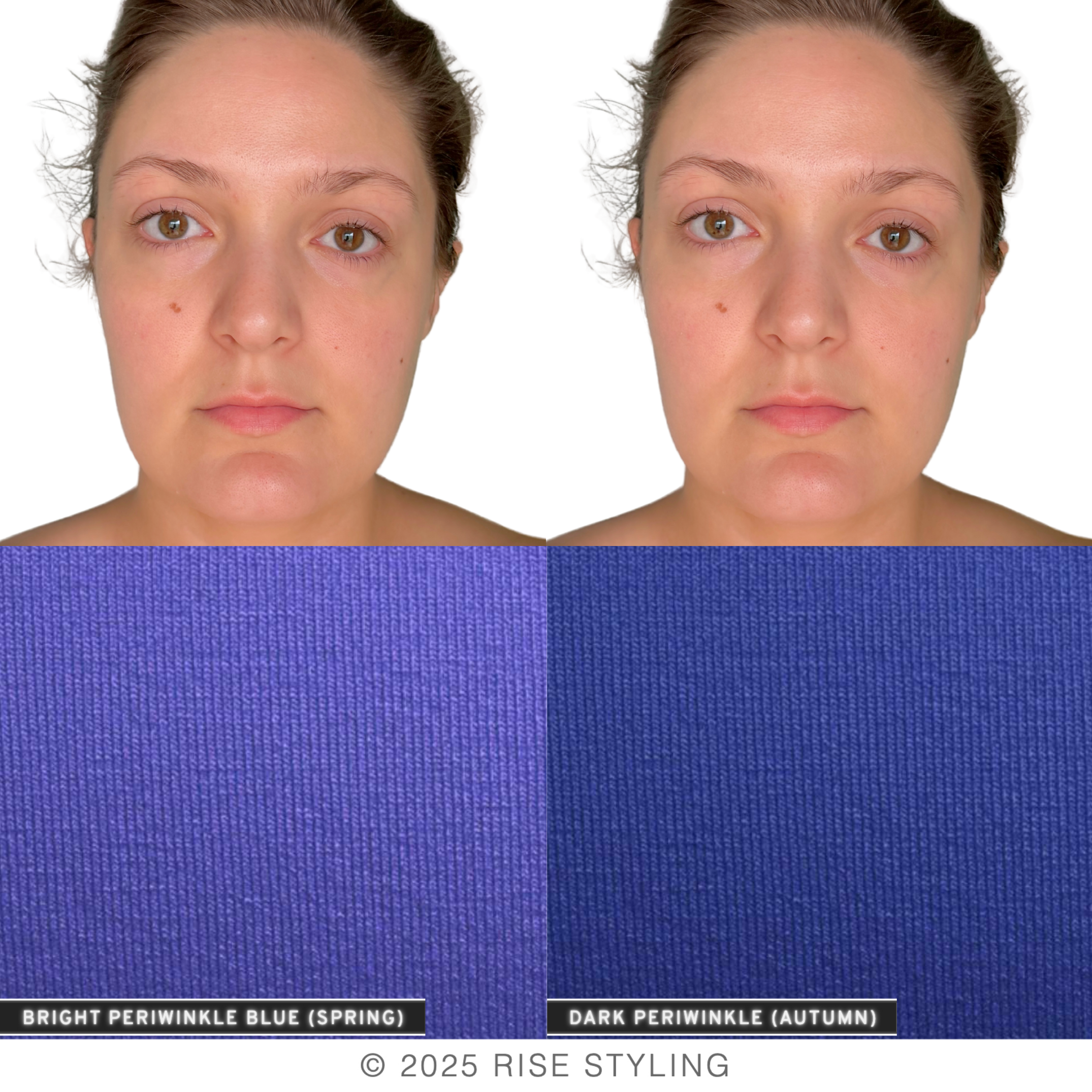
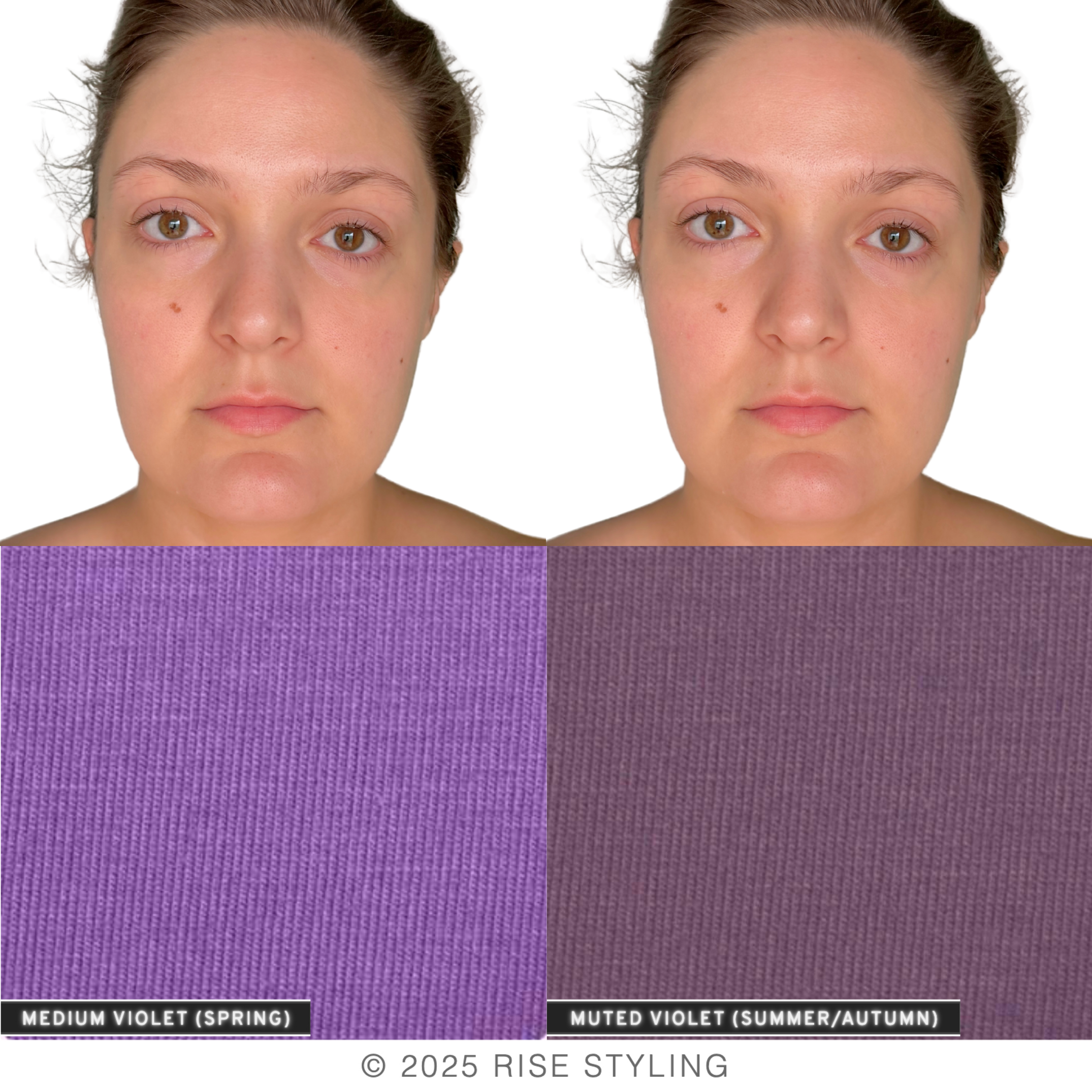
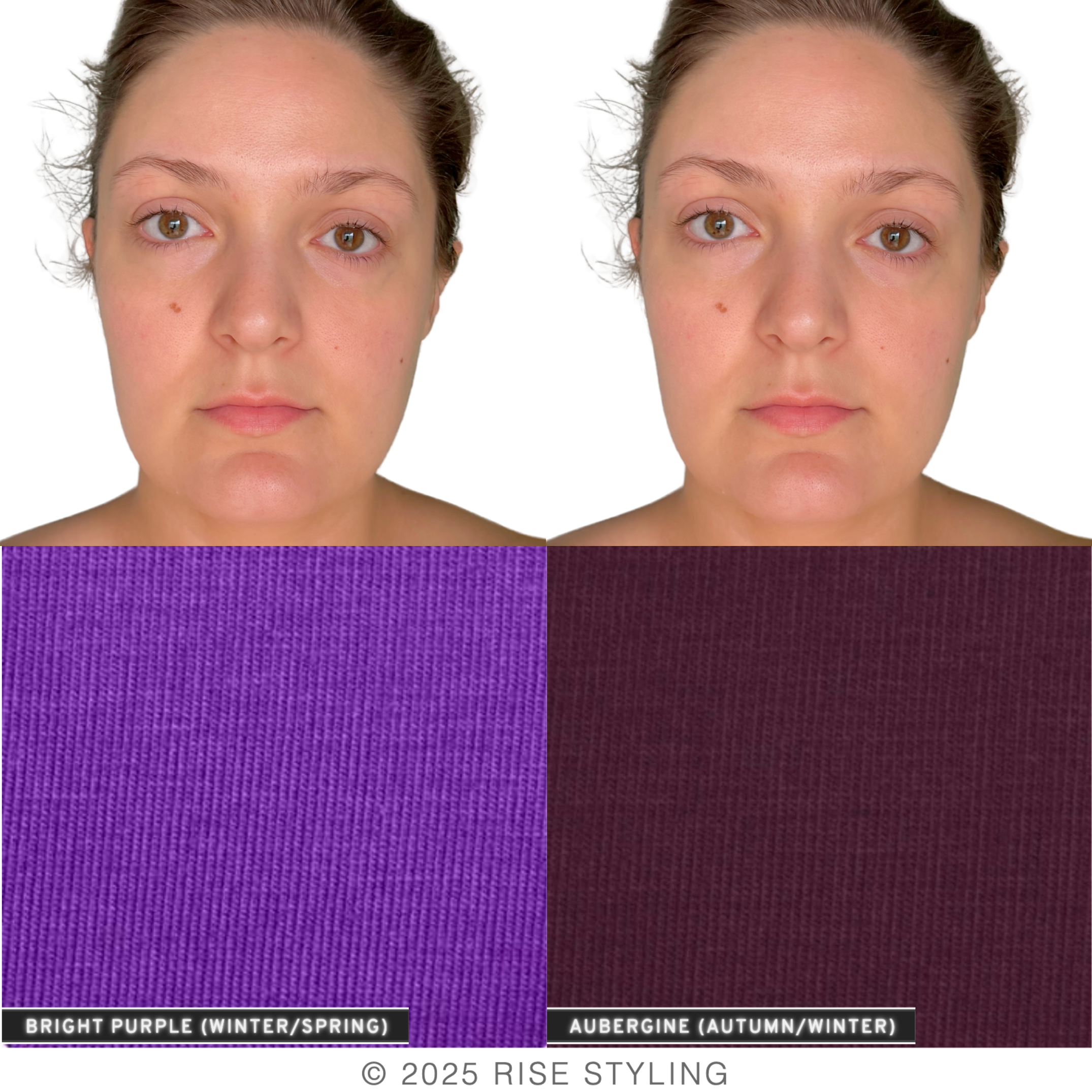
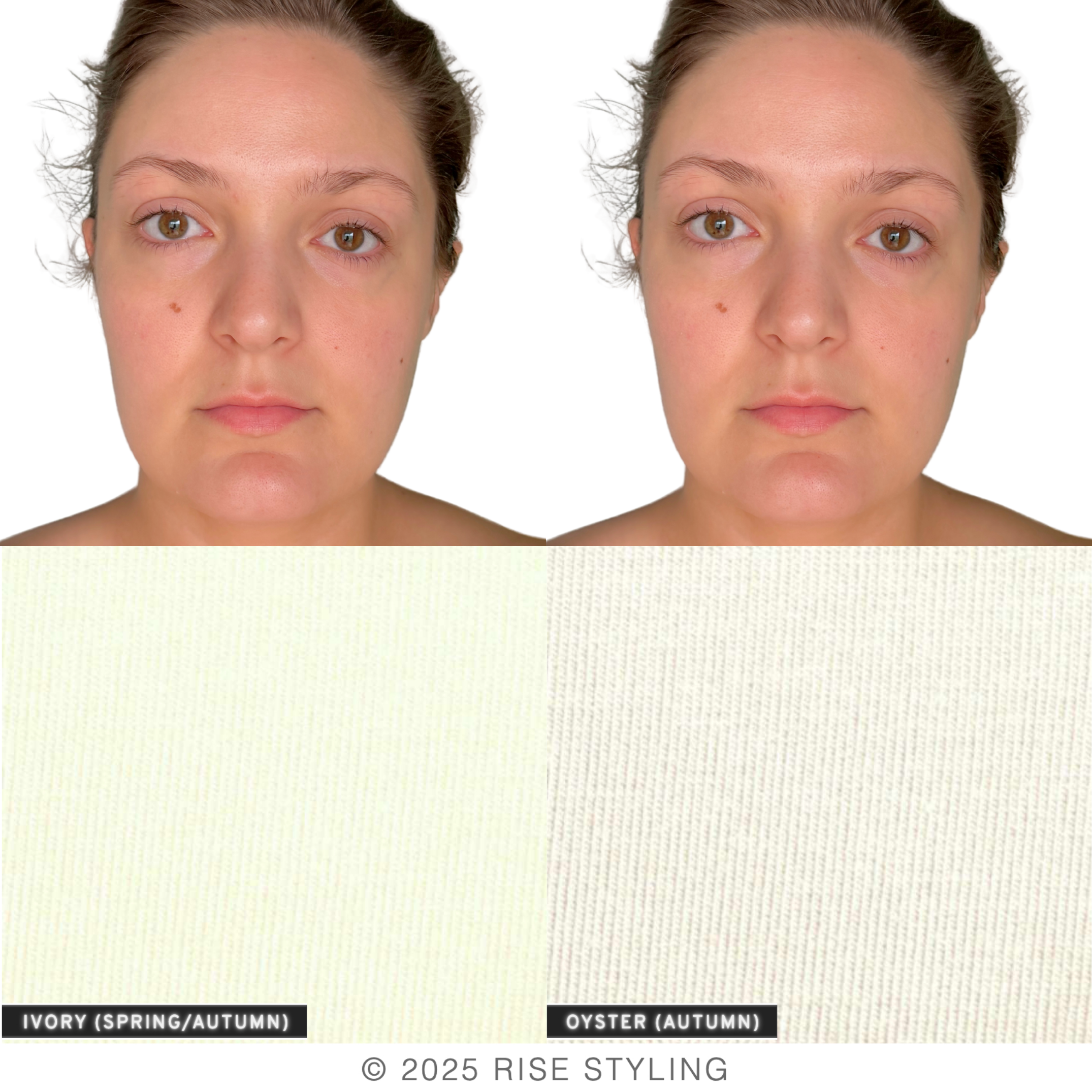
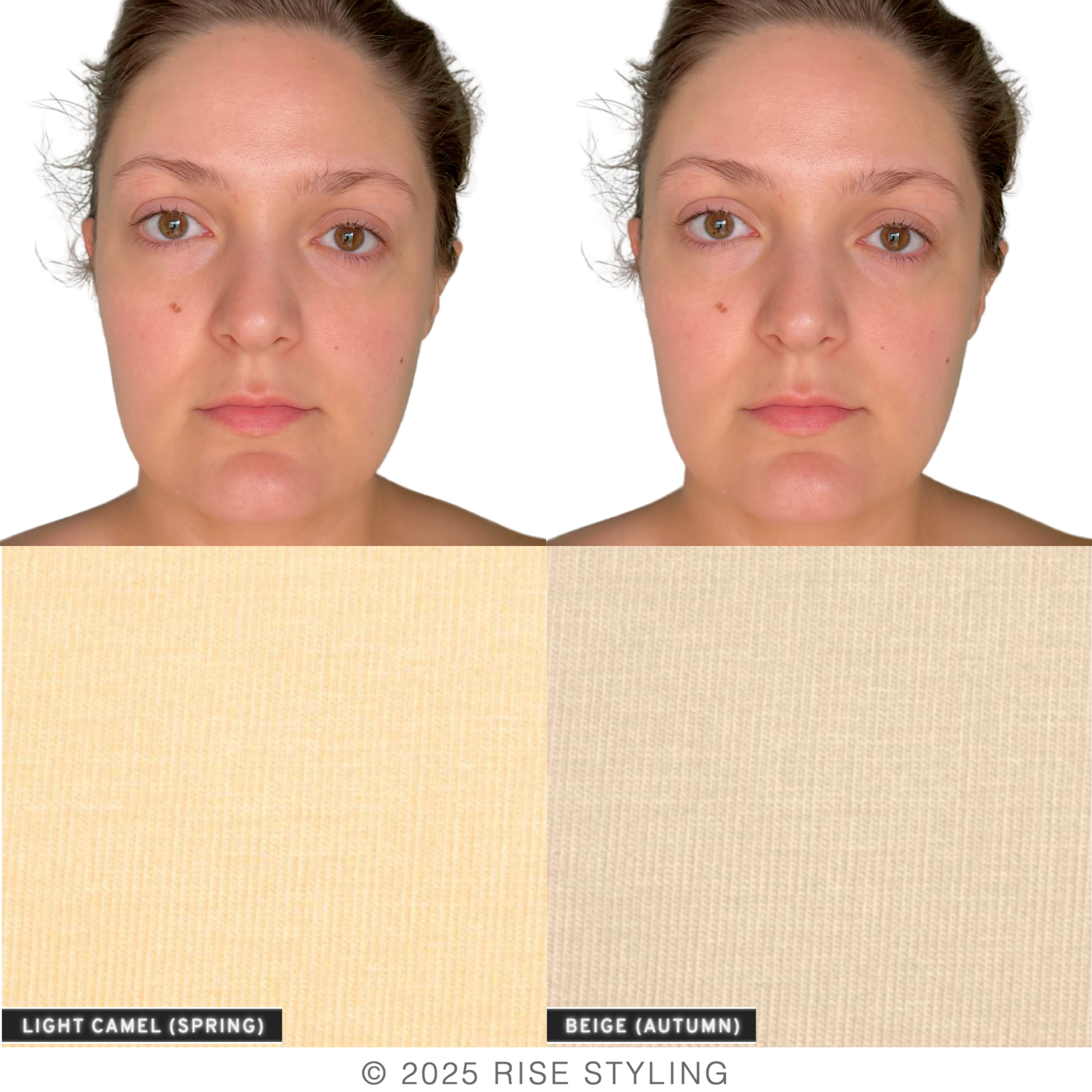
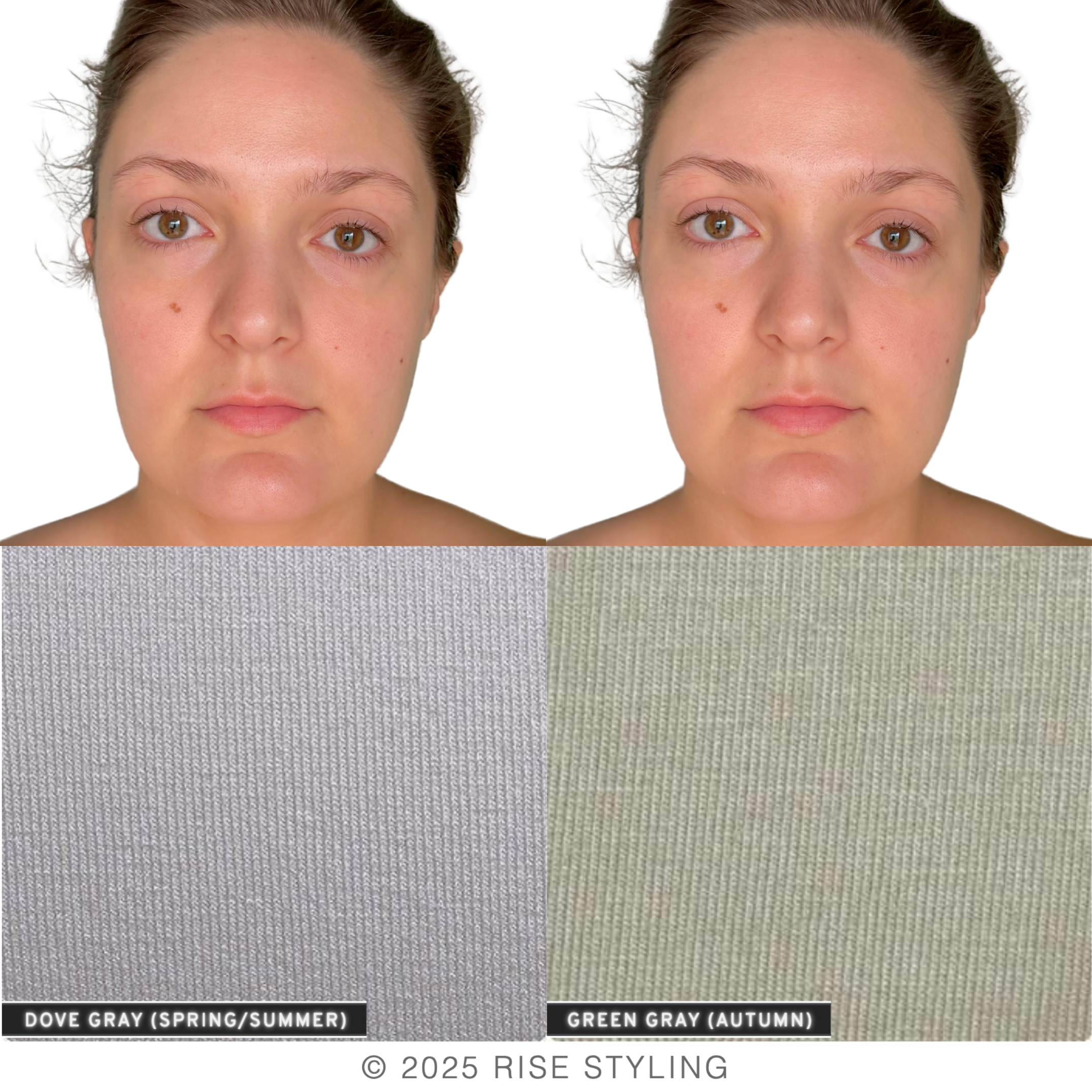
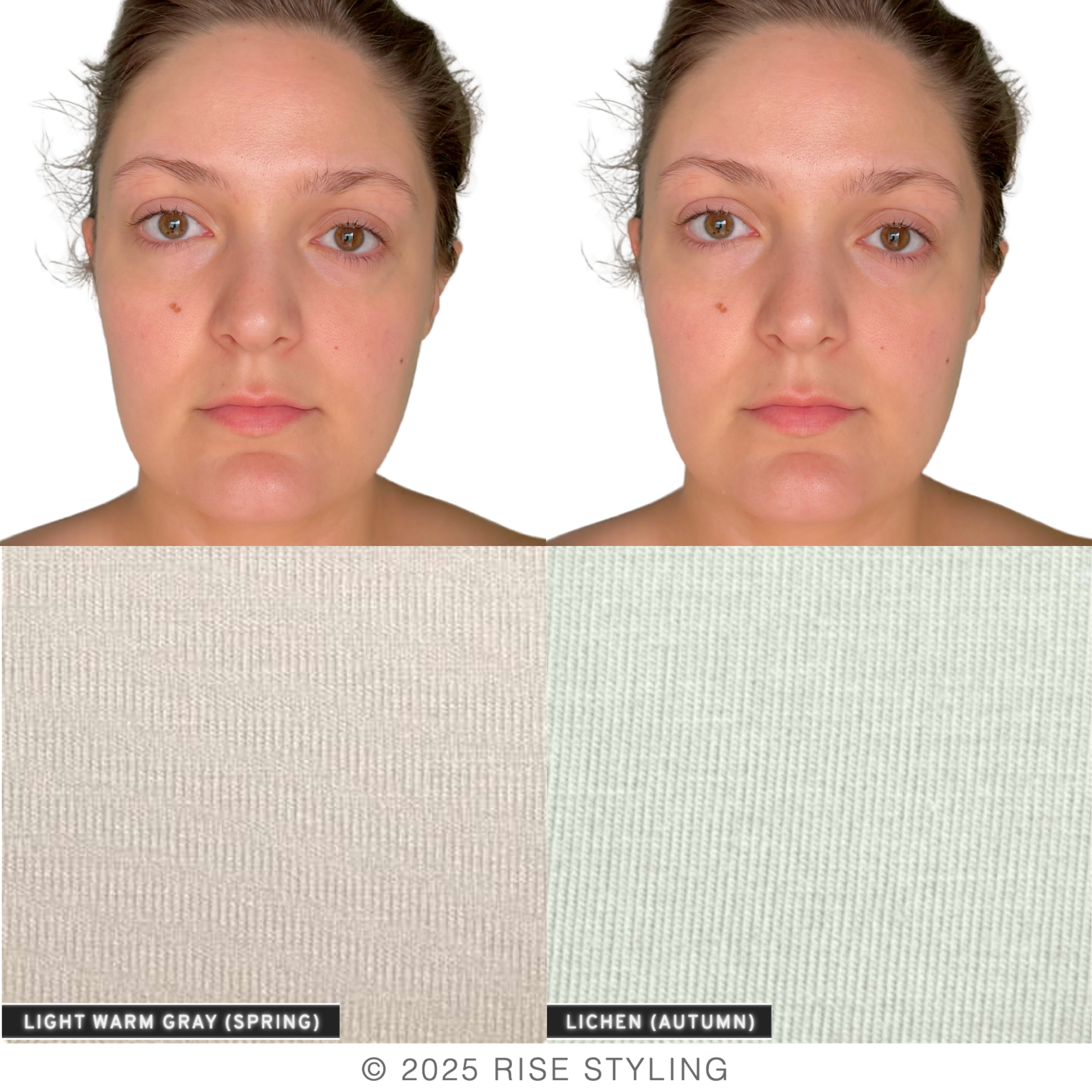
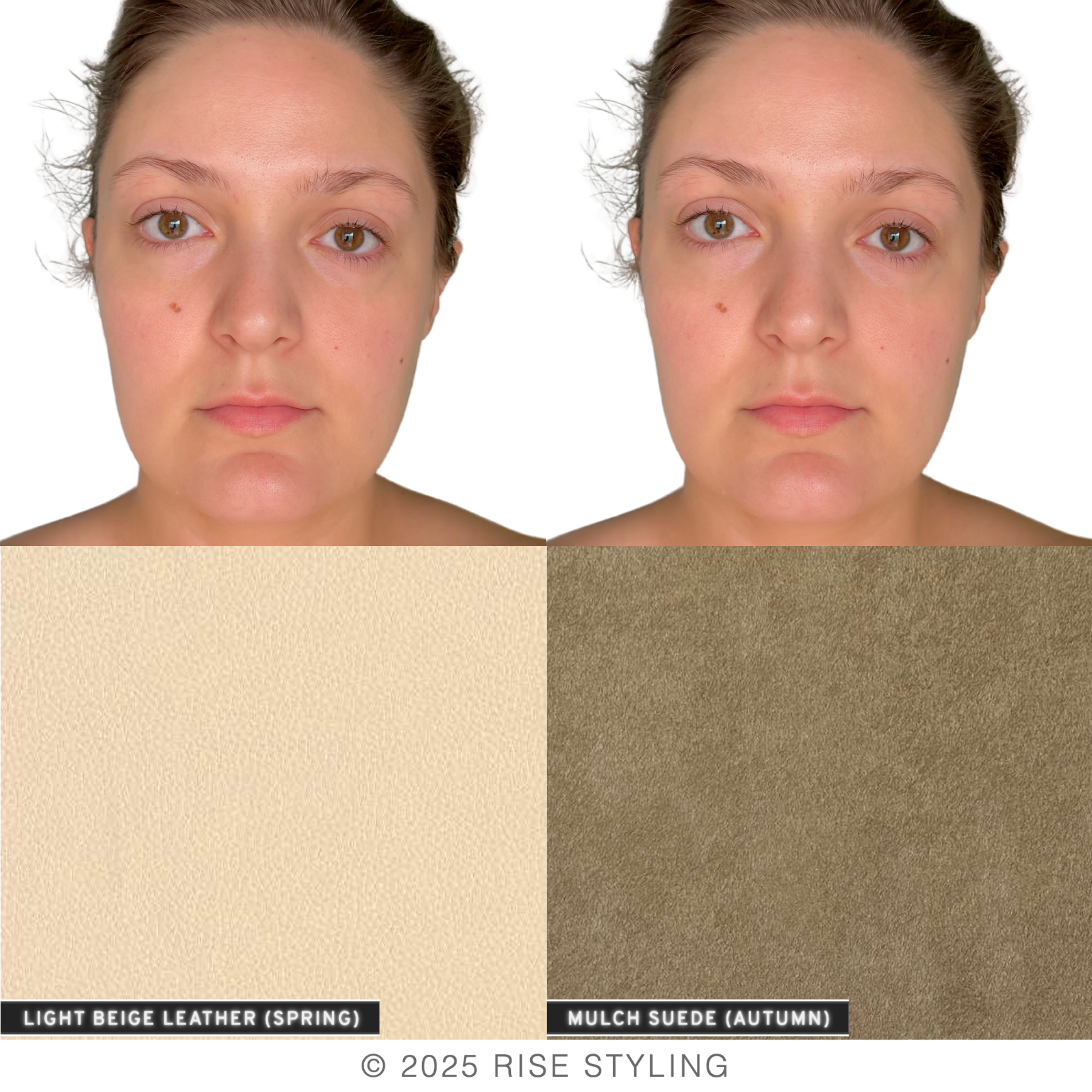
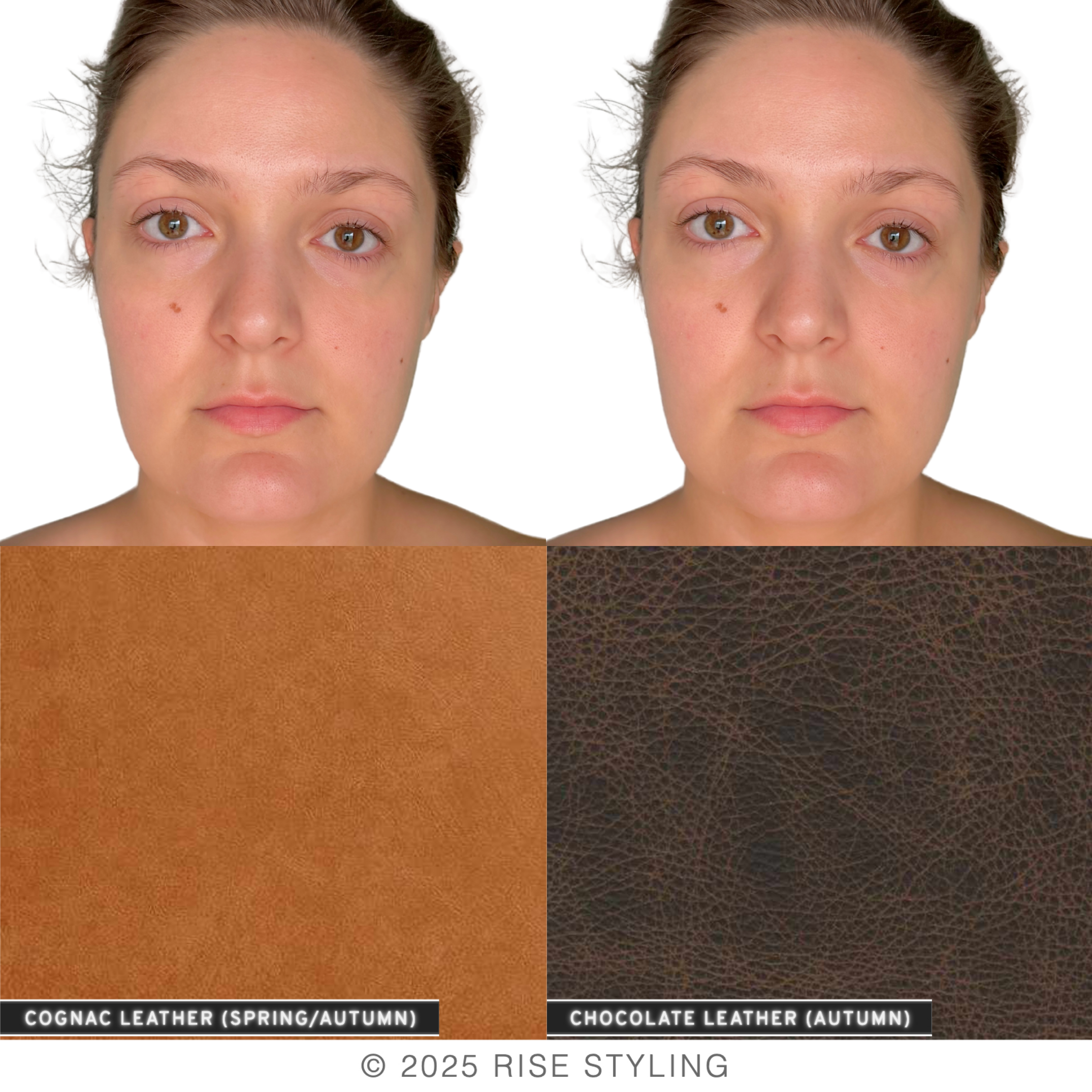
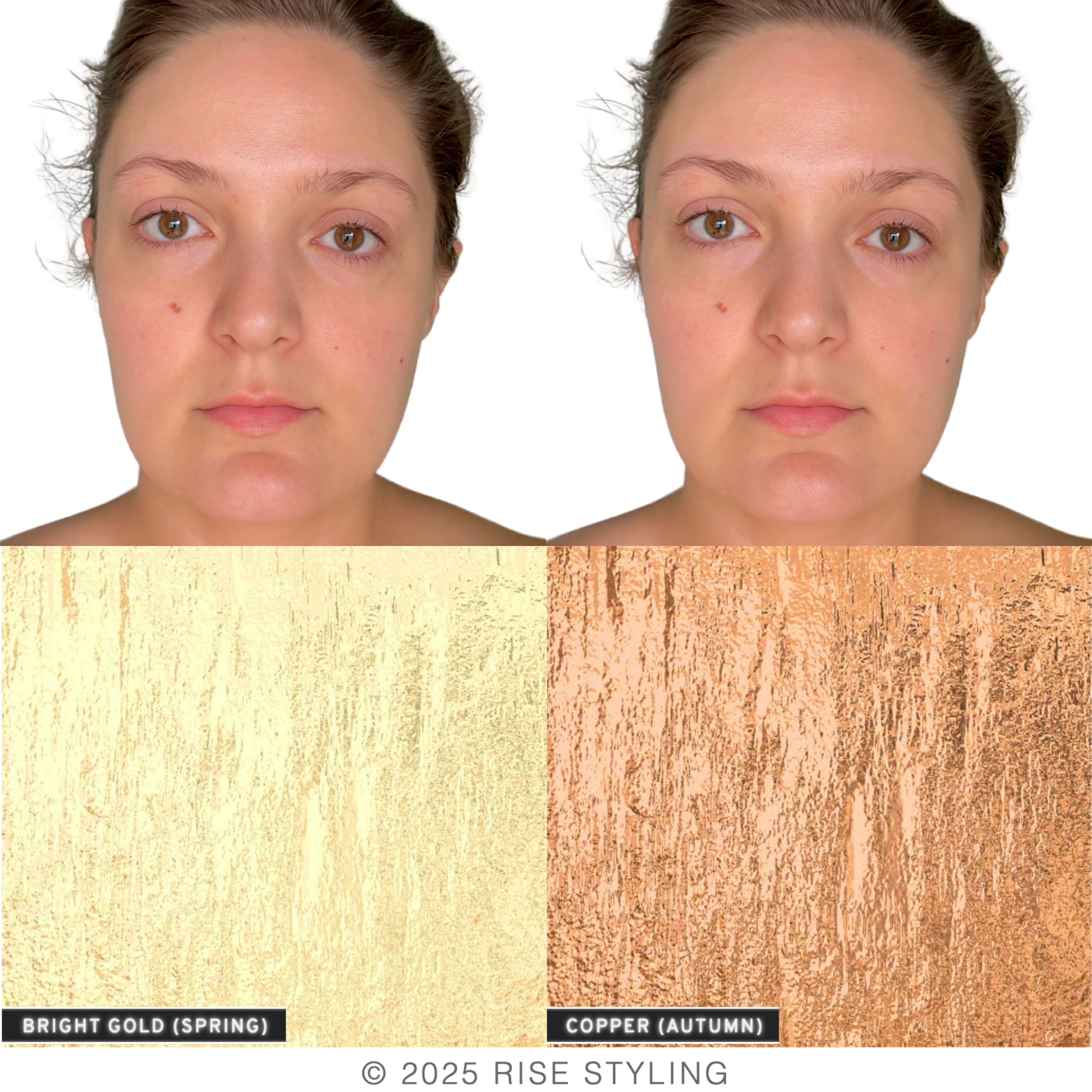
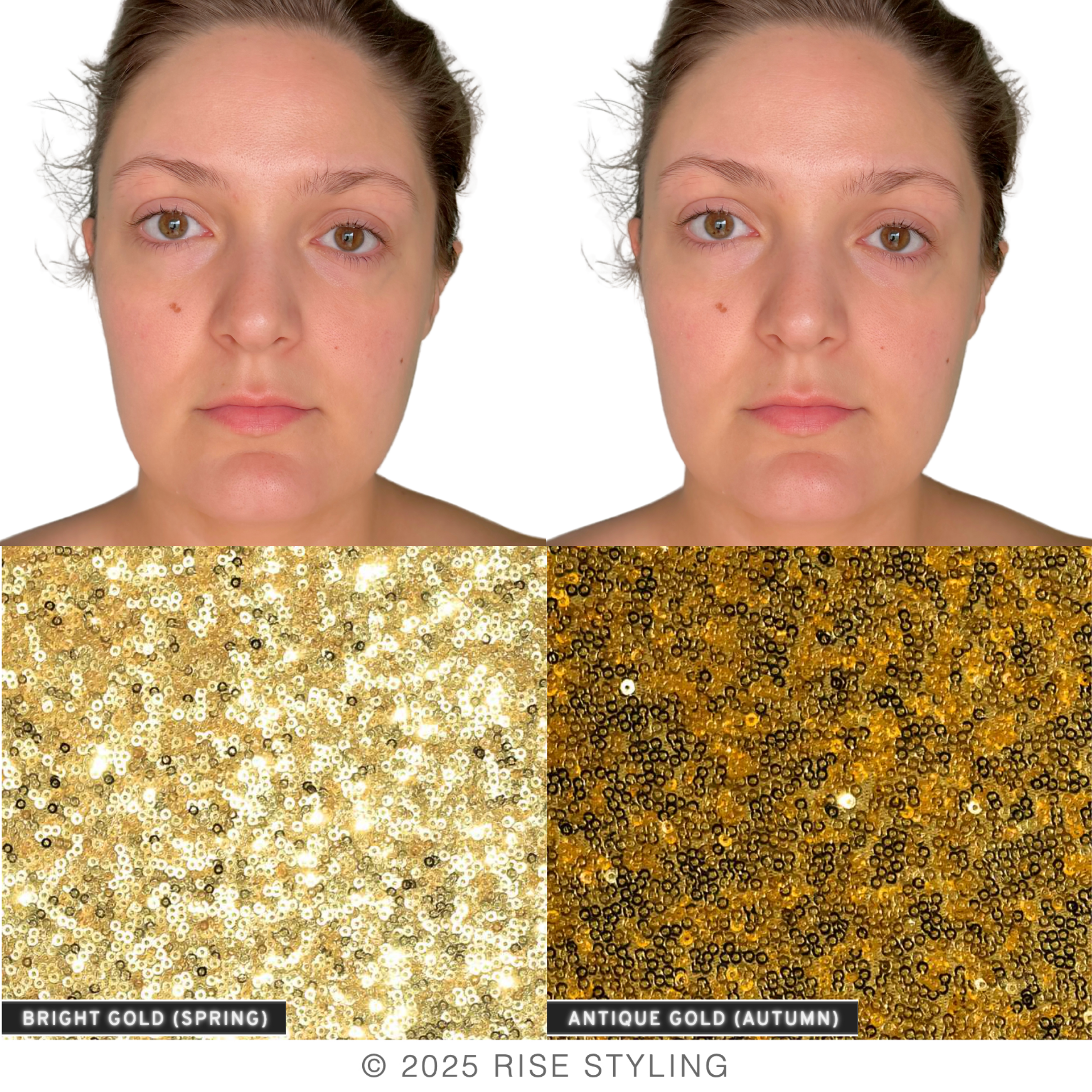
In which season’s colors does she appear to “pop”? In which season does she appear more in focus, clearer, as though she’s “listening” to you?
SPRING colors have high chroma, and appear “costume-y” on Jessica compared to Autumn colors.
AUTUMN colors have a low chroma, and next to Spring colors, there is no contest - she’s an Autumn!
These colors are mirroring her natural coloring, creating a balanced image that highlights her features.
In the next section, we will further compare the Autumn colors to verify Jessica’s sub-season: DEEP, WARM, or SOFT.
First, here is Jessica framed in a sampling of each Autumn subseason:
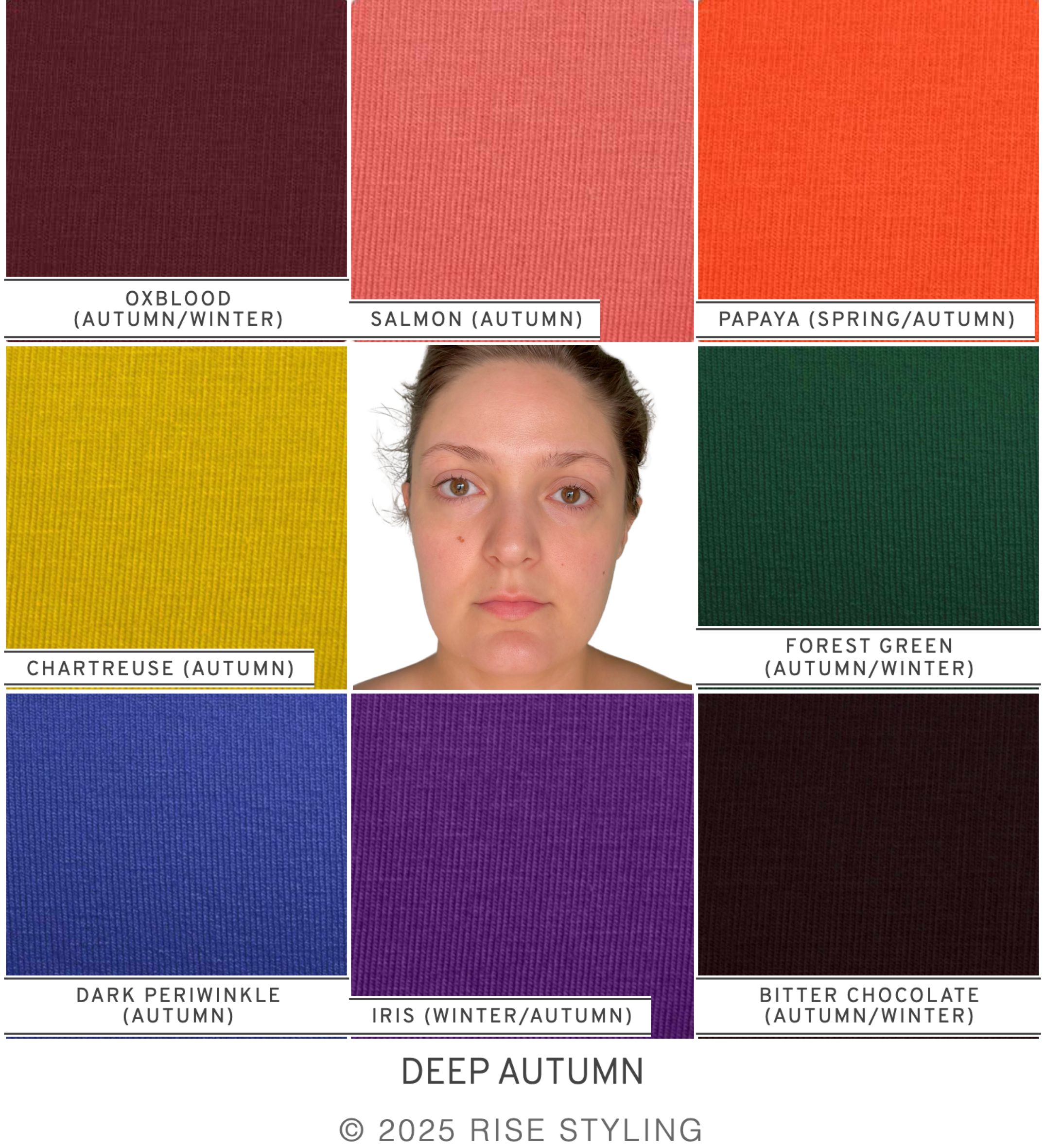
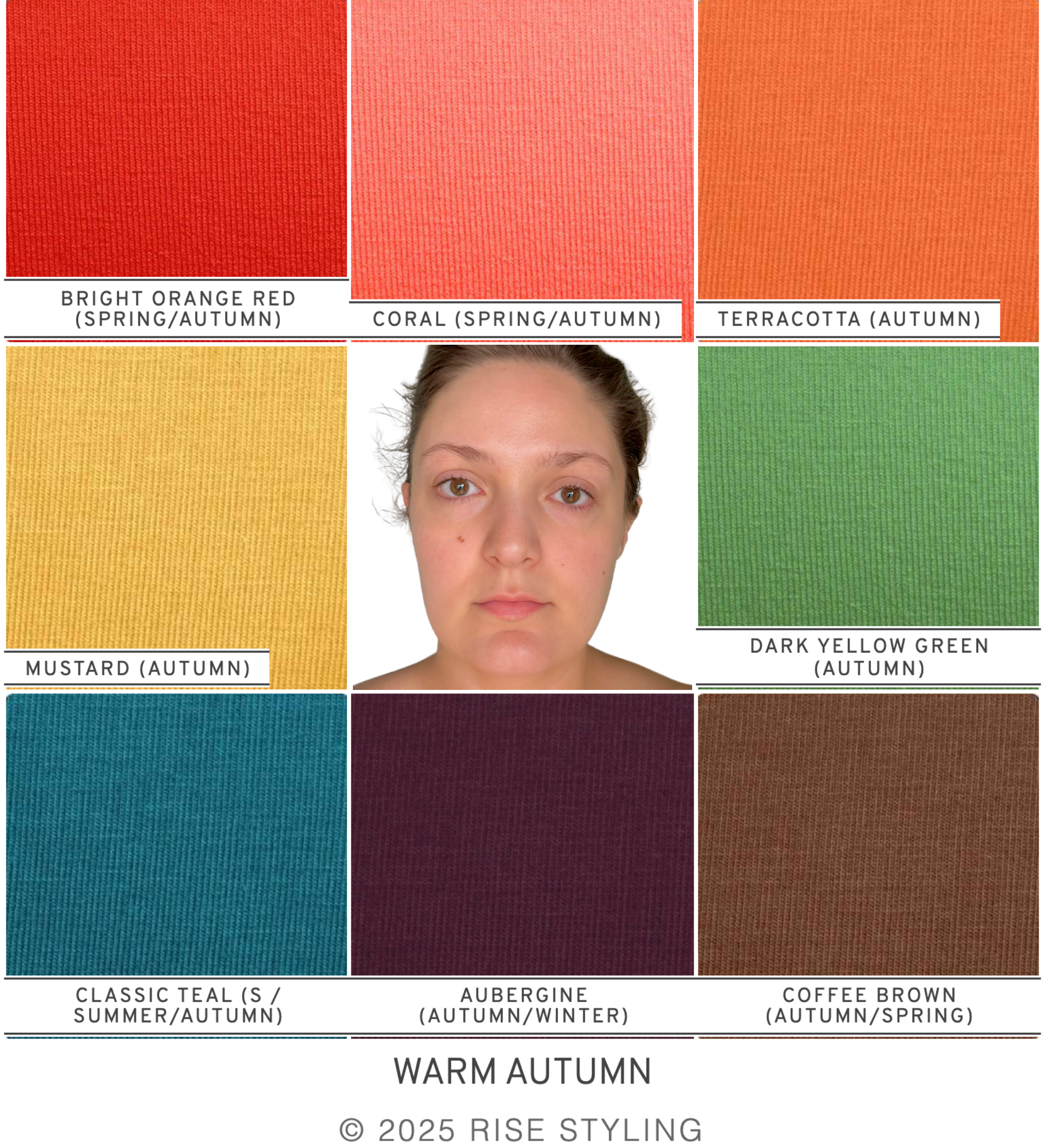
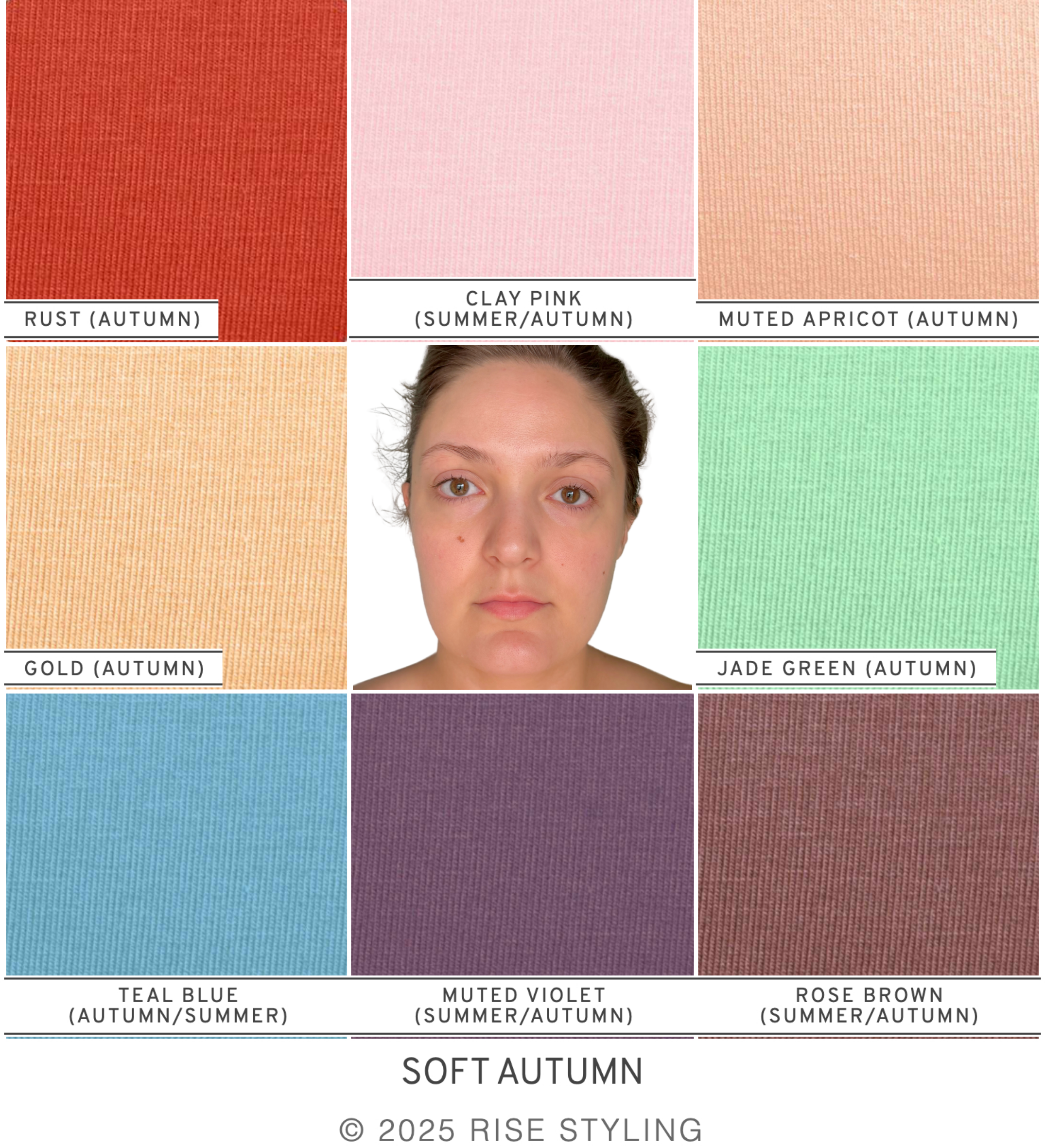
This is where I form an initial hypothesis that Jessica is a Deep Autumn. That is where I see her most clearly and she is neither overpowered nor does she appear unsupported by the colors around her.
To test this hypothesis, we compare three sub-season-specific Autumn shades from each individual color family (e.g. red, blue) and see which appears most harmonious on her.
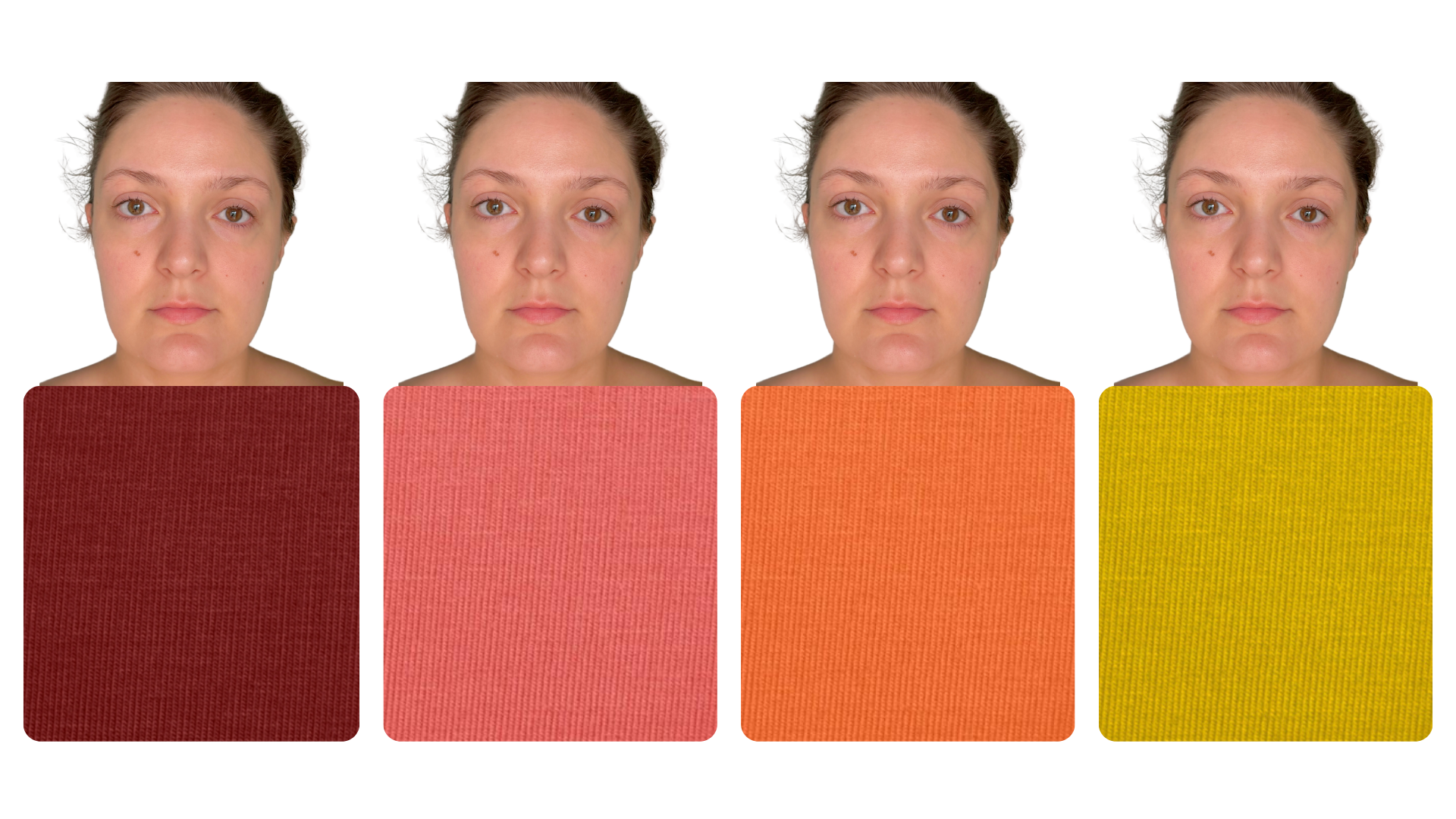
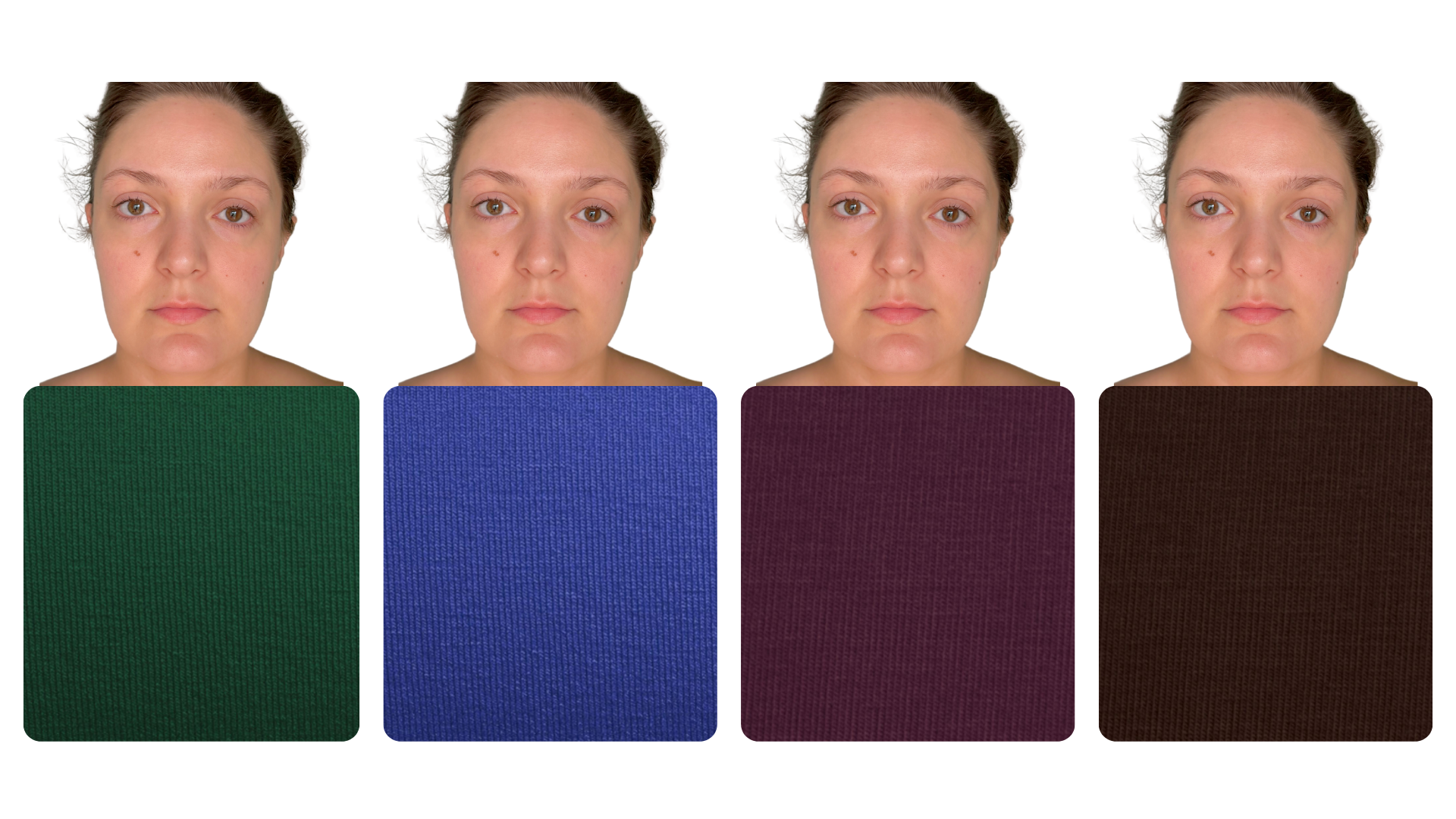
Slide through to view Jessica wearing quintessential Deep, Warm, and Soft Autumn colors from each color family, and see where your eye is most drawn to her:
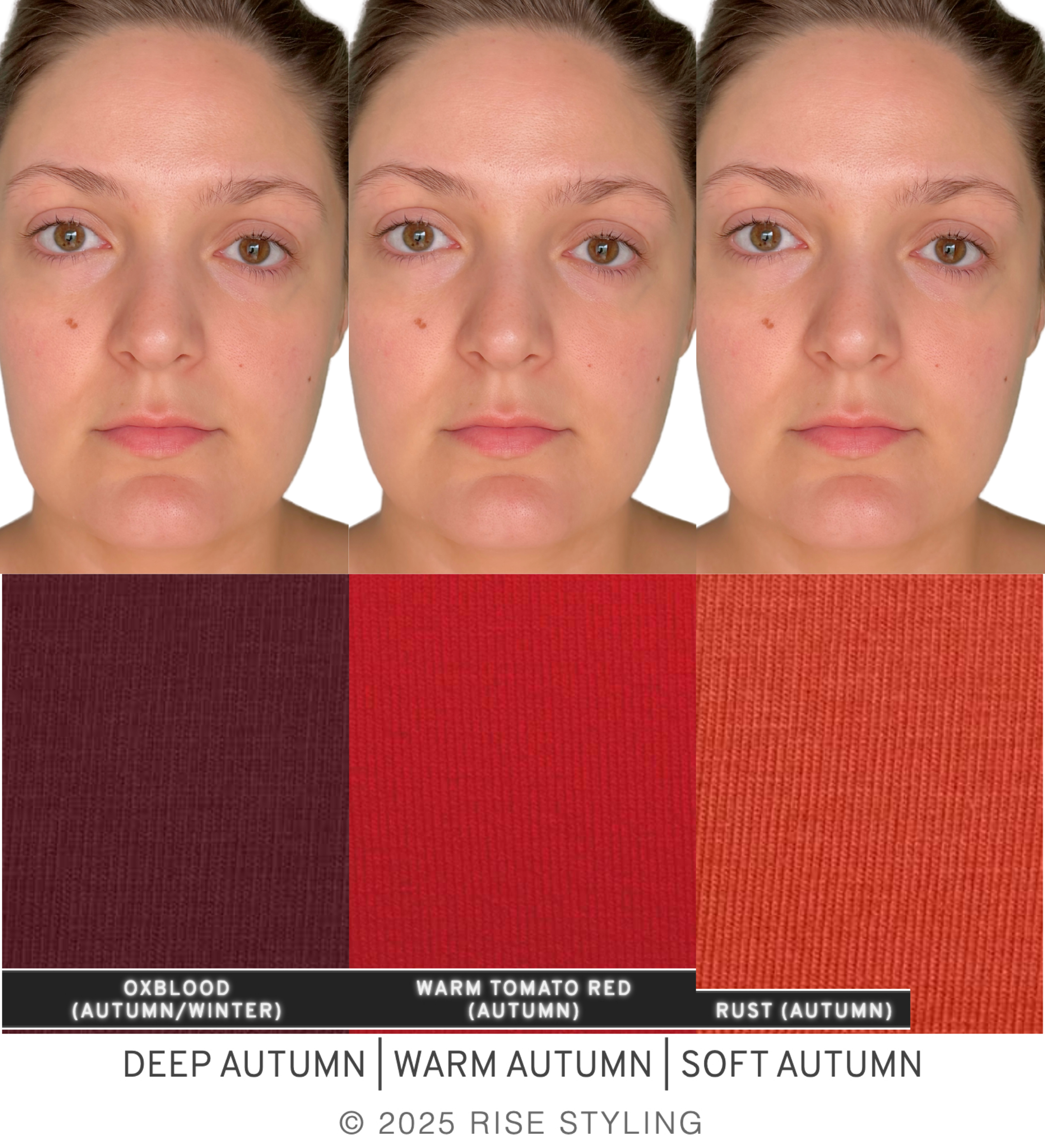
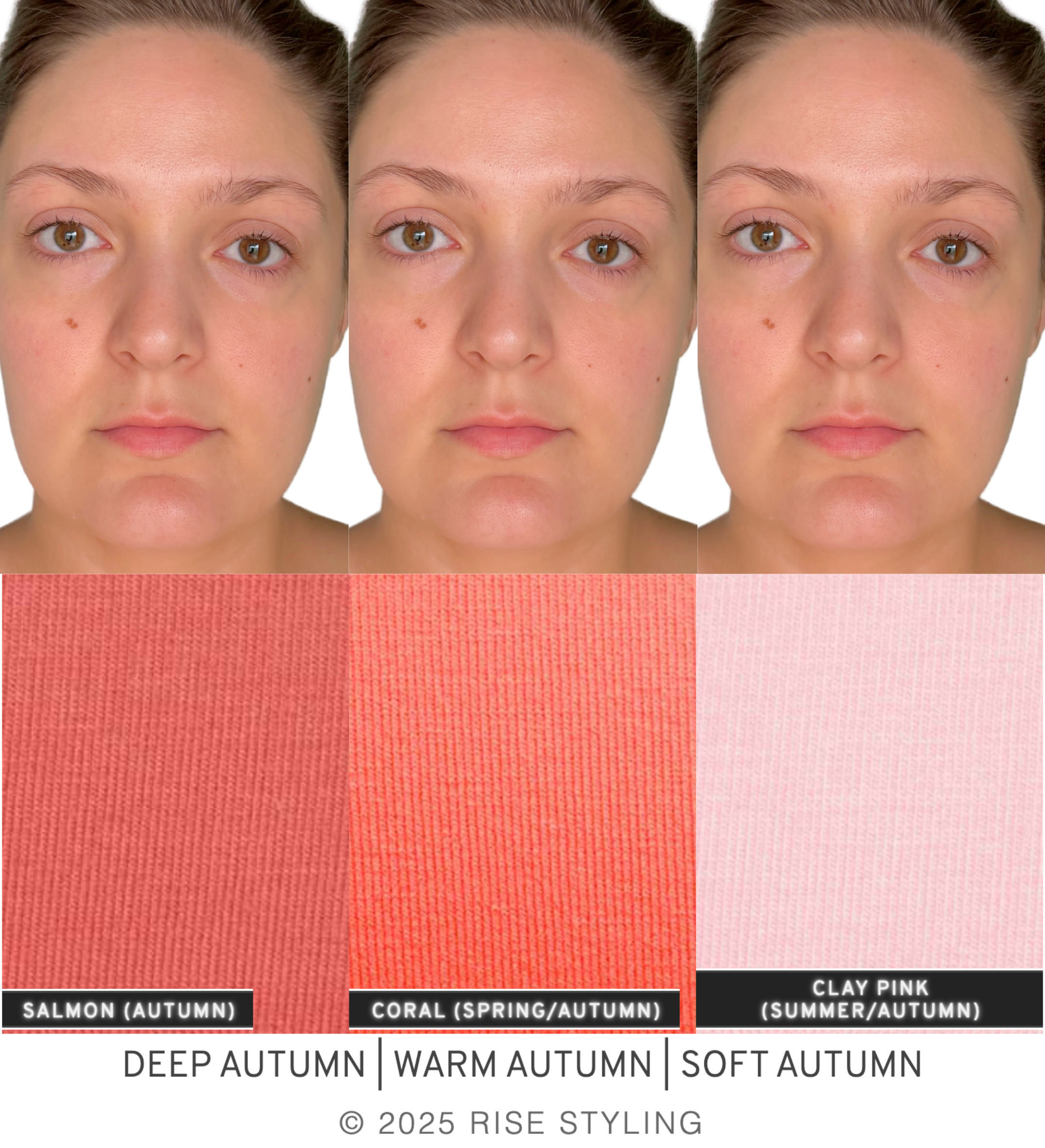
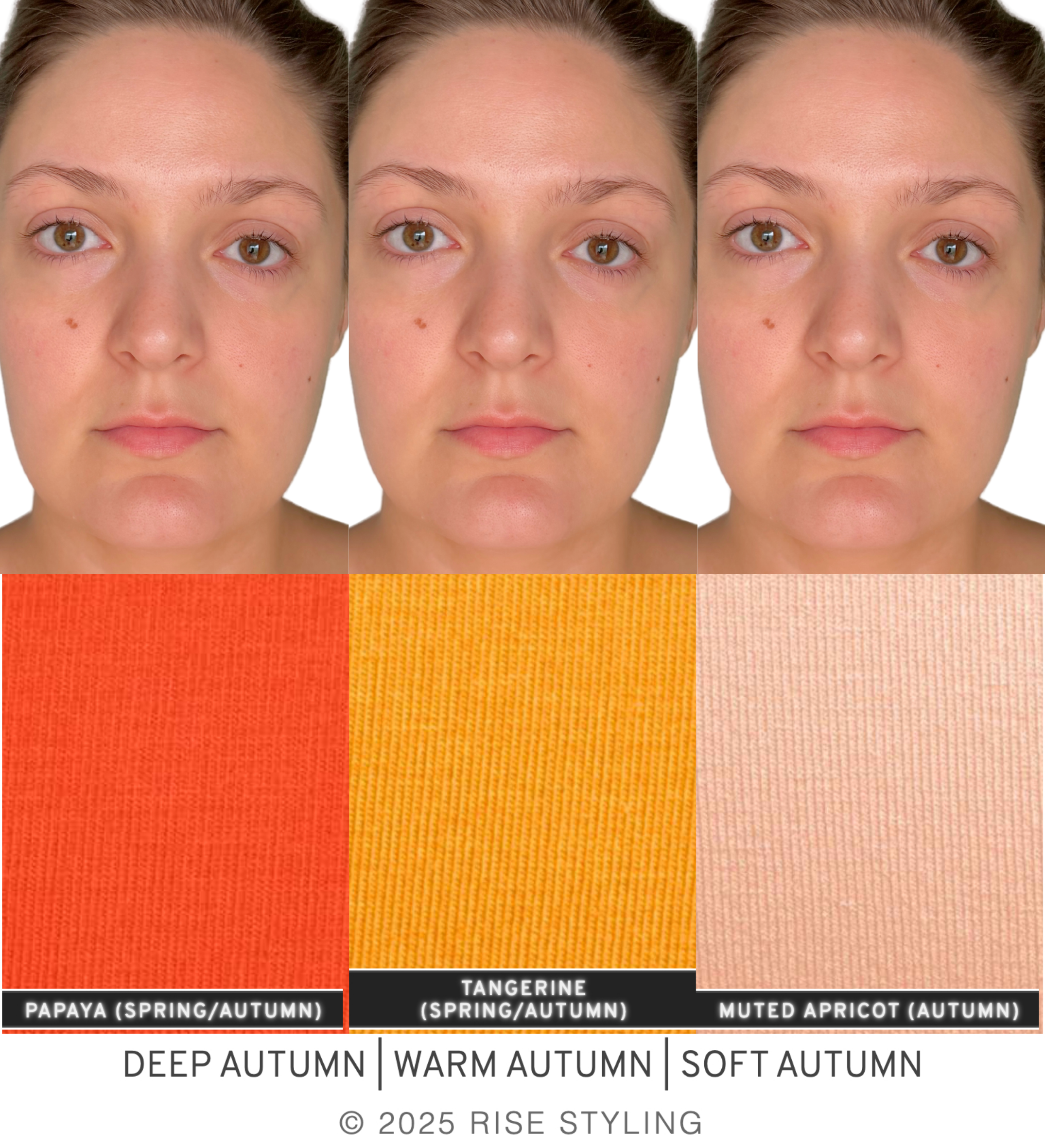
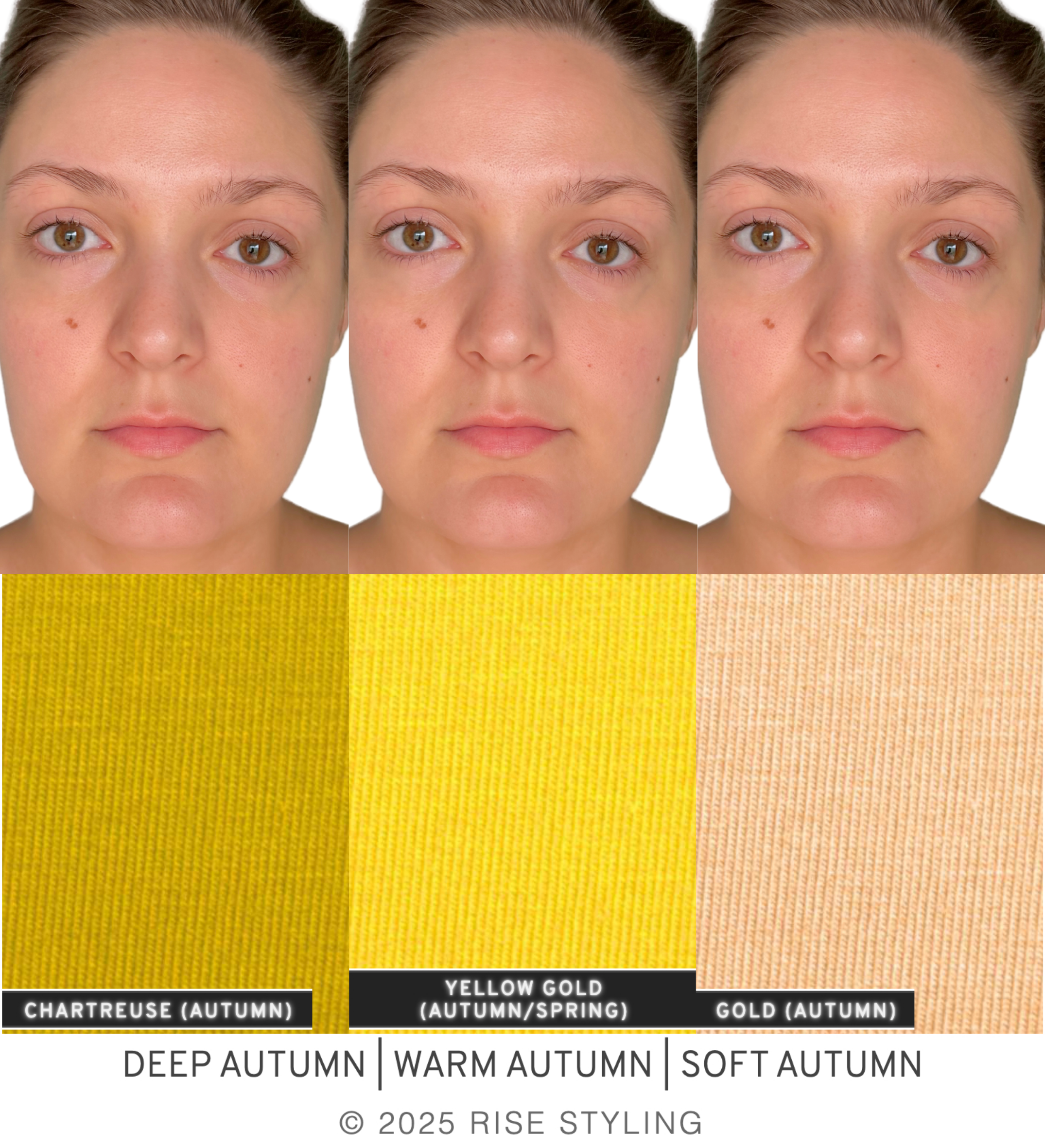
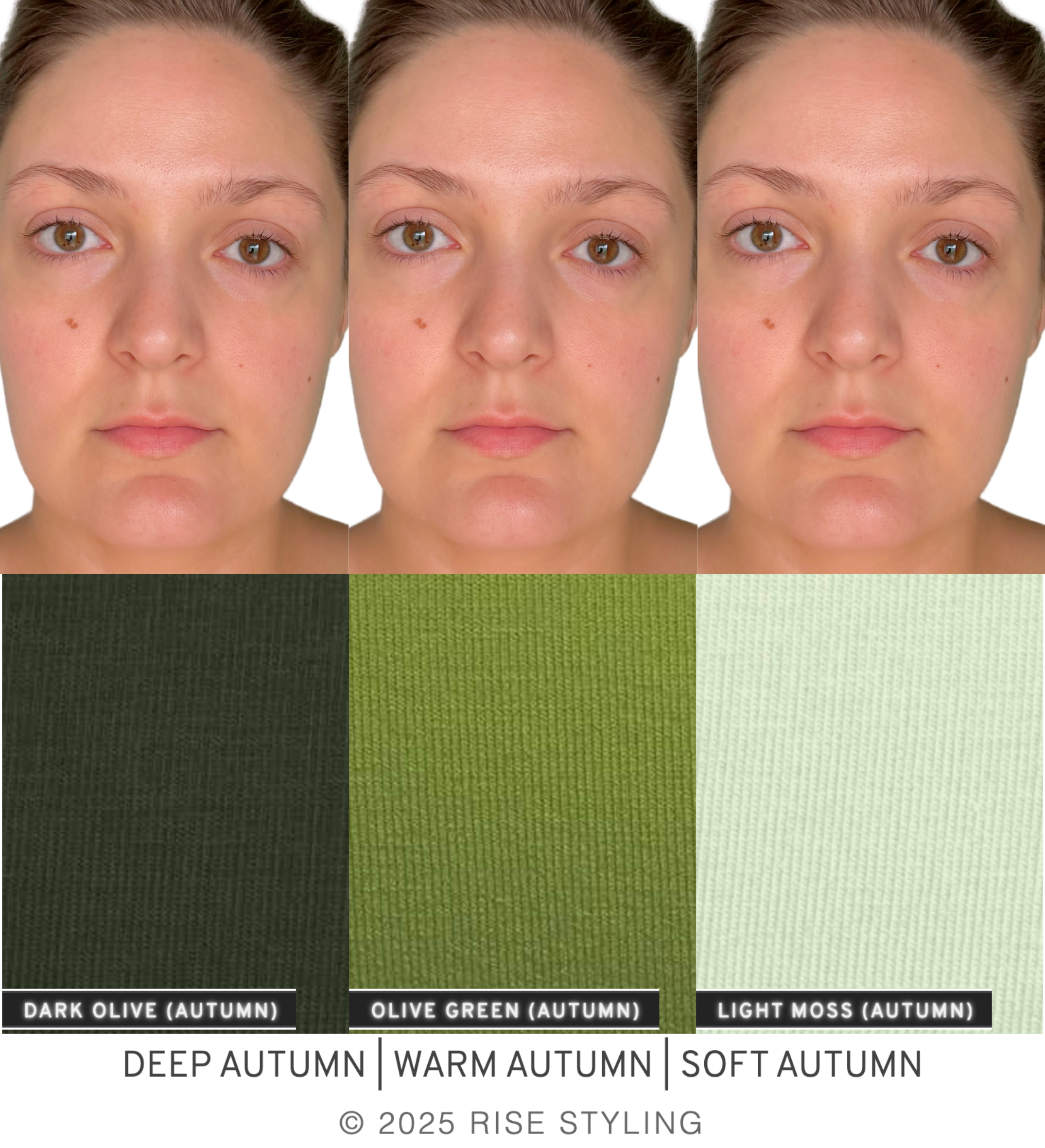
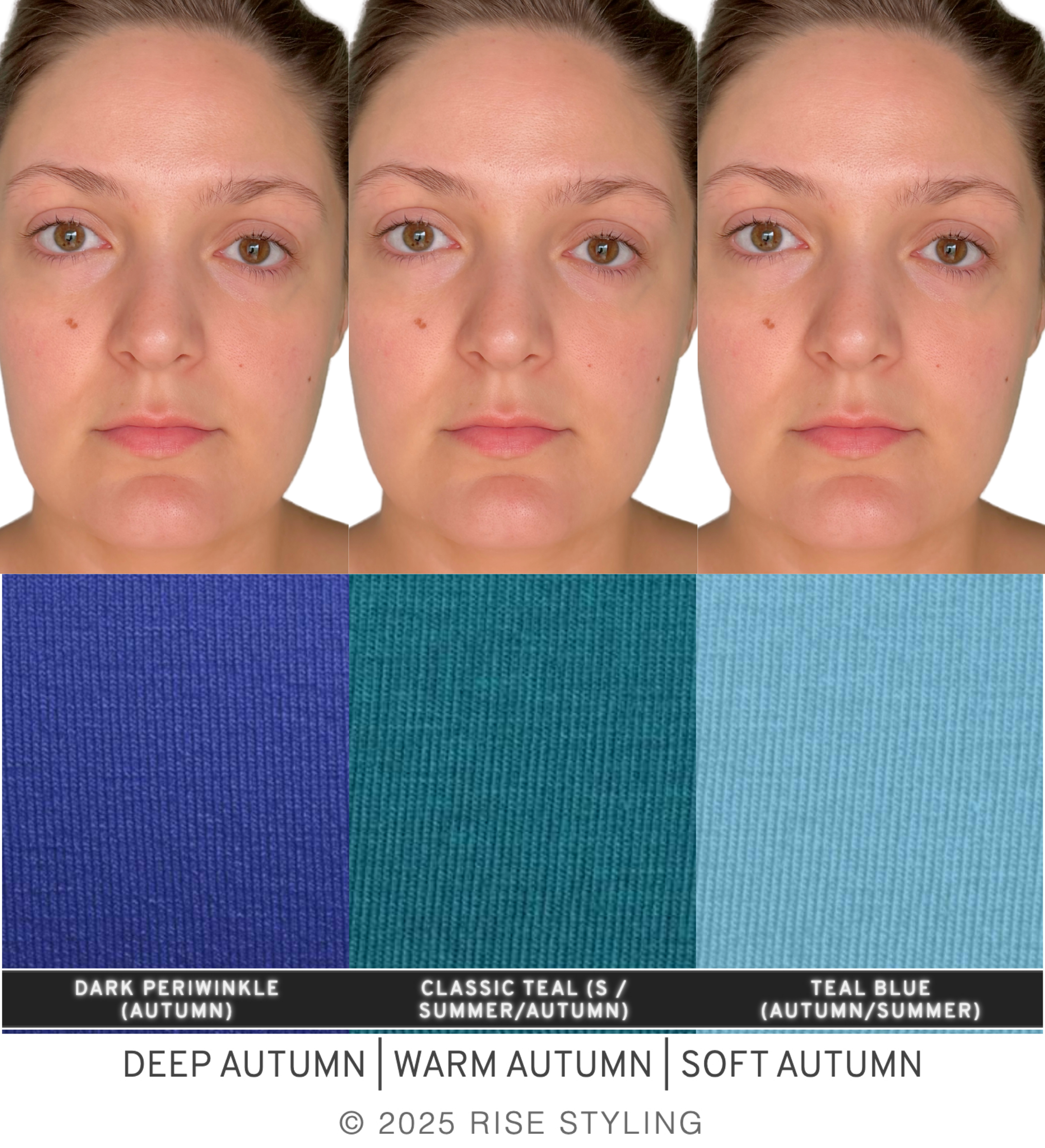
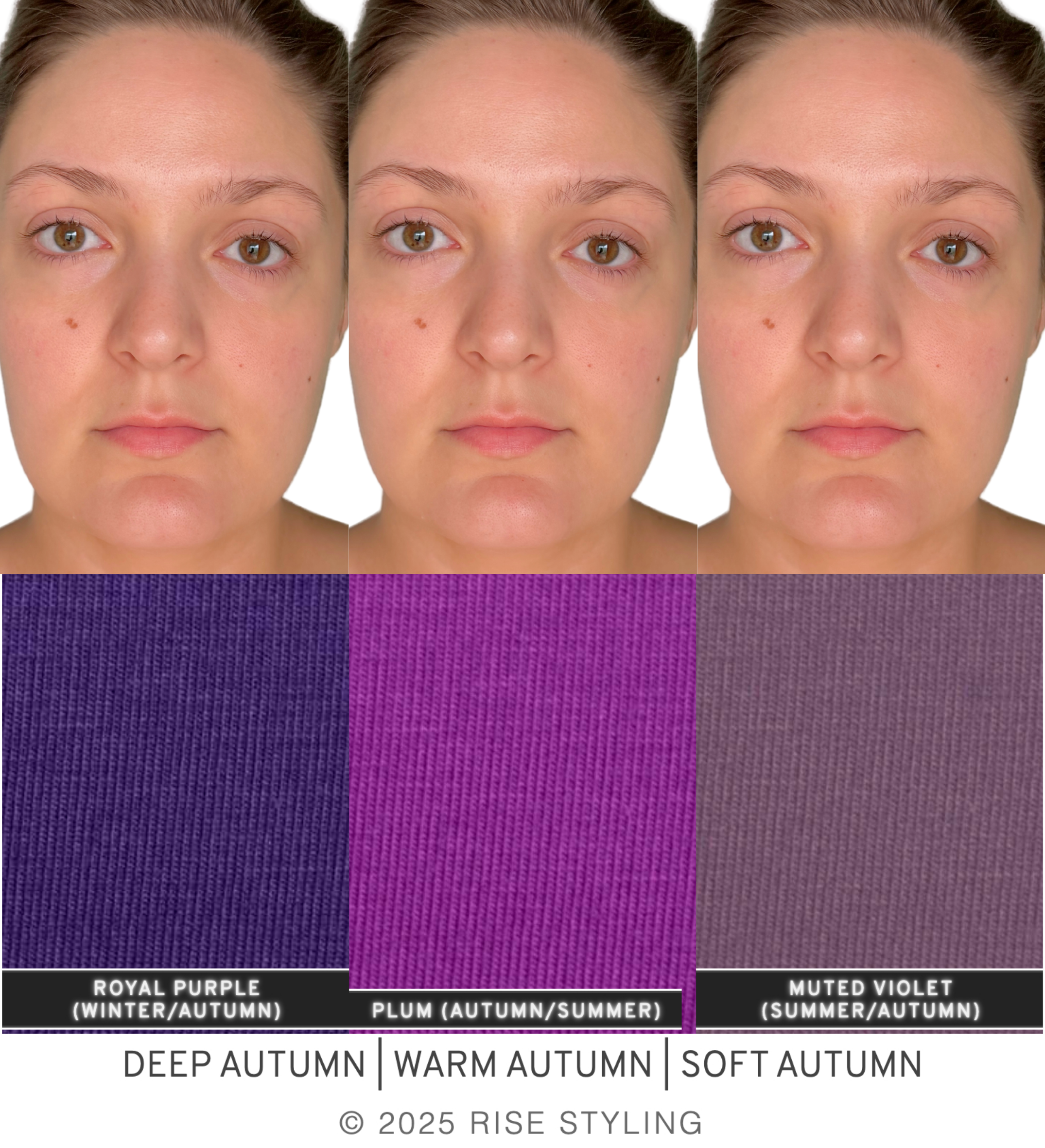
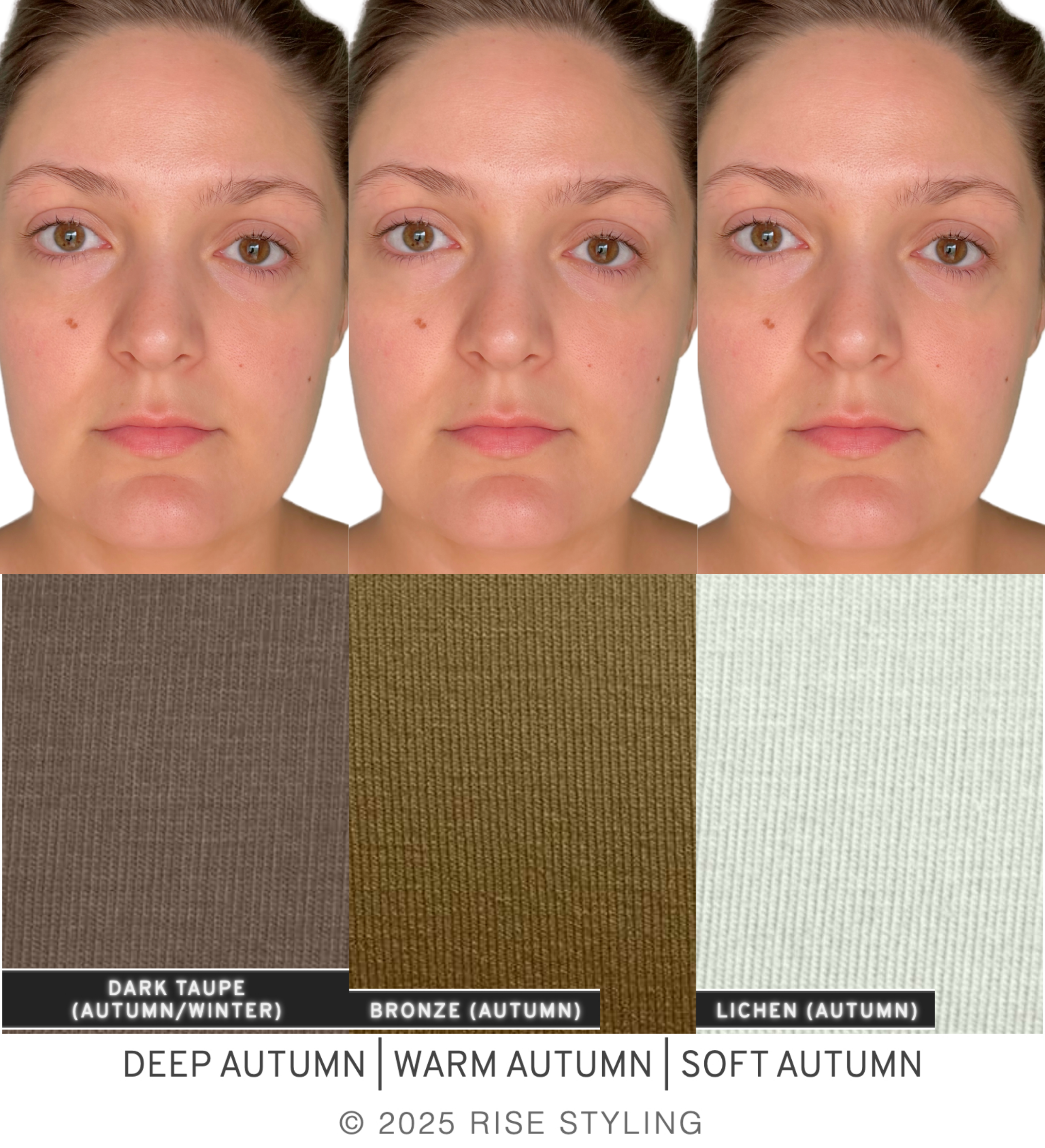
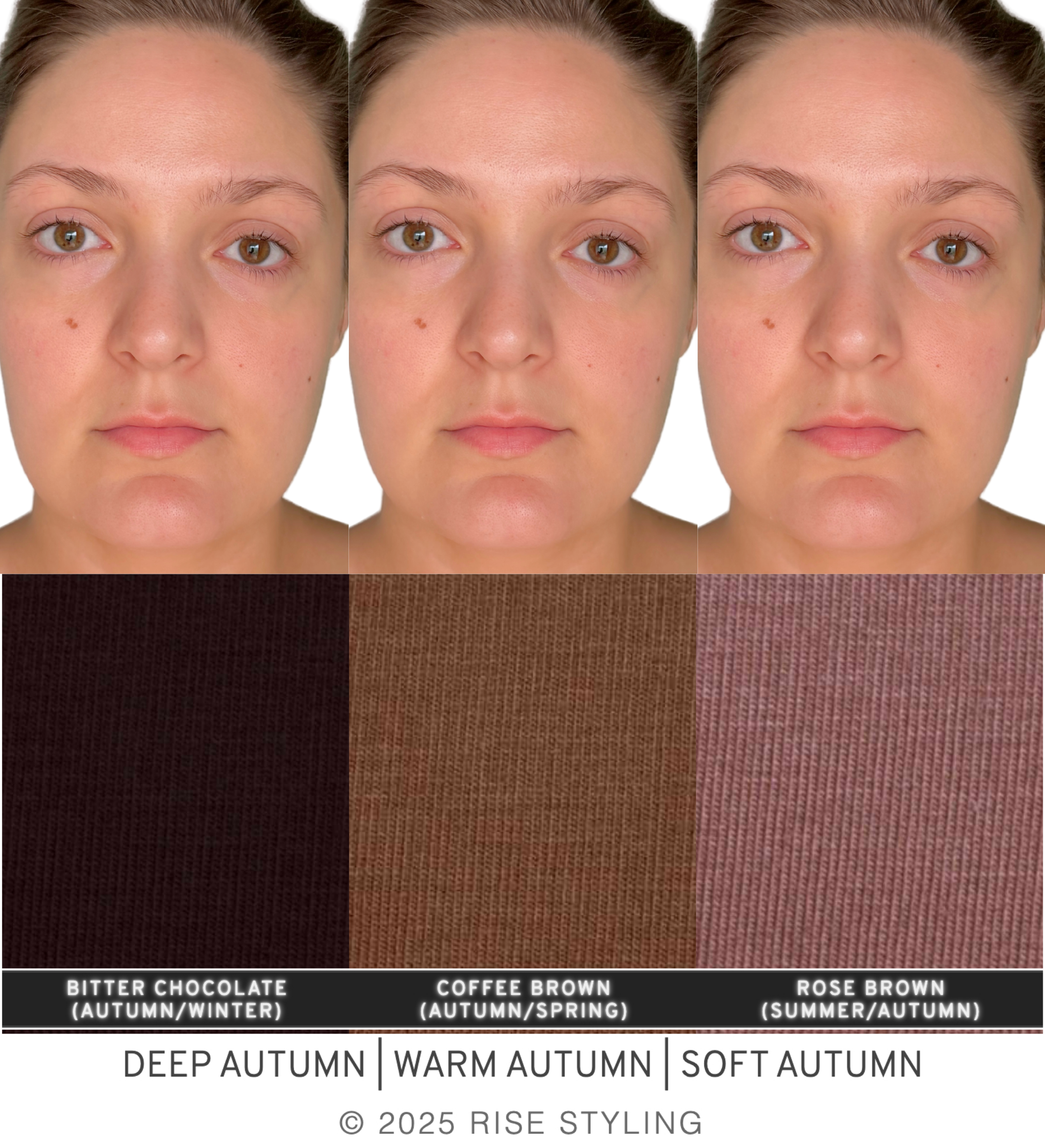
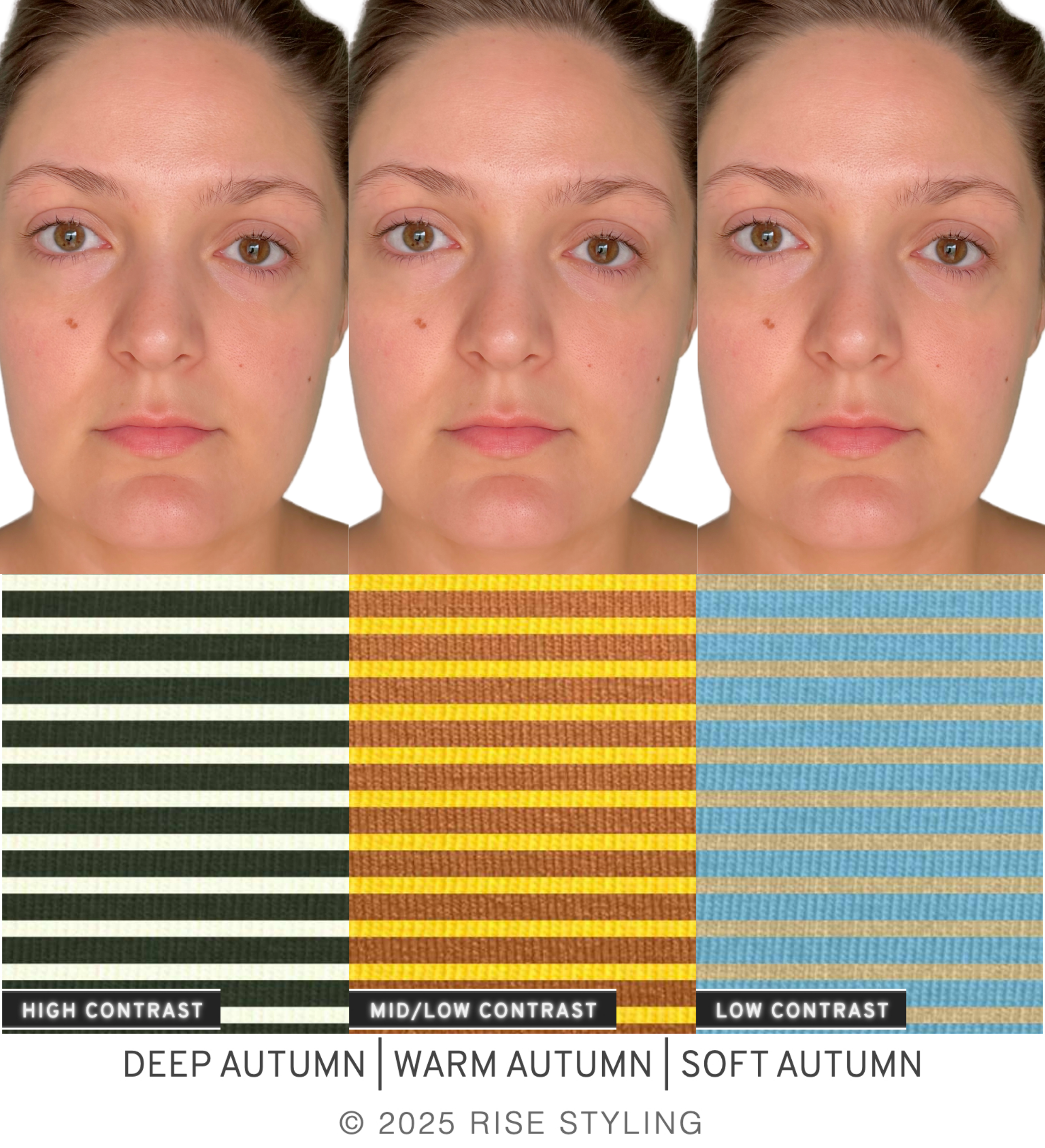
My eye rests immediately and comfortably on Jessica in the Deep Autumn colors, and a few Warm and Soft Autumn colors. Remember, no one is ONLY their sub-season. Jessica is an Autumn first and foremost, and a Deep Autumn second.
Just take a look at Jessica in her “best of the best” Autumn colors and tell me she doesn’t look like a million bucks!
Are you ready to come away with your own results like these? Get 15% off your ColorKit™ service for a very limited time!
